I can only begin with advice I read (and re-read) from Rebecca Solnit‘s Facebook post, Nov 6th at 4:25 am,
“Things you do not have to do today.
–Join the frenzy of what/who to blame.
–Take in a bunch more media.
–Feel like you’re ready to face the next five years and have to plan and strategize and do it all now.”
I often feel the need to push, press beyond pain and fear, and just DO something, anything when I hit bottom, slam into a wall. Solnit’s post offers permission. I didn’t realize that I needed permission, but apparently, I do.
So I thought, maybe you might too.
You have soft permission to sip whatever brings you comfort—whiskey, wine, chocolate cake milkshakes—and drink them anytime during the day (or night) you feel.
Brewing Chai is my blanket. I think the meditative process matters. I think the warmth of the mug against my palms brings calmness. I think the sweet mesh of cinnamon, ginger, clove, cardamom, black pepper infuses something ancient in me.
You have gentle permission to hug whatever and whoever offers you solace. Perhaps a tree, a body pillow, a shaman. Maybe you just need to hug yourself for awhile, for the day, for all of time. Do this. Do this often.
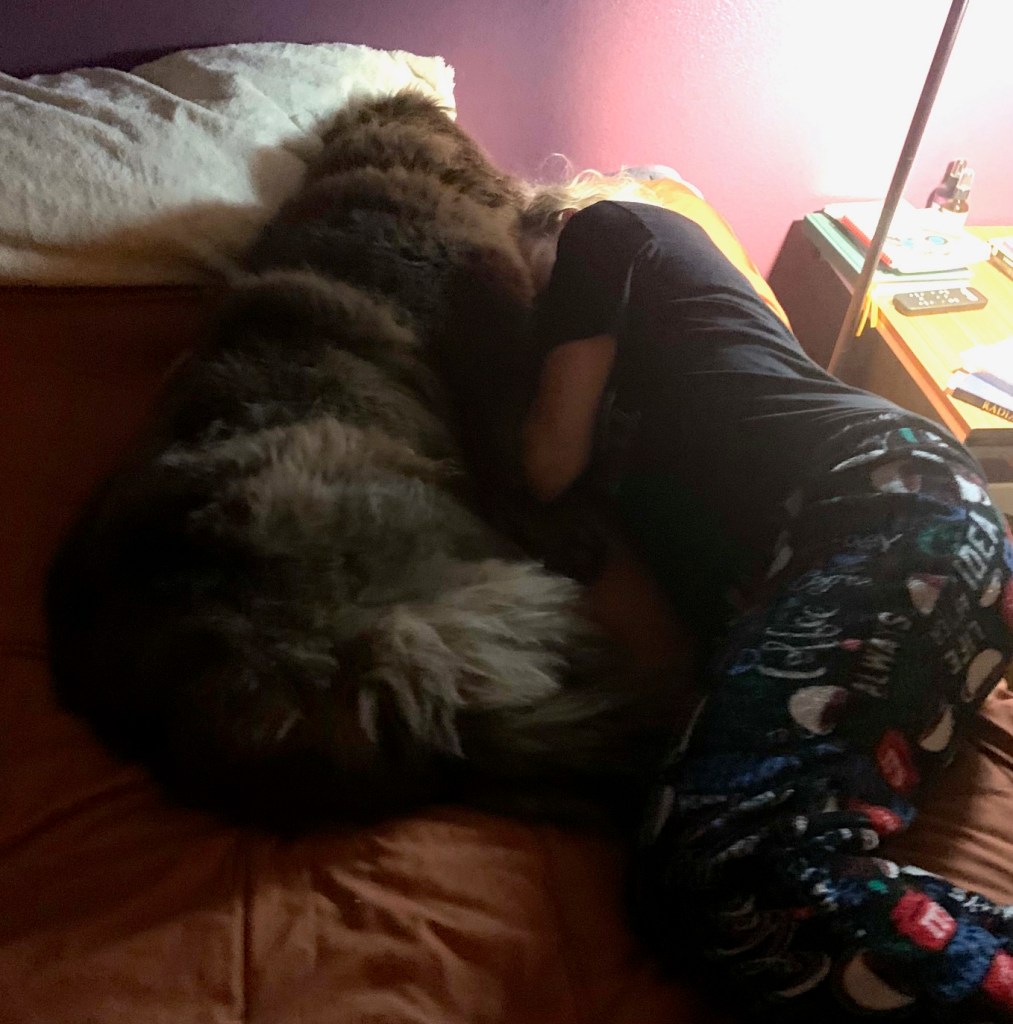
I’m blessed with Newfoundland-surround-sound. I’ve four beasts, each over 140lbs. That’s a lot of fluff and love. And these water-rescue-bred beauties feel emotion, all the emotions, sometimes all at once. When I’m hurting, they gather. They press against me and, I swear, sop away my hurt.
This is Penelope on my bed, like most mornings.
I gift you permission to read all things loving, all things that restore and replenish you. Read daily. Sit with others art and beauty all that you can. Allow words to wash over you, rinse away darkness that might bring damage.
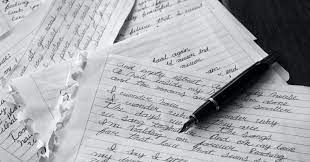
I’m absorbing Ben Okri. Above is a snippet from his novel, The Freedom Artist, which feels timely and timeless.
Heed this as permission to gather, to lose yourself in community, to surround yourself with like-minded hearts. Your community may include trees or humans or jelly beans, no matter, just gather.
Here is permission to play. Yes, play. Creative time shifts perspective, releases angst, offers a marinading of all that we hold. Gift yourself a bit of wonder. Sit with paints and color and new-found recipes from long ago. Dance in the rain to the drum of your heart. Build a sand angel, a snow castle, a gingerbread gender-neutral being.
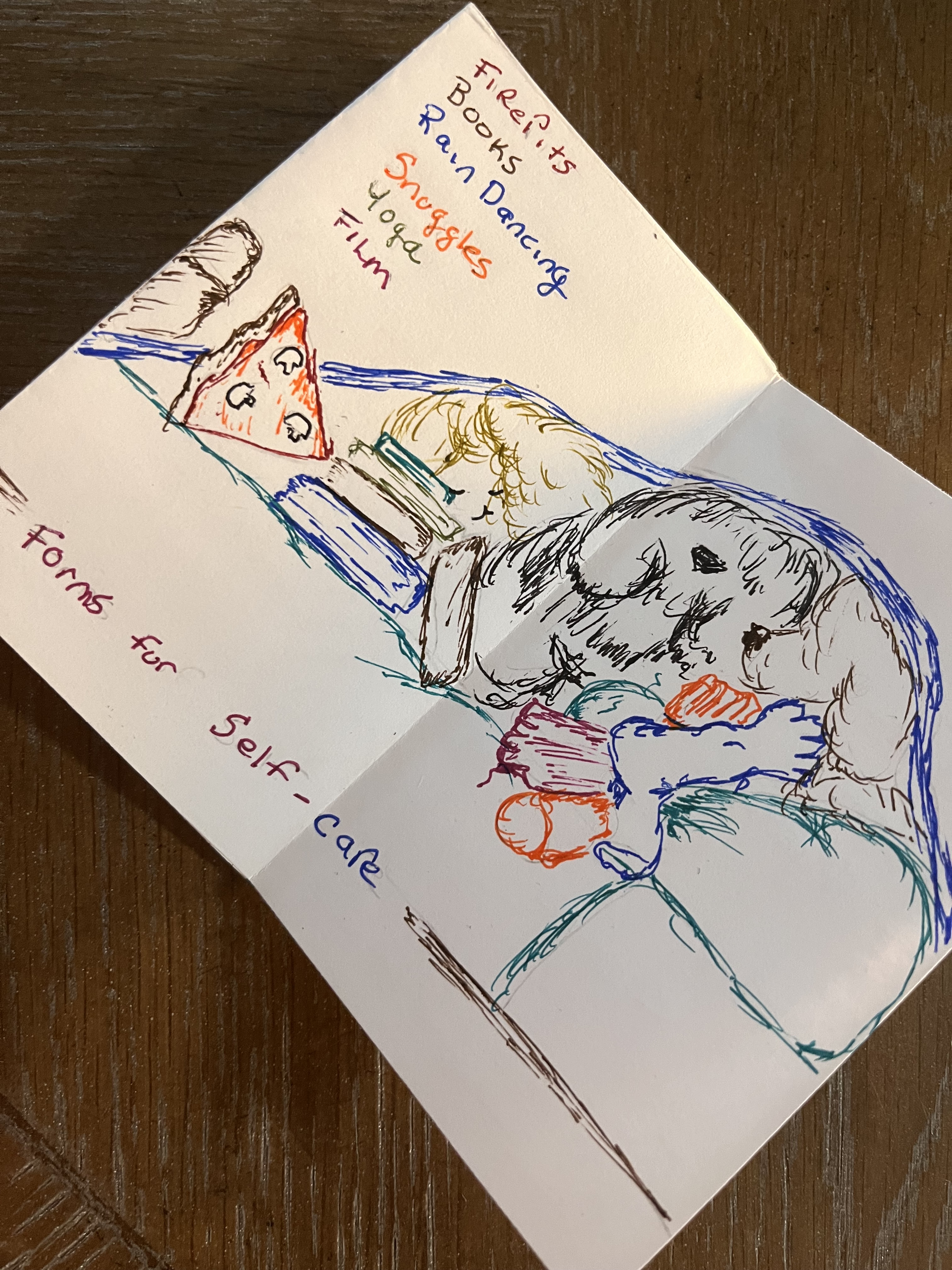
I love to Zine and Watercolor. Both mediums are less-than-forgiving, in a good way. They bring the art of letting go, the art of letting art be whatever she wants to be. Here is a recent Zine, thank you Sarabande Books, Natalie Wollenzien, and Kris K. who led the zine workshop on Self Care for a Beloved Self.
Here is my zine…
Here are a few of my zines from my little Guides series.
…and below is one of my waterweaving pieces from my series. The medium is black ink and water color on water color paper, titled, I am a purple lotus. This piece was featured in Boise Weekly‘s May issue (v 32, i 40).
I offer you little if I fail to mention the poets, and for now, Kathryn DeLancellotti, who shared in an IG post to lean into our “holy rage.” I’m paraphrasing, but I’m certain I’ve borrowed her phrase, “holy rage,” every day for the last week. Here is a sample of her holy poetry from Beaver Magazine.
Permission to eat well. Drizzle everything with garlic oil and coarse flake salt. Pause and toast only the best cranberry walnut bread. Chew slow and in silence and thank the good earth for nourishing you, restoring precious energy that we will all need now, and even more, later.
Permission to love on your skin. I typically soften coconut oil between my palms until melted and apply it to my face, neck, locks. I started this in my impoverished days when I couldn’t afford decent lotions or conditioners. I retained the habit because, well, the skin and follicles absorb everything and I could rant on products and ingredients, but I’m preserving my energy and knowledge for better banters.
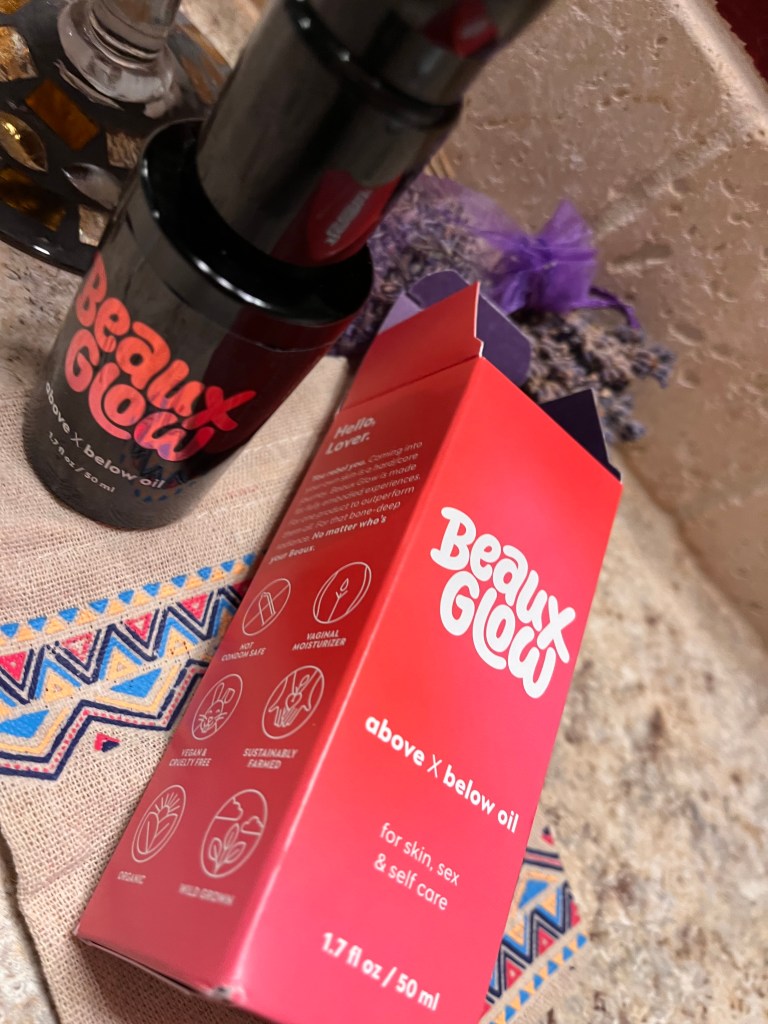
This month, I dove into a new product created by my incredibly talented (and chic) friend, Jessica Holmes, called Beaux Glow. I’m in love, enchanted, in awe. I love, love, love this product and I am not a product pusher. If you know me, you know I make my own soap, mostly from items in my garden. This product I love. On my face, my elbows, my lady parts. I give you permission to pamper yourself with something new.
Permission granted to body scan and body scan often. Check in with your body. How do you feel in the soles of your feet, your third chakra, your guts? How might you move, stretch, shift to bring your body more comfort? Do you need a warm blanket, fuzzy socks, a punching bag? Pause and listen to your body, note its whispers and respond accordingly.
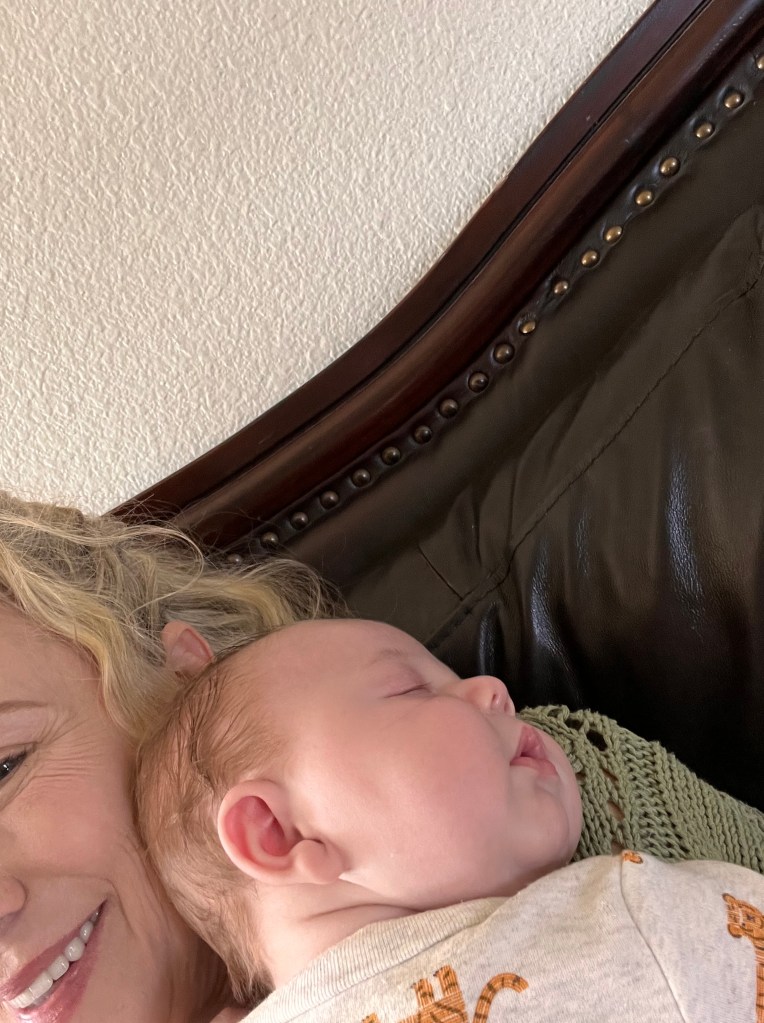
Speaking of snuggles. I can’t resist. I’m a Bubbe. I don’t take it lightly. I don’t take anything lightly. But whenever I can, I jump at the opportunity to hold my grand-baby, Charlie. Sweet innocence, being of our future, the reason why I poet, my reminder to “keep going.” I give you permission to find your reason, your Charlie, what or who you need to hold on to that allows you to keep moving.
Permission to join others in movement and musings. This is not a plug for the workshop that I co-teach with the amazing Gayle Brandeis. This is a plug for the community we’ve curated, one of hearts and gentleness. Find a sacred space, a place you can dwell with others, a place that nurtures your loves and fills you.
Here is a Movement and a Musing from our November gathering:
Movement: Choosing to be separate. There is strength in your individuality. There is strength in being a single unit as part of a whole. Separate your toes. Move each toe in each direction. Stretch. Massage. Say thank you.
Musings: Choose your singularity. Gather strength through singularity. Write one sentence. Separate each word down the side of your page. Now write a sentence using each word to begin a sentence. Repeat.
If you’d like to join us or download a PDF from previous gatherings, you can visit us at Musings & Movment.
I could keep going, all the permission that you might need for all of time, I give it all to you.
…and I’ll leave you here, with this reminder, circling from where we began, Rebecca Solnit, who offered me permission: “Rage is a form of prayer too.” (Nov 7th, 2:27 pm).
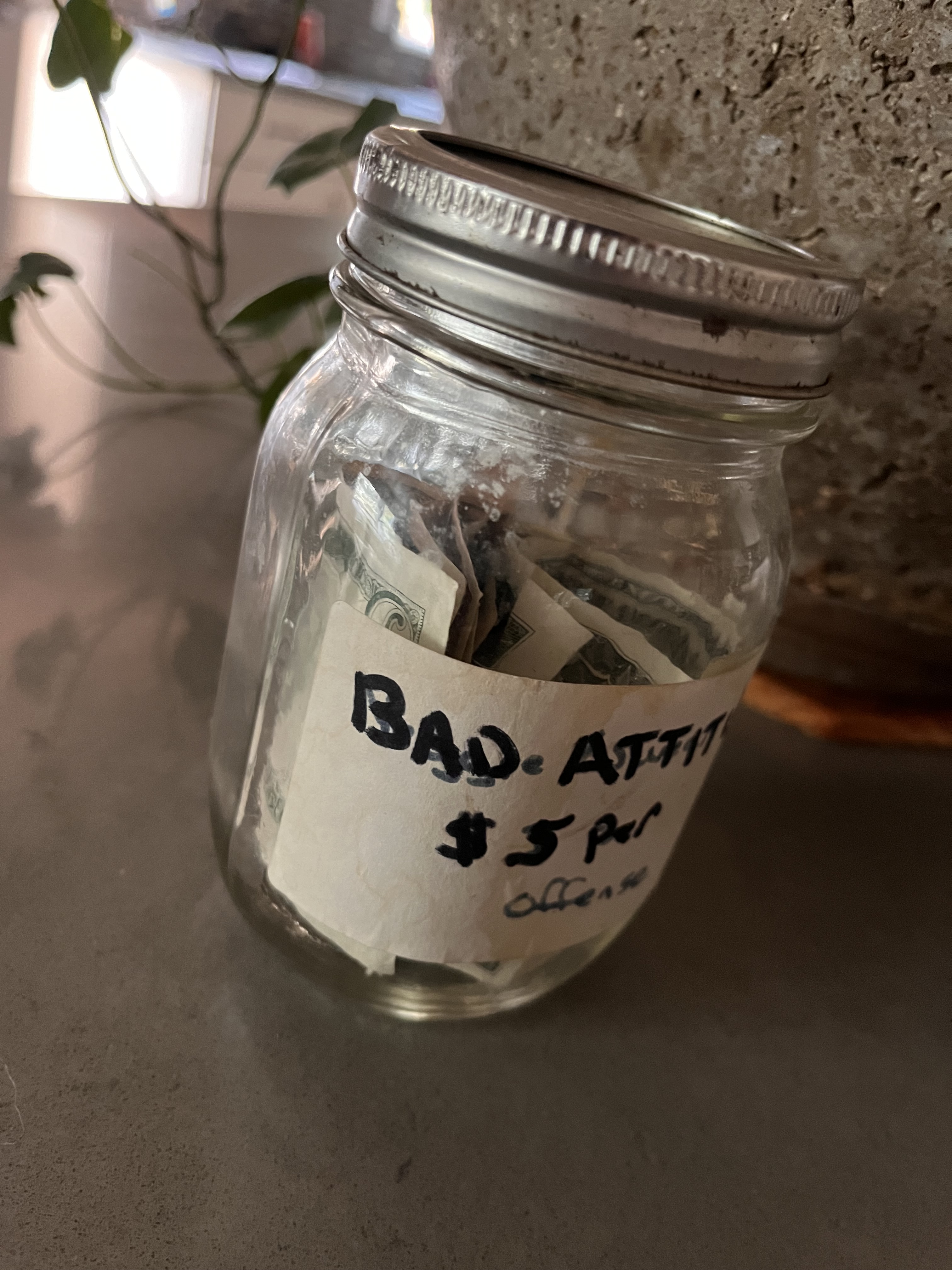
I collect money. Collect it in a mason jar. Collect coins and bills and hand-written IOUs on Post-Its. I charge five dollars per bad attitude. I began this transactional system when my sons were younger, say eight and ten and two. The price lower back then. A quarter for an eye-roll, a dime for a, But Mom.
A few years ago, I stored this jar, believing that we—my sons and me—had arrived. When I say, Arrived, I mean here, someplace stable. Maybe I mean here, Star, Idaho. What I really mean is that I hoped we’d shifted into peace, which meant our energy stabilized.
I believed that arriving here equaled more time. No. More energy.
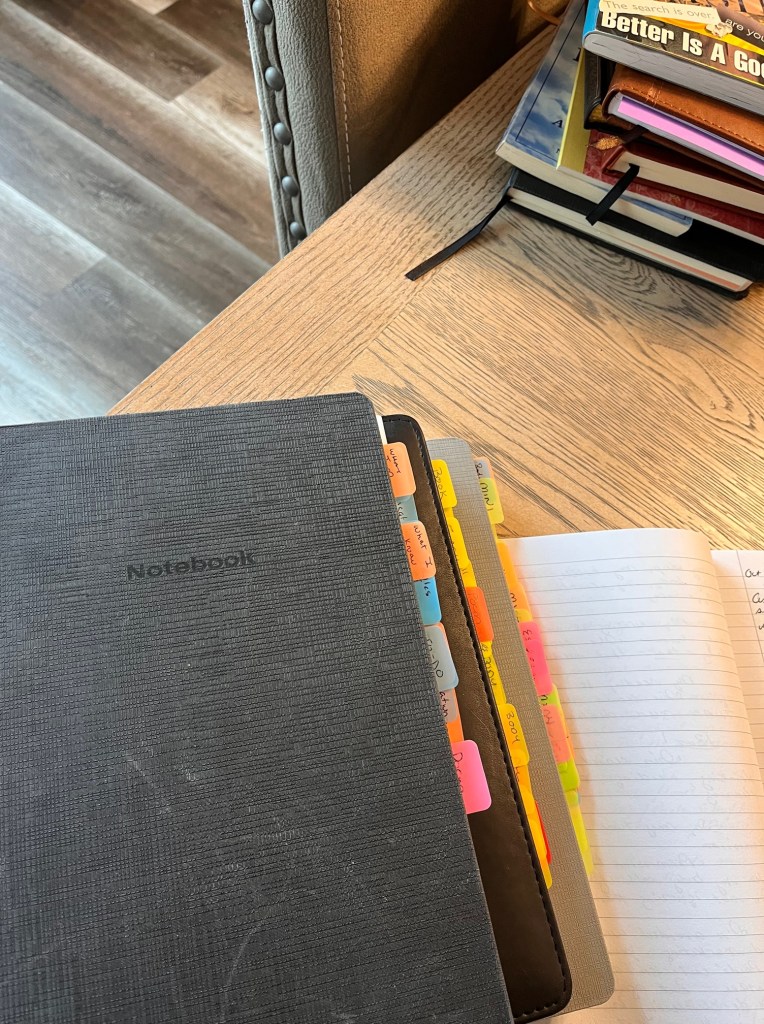
In my journal, I map my time.
4:30. Feed pups. Make beds.
5:00. Prance through my garden and pluck basil and sage, fry them crisp, fold them into fluffy omelets.
5:30. Yoga.
6:30. Pre-prep lunch—tuna salad pitas with air-fried sweet potatoes smothered in rosemary, again, from the garden.
7:00. Don’t forget the laundry, the dishes, the bills. Remember: Pre-prep dinner, shave Parmesan by hand for pasta. Oops. Buy Parmesan. While shopping, buy bread and eggs, just in case.
Already noon.
My sons munch their lunches while playing video games. In another room, I unclog the vacuum for the third time this week and tell myself. All this energy expenditure will buy me—
Appreciation?
Approval?
Irreplaceability?
Tell myself, 30 minutes. Certainly I have 30 free minutes.
I brew tea.
Set my writing intention.
I’m lying.
I need an entire week, most likely a month, to polish my manuscript. I need minutes all in a row. And
a pup eats the remote, I hand-wash dishes, store leftovers, mop floors for the seventeenth time. I forget my tea as I return to my manuscript. Technology fails. I troubleshoot. I re-boot the router. I hole in my office for six minutes, re-reading the second line of the sixth stanza of a Golden Shovel and
one of the boys pokes his head in, What is there to eat?
I pretend not to hear him.
It’s 6 pm.
Mom? Mom? Mom, I’m hungry, and
I cave.
Words escape, You need to leave
me alone.
The words are louder, more square than I intended.
The head in the doorway pulls away. Angels gasp. Devils clap. I slump, hold my face. My brain chugs a thousand directions.
My focus is hard-earned, if earned at all.
I count, oneandtwoandthreeandfour…
Boys, come here.
Look, I say and point to my poem.
See? I say, and show them my need to maintain the anaphora phrase AND the end word AND
I’m stuck in the middle of this line on a word that feels wrong in my body, I say.
How can you feel words in your body?
I have no answer.
No.
I know how to answer.
I could ask, Did you feel my shout?
But I can’t.
I don’t.
I’m sorry, I say. I didn’t mean to raise my voice. Though we know this is the nice way of owning yelling.
Let’s make hot cocoa, I say.
The guilt of parenting quilts me, snuffs out my need to create.
After they sleep, 10 pm, give or take, I wander my home like a ghost. I wish I could re-carve our life, turn time back to last week when we watched a movie, ate salted popcorn mixed with Hot Tamales.
What I really want is the ability to leave the dishes dirty.
You piece of shit, I say to me.
I move room to room and kiss their foreheads, say, Forgive me.
Tell them, I’ll try harder.
Ask, Can I have a do-over?
They slumber.
The next day, I find and place the mason jar on our kitchen counter.
Do you remember our energy exchange? I ask.
You used to charge if we argued with you, one of them says.
Do you remember why? I ask.
Because arguing zapped you and you needed more coffee to parent.
Good memory, I say.
Uhm, but we’re not arguing, the other says.
I know, I tell them. Do you remember how I told you, everything requires an exchange of energy? How, in the old days, people traded chickens for flour, or horseshoes for grain. How currency—like money—became a thing and we forgot what it represented. Our energy.
We have to pay you for something now? one of them asks.
No, I say.
I place a five dollar bill in the jar, say, This is for my bad attitude yesterday.
One of them says, Maybe you’ll save enough to hire a housekeeper and that will help your attitude?
Genius, I think.
A pup sprints through, dish towel in her mouth. Another pup chases after. The boys squeal and join in and suddenly, my body,
my body feels the word, and I, too, sprint up the stairs to my office, to my poem, jot the word and plop into my chair, the resistance of stillness fades. I’m here. Me with my body, my body with my words, my body-words with me. I smile a small smile, perhaps a glimmer of achievement.
If you’ve met me, you know I’m a fashionista. If you know me, you might say I’m a shoe slut, a tote tart, a closet-curator. I love fashion.
The truth about fashion—whether in your home, on your body, or within your body of work—is that art lives within polishing, revision, the details.
I loved fashion as a teen, and because I left home at 14ish, affording the “look” was not a budgeted item. What I had, back then and still, is my creativity and resourcefulness. With my small nest of mostly denim, I could invent a signature, repurposing—shorts into skirts, tees into tanks—with scissors and few quick stitches.
This most likely began in first grade when I felt bad for my Baby Tender Love.
Baby Tender Love, Circa 1970’s
She had one outfit. We had no money. Our family carried mostly dysfunction and chaos. Dressing that doll became my obsession. I’d found a basket or box or trash bag full of scrap cloth and I dug through an old sewing basket for buttons, a needle, some thread.
Baby Tender Love’s “dress” consisted of one piece of material, arm holes, and a button. I traced the original on a sheet of paper. I’d no clue that I created a pattern. I used and re-used that sheet on every cloth big enough. I probably used scissors for the first time in my life. At least adult ones, sharp and pointy and too big for my hands. I over-cut at first. I remember my tears, the heat of my face, the tossing away of pretty material I thought perfect for my impoverished doll.
Threading that needle to sew a button turned me into a tornado. Perhaps my first symptom of drive, determination, or my ability to singularly focus on one small task. Most likely coping method I still use today. I can’t remember how long it took me to teach myself these skills. I do remember the stack of clothes my doll had in the end and, later, my adopted sister, Tina, asking me where they came from.
Imade them.
In middle school, a teacher hired me to purchase clothes for her small boutique in Wheatfield, Indiana. The teacher, older—probably my age today, late 50’s—chose me because she loved my style, because she wanted a young, fresh “look” in her store. I paged through catalogs, the pages brimming with ankle boots, short skirts, and one-piece jumpsuits patterned in flowers.
I loved this job. This summer job. My payment in clothes.
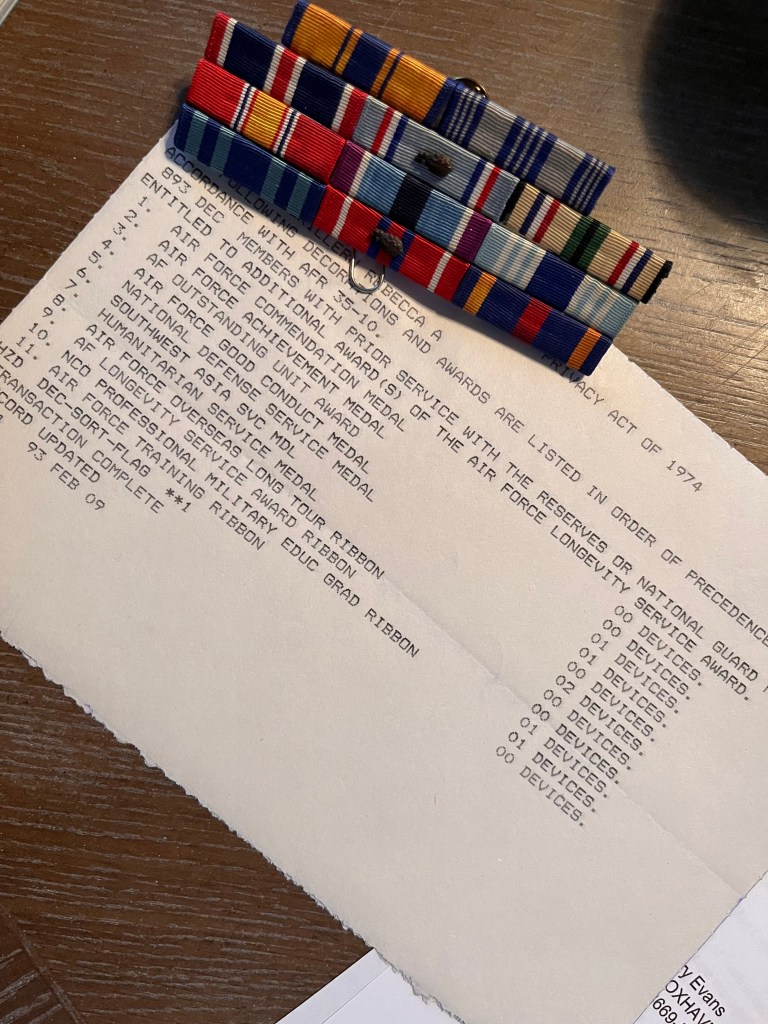
Once I joined the military, fashion became an identity. When you live in a uniform—dress blues, combat fatigues, charcoal chemical warfare suits—maintaining a sense of self feels much like oxygen. I finally had money. It felt like a ton of money. Food and shelter, covered by the USAF, meant I had extra money. I shopped. I shopped often. Sometimes I stole items. Sorry, a different essay for a different day.
Scarves, totes, belts, and shoes.
At the time, I barely topped the scales at 100 pounds. I struggled with Anorexia and Bulimia, though I’d tell you, then and now, I’m fine or I burn fat when stressed. I told myself this too. I believed this. And because of my body-shame, wardrobe offered a place to hide. I could mask my thinness in layers. I could also keep my body safe from predators. My outfits became bulky, but still, fashionable, at least to me.
Comfy ClothesMe in Chemical Warfare Charcoal Suit, Circa 1980’s
During my military stint, I journaled, almost daily. I did not deep dive. I did not seek an understanding of self. I avoided any emotionally charged idea. Instead, my journals appeared like a catalog, capturing events, places I journeyed throughout Europe, sketches of the world around me.
Outside of me.
I kept everything outside of me.
Including me.
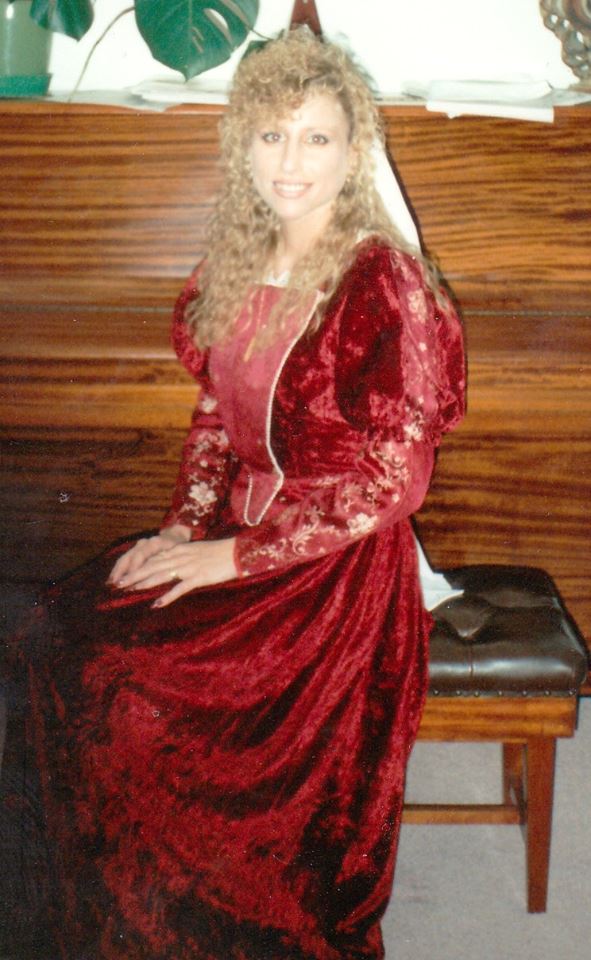
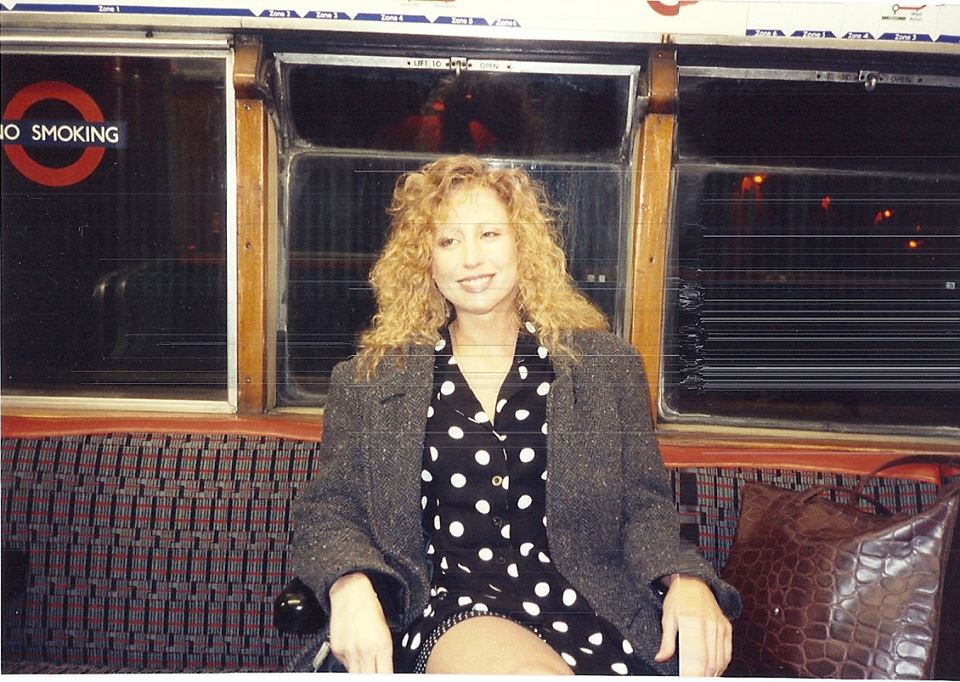
As a Damsel at a Medieval Banquet, Circa late ’80’sOn the London Tube, off duty from the military, 1990’s
There’s a long narrative between my exodus from the military in 1993 and my entrance into pageants in 2004. Most of this time has little to do with fashion or writing and more to do with surviving. What you need to know about this decade:
I hid in my walk-in closet to write at 3 am because my then-husband thought writing too much a luxury and my time should be spent on my chores—caring for my sons, keeping our home pristine, looking perfect.
One “requirement” of my then-husband was for me to look perfect—body, hair, make-up—so, after I wrote, at 5 am, I put on my face and a cute outfit. I looked good. I felt numb.
During this time, I taught and trained and coached high-level athletes at the gym. This offered the opportunity for me to keep up, keep low (body fat), keep going.
I didn’t understand the complex duplicity of my life. In the military and later. I didn’t understand how wardrobe defined who I needed to “be” at any given moment.
Spandex = Gym Diva
Gown = Pageant Queen
Uniform = Disciplined Airman
Fashion Outfit = Perfect Wife
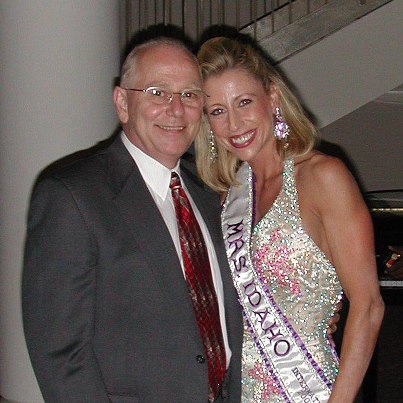
When I became Mrs. Idaho International in 2004, a dear friend and incredibly talented fashion stylist dedicated months to helping me re-shape and re-define my image.
Her first challenge?
Cutting my wardrobe. Most of my clothes were two-, maybe three-sizes too big. I still suffered with body dysmorphia and occasional episodes of Bulimia. I thought myself “healed.” Thought that this was as healthy as I would be.
She gathered clothes that did not “fit,” hanging them on one side of my closet.
I took to a bottle of wine.
I feel this is where writing and wardrobing clearly intersect.
Here, my “base” wardrobe simulates an early draft. Here, we cut and cut and cut. Take away everything that does not belong.
Images that are out of range of theme or tone.
Repetition that fails to build or shift the narrative.
Wandering story lines.
Excessive words—articles, adverbs, etc.
And my favorite cutting—weak verbs.
And yes, shaving a narrative feels like revamping my wardrobe in 2004. Some days I want to reach for a bottle of wine. It’s uncomfortable. I’m attached to words and shoes and comfy sweatshirts. But I’ve learned that cutting at the foundation allows me to build something that truly works—on the page and my body.
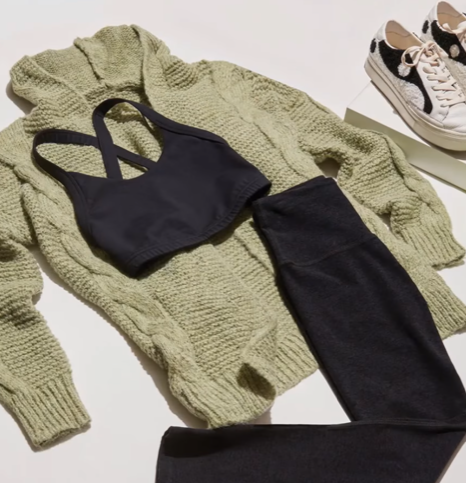
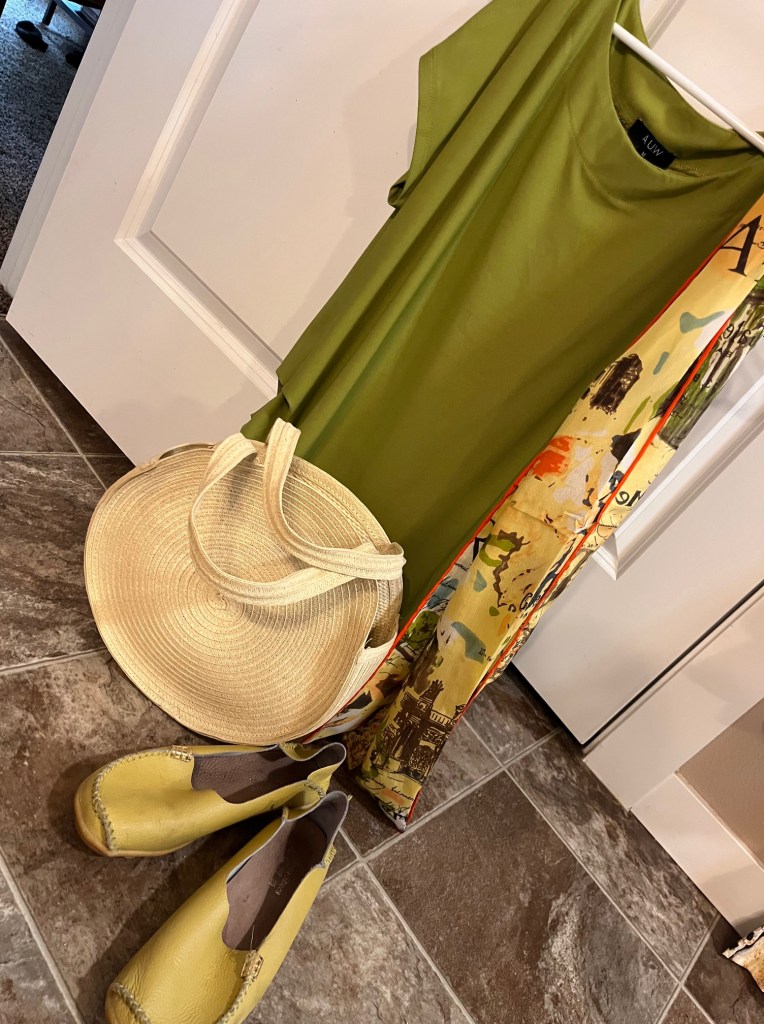
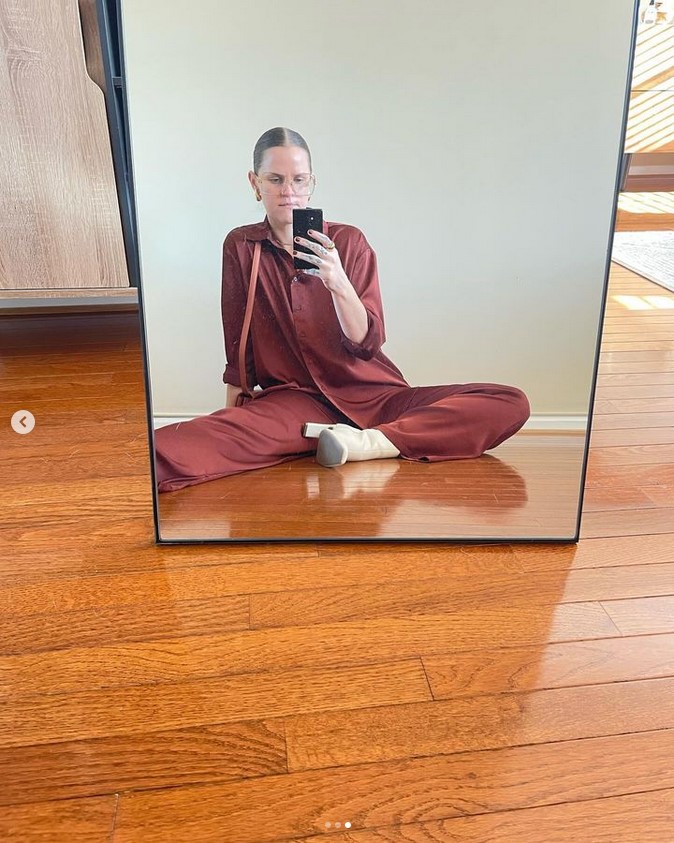
Much like this off-green blouse. The arrangement is simple. A scarf, shoes one tone lighter, a woven handbag.
I could keep adding to this ensemble—pending on the weather—an off-white denim jacket, sunglasses, a hat.
This is true of penning a decent essay. You could keep adding. But it depends. Weather matters. Is there a storm brewing or a breezy beach day on the horizon?
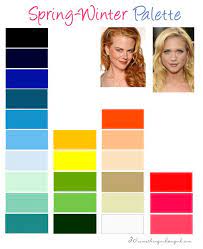
Back to 2004 and re-defining my style. My fashion stylist-consultant-counsellor’s next step involved color. The foundation here is a bit Socratic—Know yourself. Which colors enhance your complexion? Which drains? This is both simple and not-so-simple. The stylist held fabric swatches near my chin beneath great lighting (meaning: NOT fluorescents). I could see the difference in my skin, how my tone shifted based on hue alone. Pastel and jewel tones offered a healthy sheen for me. Earth tones brought a jaundiced-death look.
We decided I’m both a Spring and Winter.
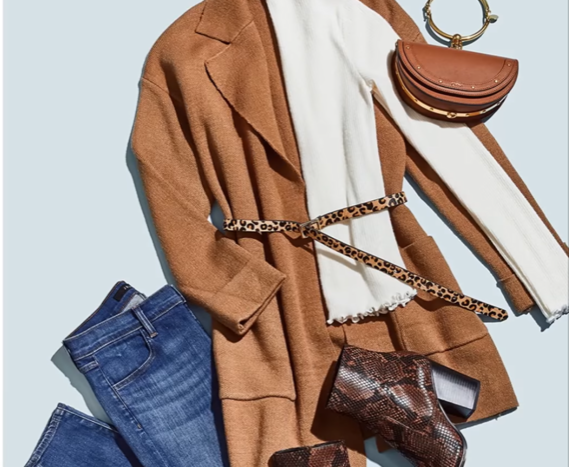
My one earth-tone exception was camel. I look amazing in camel. Teal became another signature color for me. Odd enough, both colors were absent from my wardrobe. My stylist found a camel suit, top coat, slacks. Teal blouses, tanks, sweaters. The challenge for me was not the shades but the size. I felt awkward and exposed wearing clothes that cinched my waist, tugged my thighs, showed my body.
My conflict? I love fashion. I dislike male attention regarding my body. How can these two co-exist peacefully? How can I live comfortably in my skin AND wear clothes I love?
I do not have an answer.
I still struggle with this today.
But writing teaches me about this.
Think FORM.
Form in wardrobe moves past size and color, focusing on body shape and how to enhance it. For example, a V-neck looks fabulous on a large-busted form. A cowl or turtleneck on the same body type is less flattering. Necklines, collars, hem and sleeve lengths, trouser leg width, all of these details matter.
Using form in writing is parallel to this.
The paragraph might work well, even read well, much like the turtleneck, but a list could serve the piece better, like the V-neck. It isn’t a matter of right or wrong. Think great versus good. I think of form in writing as our greatest opportunity. We can alter that same paragraph into a Haiku or short staccato sentences or one long stream of thought. We can push the entire structure into a poem, a hybrid, a flash, or long-form. The critical element in form selection in writing equates to form choices in wardrobe – is this the best shape for this body?
I witness writers pushing poetry into the middle of a narrative when the project doesn’t call for that shift. The pressure of hybrid form and acceptance into a literary journal will sometimes force an artist to add an element that goes against instinct. The same is true of wardrobe—social pressure, approval, acceptance can influence us, pulling us away from our guts and into the darkness of…fads. Of course, art is subjective. The hope for the artist, the human, is to make choices that honors their nature, their desire.
In writing, we begin again as well. Walk through, remove the lines that no longer serve.
Return to texture.
Think of white space on the page as the first layer of texture in writing. Here, we decide. Do we begin in scene? In dialogue (which is in scene)? Does the sentence stand alone? The word? These choices alter the feel of our work. These choices change the way we breathe in our words.
Of course, wardrobe holds texture too. In 2021, I fell ill with an autoimmune disorder, another layer on top of my already dis-abled body. I returned to my closet. I walked through, much like my stylist taught me. I touched every item, massaging fabric between my palms, on my face.
I kept clothing based on touch alone—the softest, the silkiest, the items that felt like butter. I love blossoming trousers (which work for my body-type) and breezy sweaters. Maybe I long to feel like a petal or a butterfly. Maybe I’ve this need because my body holds so much pain.
Soft against hurt feels a salve.
Spandex tank, silk blouse, non-binding trousers – comfort is key.
This is true of word-texture. How does a word feel rolling off the tongue? I find the use of beautiful language to describe the ugly and difficult can offer less friction, it goes down smoother.
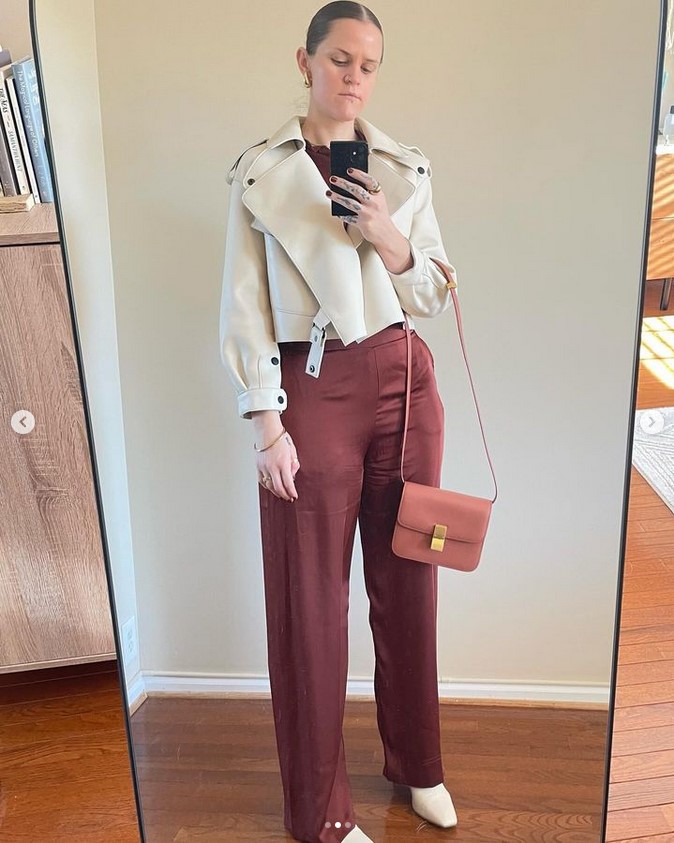
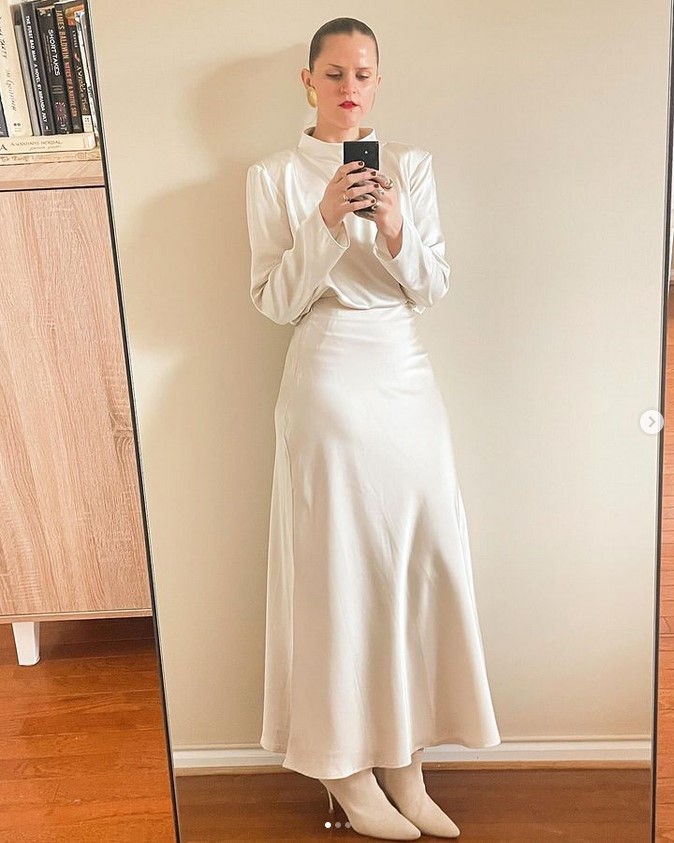
I think of Hannah Harlee’s incredible styling—elegant, classy—and her choice of texture. Butter-love!
What I fail to mention in this essay, Hannah captures perfectly—the rest of the product. Lips. Hair. I mean, look at her red lipstick contrasted with this white ensemble. Perfection.
Again—this mirrors writing. You can manage a gorgeous, even streamlined narrative, but if you don’t land the ending (the rest of the product), you’ve failed.
If you read Hannah’s essays, you’ll see her alignment between wardrobing and writing. Elegant. Classy. Specific. Butter. Love. Nailing-It-Stellar-Endings.
For me, the fun, the true adventure—in wardrobing and writing—lives in arrangement.
As I arrange an ensemble, I begin with my lower half—leggings, capris, jeans. Dress? Skirt? And, like Hemingway’s reminder, don’t forget the weather. Idaho Spring and Fall offers continuous shifts in temperature—snow to sun within the hour—so layered-dressing is a must.
My selection continues—blouse, camisole, sweater.
This process resembles line breaks, enjambments, punctuation—em dash, semi-colon, period?
From each break, I move words, a sound-by-sound exchange. I focus not only on the best word, but the best sound. This attention to sound is like the attention required for true style and taste.
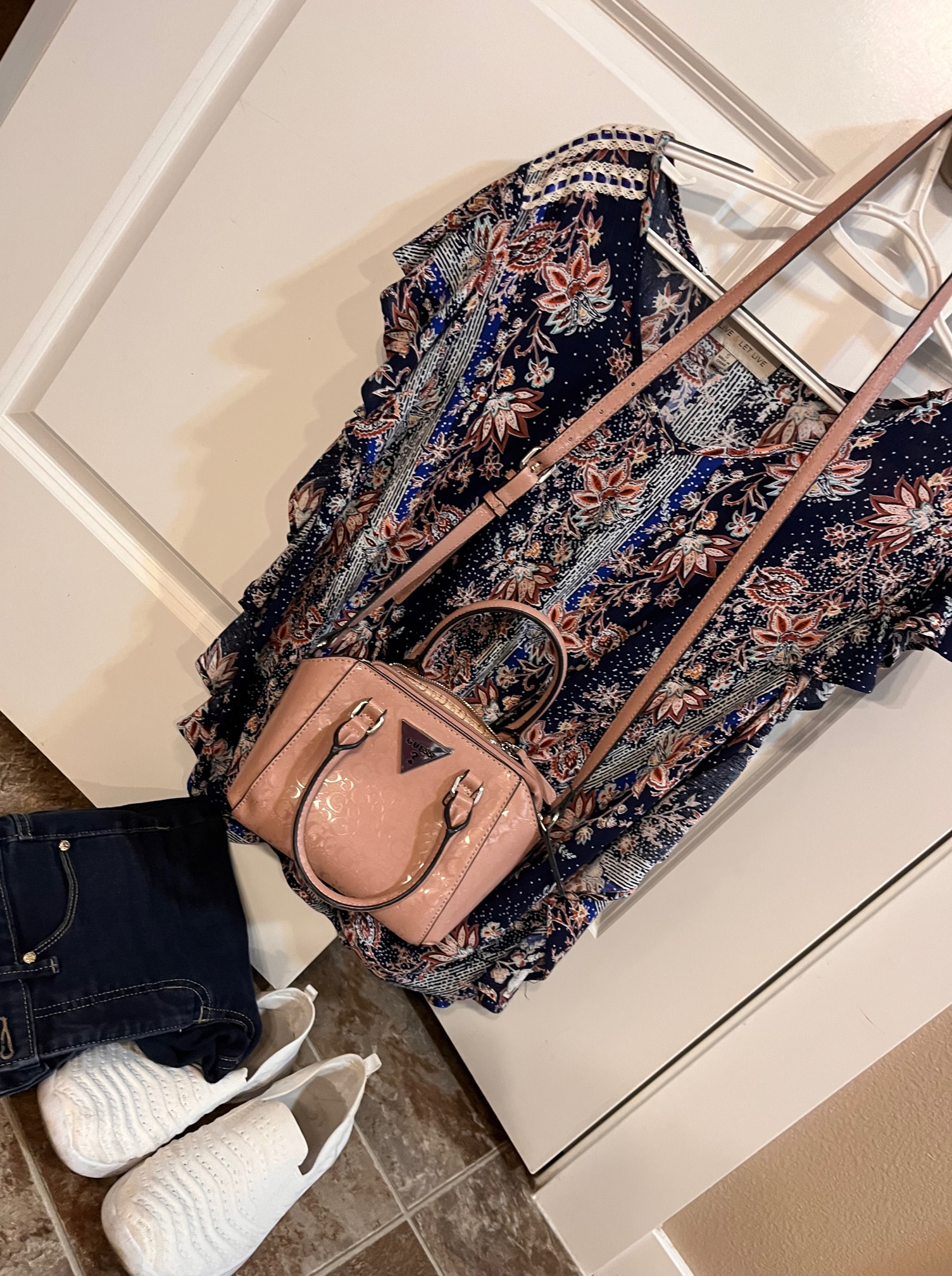
The small speck of teal in a shirt might become my main accent—my focus color—choosing shoes or totes or bangles to pull that tiny hue to the surface. To grab notice of something seemingly spare.
Note the pink-taupe barely peeking through the shirt but accented with the handbag
Words work this way.
The soft S. The hard K. I search for music.
I’ll rarely repeat an ensemble – on the page or on my body.
This does not mean I avoid repetition. I seek re-invention with every piece, maintaining an art form all its own. In a collection of essays or poetry or hybrid work, this array offers range. THAT form served THAT part of the narrative and only for THAT moment. Or, perhaps, a repetition for THAT type of moment throughout?
When I write the way I wardrobe—I maintain a sense of abandonment. I want to feel surprised. I want to love the process AND the end result. I long to linger, to delight, in both forms.
Wardrobe and writing inform one another. The more you pause for details in the small, daily matters, the more you include details in your writing. The more specific and detailed the writing, the more universal the meaning behind the words.
This type of writing (and living) is a mindful, intentional approach. There’s a sense of zen and grounding and earth within it. There’s also a deeper sense of self, of gratitude. I could compare writing to every aspect of my life—shopping, cooking, gardening, sleeping, loving, hurting—they continuously intersect, overlap, and instruct one another.
For the writer, writing is not a separate category of life. We find our stories in the every day. And should our creative well run dry, we can run our hands along a seam, trace the flower in a pattern on a sleeve, remember that the detail, the selection we made from the start of the day can be a major contributor to our art.
~
NOTE: In April 2023, I underwent a double mastectomy. After I healed, I returned to my wardrobe and undid the necklines, altering and revising yet again into something more in alignment and true to me.
If you’d like to order my FREE Zine, A Little Guide to Clothes I Wear All Day, just send a SASE to: Rebecca Evans
Image credits: From Instagram, public domain, 2024, Ageless, Stitch Fix, Dailylook and, with permission, Hannah Harlee. The remaining images are from my life.
You can find Hannah’s LookBook on Instagram at: @hannah_a_harlee and info regarding her Literary Journal, Art Wife, @artwife_mag.
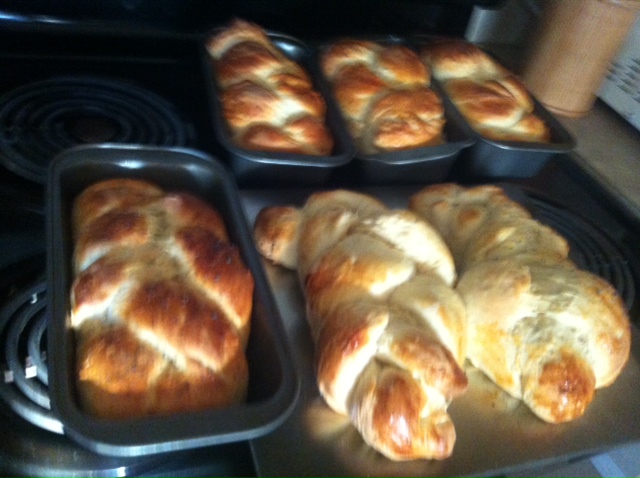
This morning, I will bake and braid challah. This is one way I write poems. This is one way I pray. I pour blessings as I braid—three strands, or six—hoping all who consume my bread will suffer less. Hoping all will suffer less.
If I submit this piece for publication, they might ask about my background, my expert-ness.
What qualifies my opinion?
I struggle with an answer. I do not feel intelligent or experienced enough despite two graduate degrees, serving my country, birthing children, fleeing domestic violence, traveling the world, competing as an athlete, surviving—well, everything thrown my way.
I’m a Jewish woman, which offers little qualification as well.
Stating I’m Jewish, I know, will hard-stop many readers right now.
As a writer, readers stopping saddens me.
Lately, I’m barely writing. The state of the world paralyzes my art. Anything I wish to say, to speak towards, or on behalf of, feels too small, too uninformed. I seek mostly comfort and, what I know for certain is that because I’m able to find and seek comfort, I’m one of the few, the privileged.
All I have to offer is my lens, impressions of my experiences imprinted on me. These imprints inform and influence my managing and handling of my life.
In the build-up and center of the Gulf War, 1990-1991, we watched CNN. We listened to the Base’s reports, most of us deployed and then, re-deployed, from around the world. We found ways to tune in or read BBC and US news. We tried to feel informed. Nothing that we read or watched on the news aligned with our briefings and debriefings. And nothing, nothing matched our real-life, boots-in-sand situation. Each of us gained knowledge differently, pending on our jobs and security clearances. I could transfer flightplan data over the airwaves and know either more or far less than the person working alongside me.
The military machine operates like a focused telescope. They trained me to perform a specific job in time of war, not very different than my peace-time role. My briefings included only need-to-know information that allowed me to do that job.
Each of us, a small spoke in a massive wheel.
Through this lens, this understanding of my limitations, I respond to the situation in the Middle East today. This is my first public response. I paused when Gaza officials reported that IDF bombed a hospital. Some accused me, claiming my lack of response equated to apathy.
Not responding, for me, equates to waiting for wisdom. Not long after the official Gaza IDF-hospital-bombing report, the IDF reported that Hamas was responsible for the bombing. Now, we have evidence, including a blast analysis, suggesting a ground explosion versus an airstrike that hit this hospital.
I know that waiting for truth to surface will serve me more than reacting from emotion.
I also know that truth will not always surface.
And I know that I know so very little.
What I Do Know: I have no clue what is happening in Israel, in Gaza. I’m on foot in the center of Idaho, residing next to a cornfield.
What I Also Know: It took me two decades to decipher my role, my participation in the Persian Gulf War, and I’m still making sense of this today, a continuation of new information and my faulty memory filled with skewed reflection.
What I Know: War is horrible. War crimes, intolerable. Innocent people caught in the crossfire turns into atrocity—regardless of your belief system.
What I Know: I’m afraid to show up for events with my Jewish community. Idaho is a deep-red state with Proud Boys and Neo-Nazis and KKK chapters.
What I Also Know: My inability to attend a Jewish event is not an act against solidarity, but instead a fear for my safety.
What I Know: A six-year-old Muslim stabbed to death because of his culture brought me to my knees.
What Also I Know: A 65-year-old Jewish man bashed in the head at a peaceful protest, and later, dying from this wound, also brought me to my knees.
What I Know: I’m worried about the rise of antisemitism globally.
What I Know: Social media now melts into invented-journalism. People have forgotten that footage can be enhanced, altered, edited, shaped, slanted. Okay. So can the news.
What I Know: It’s difficult to find truth. It requires work, research, and the ability to listen to all sides. It takes discernment, conversation, and an open heart.
What I Know: Our VP announcing a protection plan for Islamaphobia heated me. Where is the protection plan for Native Americans? African Americans? Jewish-Americans? Every American? Everybody? Shouldn’t we all feel safe?
What I Know: The cure for phobia involves exposure to the object that causes fear. This is called: Exposure-Therapy. This means education and awareness. This means unteaching hate, unraveling ignorance surrounding our differences.
What I Know: We are not that different from one another.
What I Know: I can’t even begin to construct a sentence regarding the rape victims in this war. I can’t even. I can’t.
I sit cross-legged in meditation. I curl into a fetal-position and layer myself in blankets. I avoid writing. I try to tune into my inner being, my heart, which is clearly damaged. All I feel is fear. No. Not true. I feel pain and suffering and love too. I light my candles and I pray. I pray a prayer for you, for me, for all. I curl smaller because I am only one spoke in a wheel that is unreliable. I don’t want to pen an opinion because I don’t want to contribute to any more misinformation or propaganda. I’ve limited my social media to the small words that carry what I think I know.
I know how to love and, I know where I can, I can become a light for others, and I know that if I can help another, I will. I know, to me, this is the definition of living life as a Jew.
I also know that this way of life is not exclusively Jewish, that this is living as a human which has nothing to do with culture or dogma, and everything to do with compassion.
I know, this morning I will bake and braid challah, my way of penning a poem.
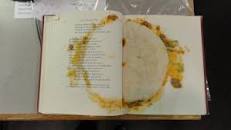
The other day, in a workshop with Sarabande Books, someone shared the story of a librarian discovering a taco in the center of a book.
A taco.
Squished in the pages.
A taco.
Note: This is the actual image. Here is the link to the taco story (and other horrific “bookmark” offenses).
I’m thinking this a ticketed offense.
Forget book-banning and charging librarians for providing access to literature, a rant I could blog about for all of time.
I’m imagining the yuck and guck librarians discover within pages and on shelves.
Even though I’ve stacks of bookmarks, mostly free from libraries and writing conferences, I rarely use them. I mean, I rarely use these cleverly quipped card-stock objects to track my reading progress.
I use many other items in place of bookmarks, though I’ve never used a taco.
Currently, I’m in the middle of eight books, give or take.
And while I searched for the quote, I found a bookmark, though not placed as a marker in order to return to my previous reading session, but instead, my form of “dog-earring” (another ticketed offense) an important page.
The bookmark? An unused Barnes & Noble gift card, dated 2015 for $25 and yes, it still worked, cashed in by my son for a fresh read.
So I photoed the bookmarks from my current stack for you.
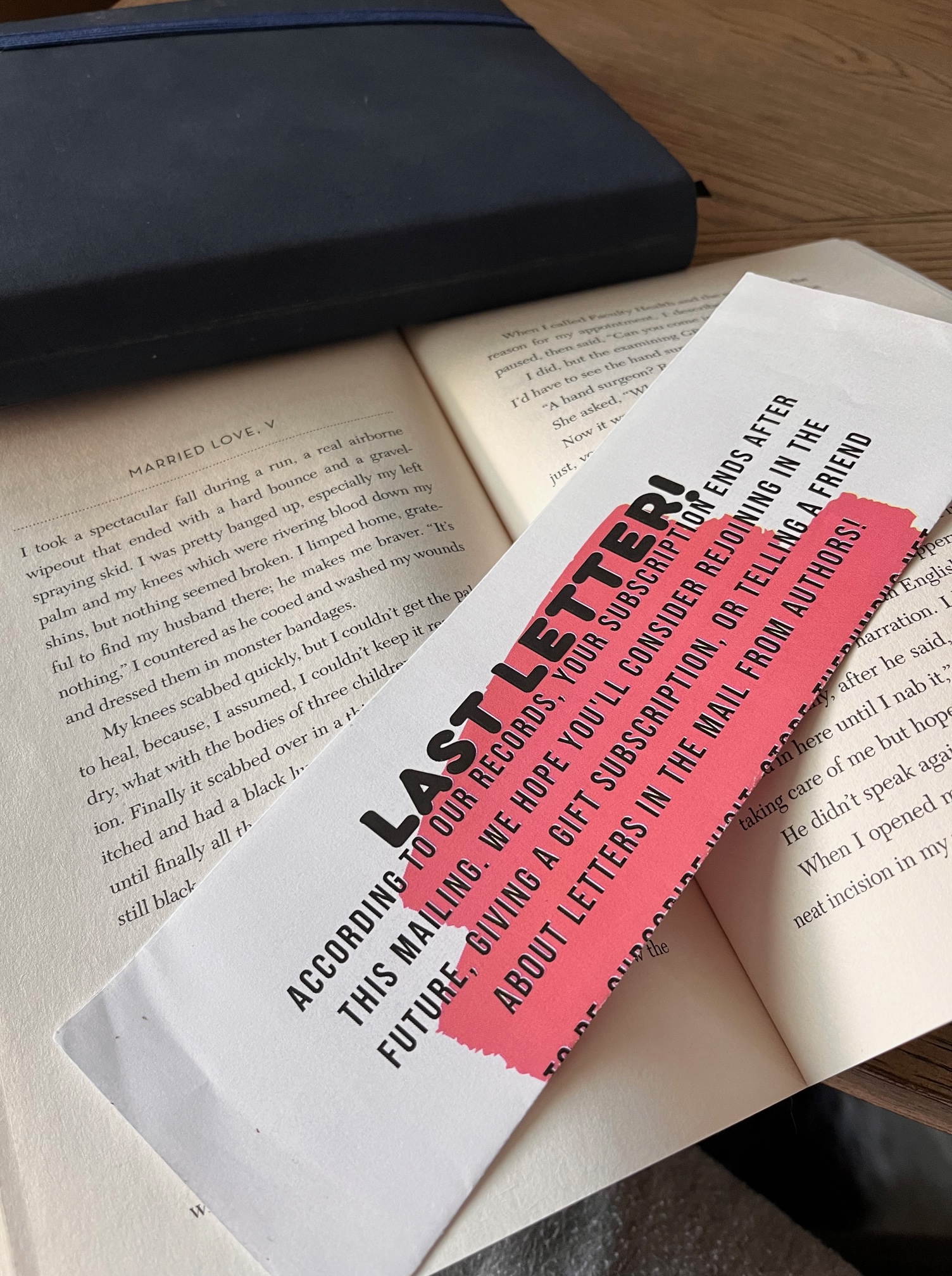
I’ve a note from The Rumpus, letting me know my Letters in the Mail subscription was about to expire. Sometimes, I use one of the letters to save my place. These writings are stuffed with insight and inspiration, so yes, I’m still a subscriber. This month’s letter, six pages, included pictures, from Sequoia Nagamatsu! Priceless.
My hospital allergy wrist band from my most recent surgery, April 19th, 2023, which I’ve not told many people about (yet) as I’m still recovering and healing and adapting. Sometimes I forget I’ve allergies, like Sulfa drugs and Codeine, which could turn even a simple procedure deadly.
Some of my most treasured bookmarks include little notes from my Miracle Son, Zach. This one he left on my nightstand after my rough day with high pain and a low mood.
I’ve a coaster reminding me to love. Always.
And a nifty metal-art bookmark that clips to the pages.
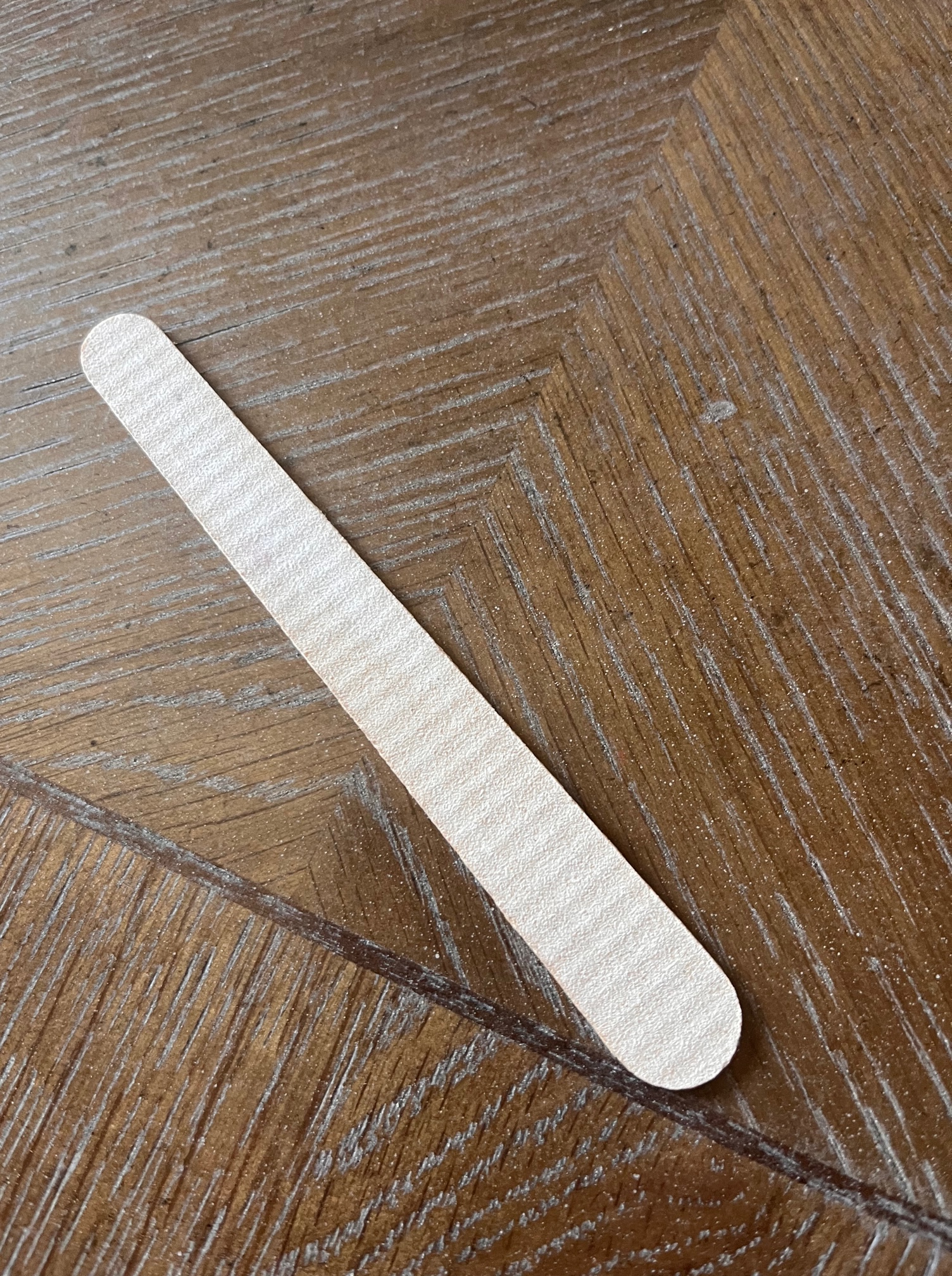
And an emery board, though I rarely locate these devices when I’ve a snagged nail.
And numerous fortunes which have yet to come true, but still, I save them, repurposed for place-keeping between pages.
Now I’ll share a secret with you.
The secret to finishing. Most anything.
The act of finishing is often built on momentum and can relate to, yes, bookmarks.
In March of 2007, I worked with coach E. Dan Smith, author of Your Lifebuilder. I loved his work and sought his coaching as I continued to hone my skills as a Life Coach and Fitness Professional. In one of our sessions, a time I felt “stuck” and unable to finish several projects, Dan asked, “How many books are on your nightstand right now? Books you are in the middle of reading?”
I counted. I’m sure there were more than eight, but I don’t remember the number.
“Bookmark each one,” he suggested, and, “Shelf all but one. Finish reading just one book. And then another. One at a time.”
The idea garnered a feeling of finishing. I understood the technique as an Empowerment Coach, offering similar approaches for my own clients, suggesting spaces they felt they could “tackle” and “finish,” like clearing a junk drawer or one shelf in the fridge.
Once you finish one thing, there’s movement and a sense of completion, which propels you to begin finishing.
Today, 16 years later, I’ll incorporate this concept, move my half-read reads to shelves and dive all the way into just one book, which, once done, I find that I’ve completed other tasks, like editing another chapbook or a project on the home-front, such as resurfacing a desk for the spare room.
So, if you’ve a stack of reads and another stack of stubborn projects to finish, you might try this Bookmark Approach.
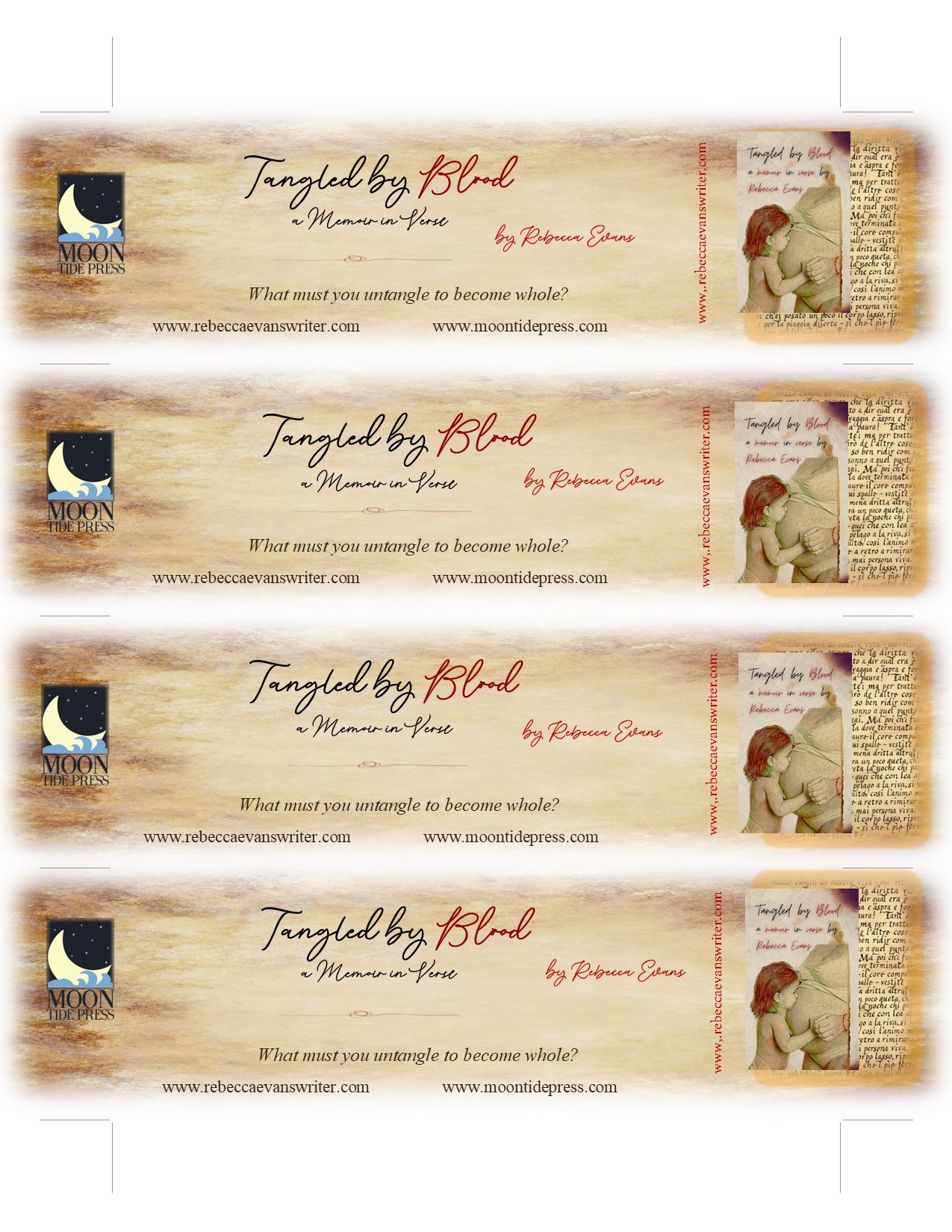
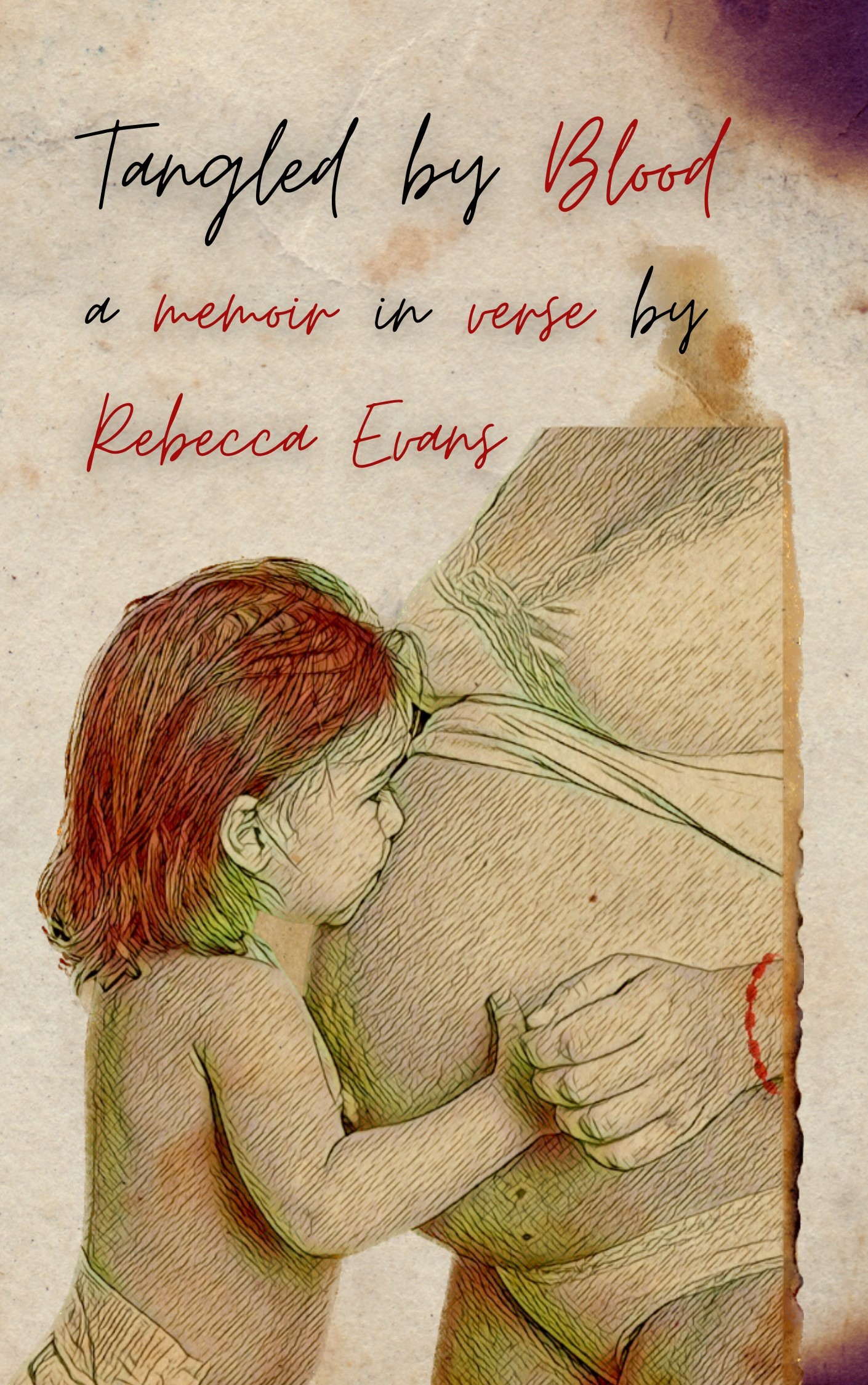
Note: This year, at AWP, which coincided with the pre-launch of my memoir-in-verse, Tangled by Blood(Moon Tide Press), I designed “business cards,” coordinated with the tone and mood of my book.
NOTE: If you pen or journal or sketch difficult experiences, this tool might prove a useful method to “contain” yourself once you exit your writing. Of course, you can “catch” yourself anytime you’d like.
~
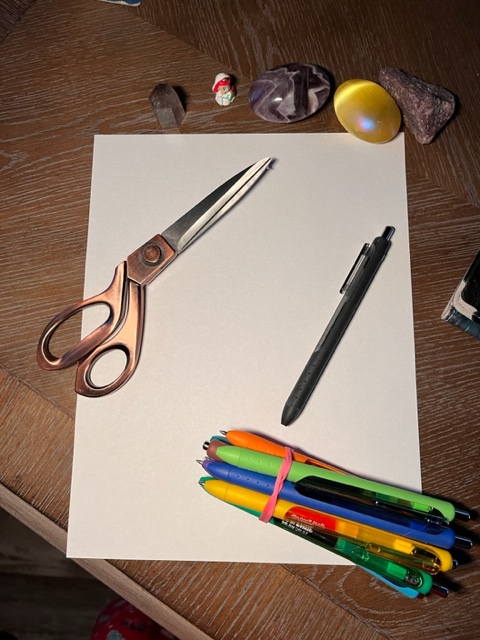
Gather what you need
Paper…Colors…Fave pen…Scissors…A small witness…Stones…Crystals
~
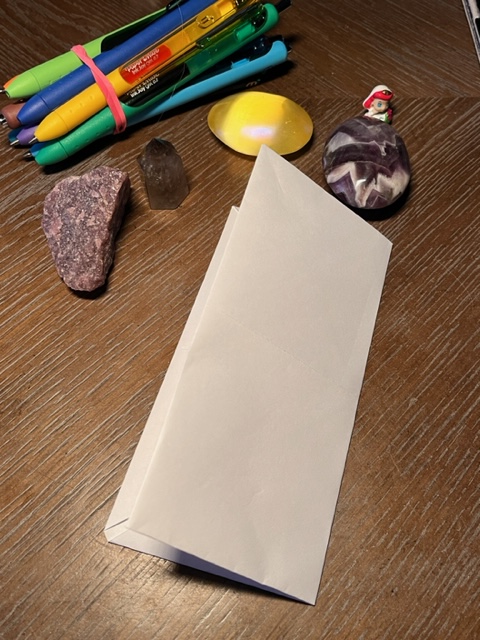
Fold paper diagonally, lining up two sides
~
Cut the top edge so you are left with a…..
~
square
~
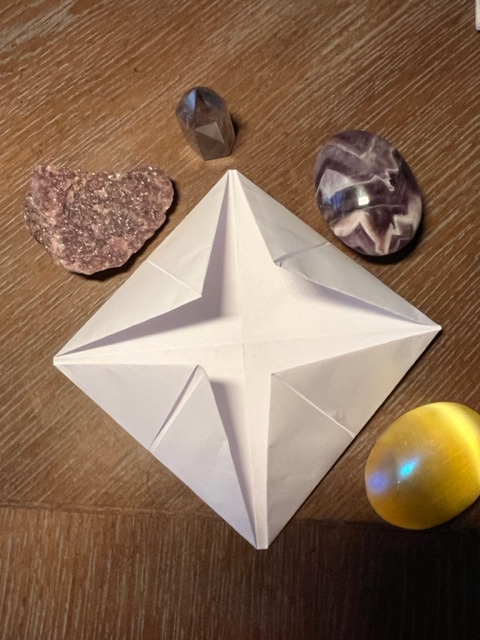
Fold all corners
~
Towards center
~
Seek your center
Have you forgotten…
…you have a center?
~
Fold your square in half
How many times have you folded in half?
~
Fold the corners towards the center
~
Keep folding…
~
Yes
Sometimes you must repeat yourself
~
Fold the square in half
~
…and, yes…
you are again repeating
~
Slide your pointers and thumbs under the four flaps
~
Yes
It resembles an open mouth
Yawn if you must
or
Howl
~
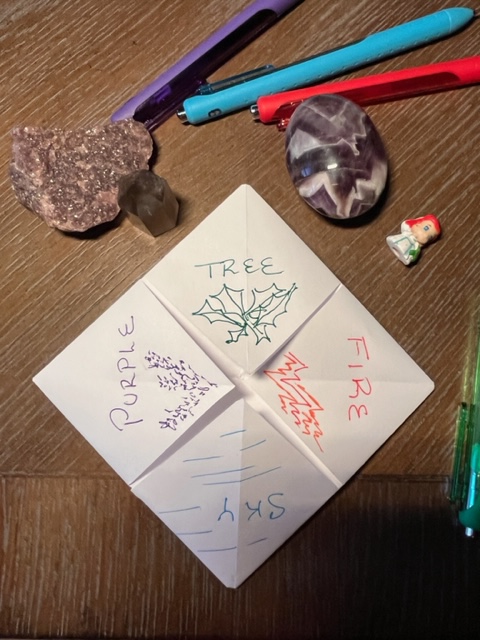
Like you, your Catcher lives in layers
First Layer: Label colors
~
Second Layer: Label Senses
Yes, you’re a writer
Have you forgotten?
Be specific
Include sensories you love—your musts, your longings
~
Divide your Final Layer, your Deepest Layer
Don’t hurt yourself
Use a pen
~
Deepest Layer: Label an activity that centers you, grounds you, elevates you
Fill in remaining triangles
~
Now play
You only need yourself
Did you forget?
Place your thumbs and pointers back under the flaps
Choose a color from the first layer
Move the flaps in and out and side to side and, in time with the letters, spell out the color
Stop on the last letter
Note the sense
Move the flaps in and out and side to side in time with the letters, spelling the sense (ie, smell)
Stop on the last letter
Note your destination
Catch
&
Contain
&
Restore a piece of yourself
You might end up taking a bath while listening to cellos surrounded by lavender
When I read the call for The Elpis Lettersfrom Kayla King, my thoughts turned to my adopted sister, Tina. If you’ve read my poem “I wanted to be your wall,” (earlier versions published as stand-alones and an extended version in Tangled by Blood, my memoir-in-verse), you already know Tina and you’re already familiar with this poem.
What you might not know is that when I first wrote this poem, it wasn’t a poem.
It was an essay.
And it wasn’t written from the POV of Tina.
It was written from the POV of my bedroom walls.
It opened like this: “Pale blue like a time somewhere before sunrise, they drip with tears. ‘Did you notice your sister’s sacrifice?’ they ask.”
Not my childhood bedroom – but one I dreamed of dwelling.
When I revised this work, I switched the POV to third person and fictionalized my childhood trauma. I couldn’t capture the “story” this way either. Perhaps because it was still too far removed.
Perhaps because it felt like someone else’s story.
“I wanted to be your wall,” turned into an offering of agency and autonomy for Tina, for me, for other victims of childhood sexual trauma. The poem granted Tina a voice, me my voice, and, it is my hope that it gifts a voice to those who’ve been silenced far too long.
Why bother sending this poem for a re-print in an anthology once it has already entered the world?
Why bother reprinting any piece of writing?
I’m not comparing myself to anyone as gifted and brave as Ilyse Kunitz or Brian Turner, consider this only an example. We—Ashley Kunsa and Shaneen Harris and myelf—the editors of When There Are Nine (Moon Tide Press, 2022), opted to re-print (with permission) Brian Turner’s, “Milh” and Ilyse Kusnetz’s “Harbinger.” In doing so, we curated collected poems and created a conversation. Both Brian’s and Ilyse’s poems continue to live on and in a new way within this anthology.
Every time a poem is set or read alongside another body of work, including music and visual art, it shifts, altering the way we observe and absorb the words. It transforms how the poem enters the world and our hearts.
Offering “I wanted to be your wall” as a letter—an opportunity to share space with many other difficult and beautiful letters—changes the way the poem reads and feels. It also keeps the conversation going—the #metoo, #survivor, #childhoodabuse, and more.
So, even if you’ve read my poem a hundred times or once, I hope you’ll gather a few quarters, order The Elpis Letters, sip a cup of tea or glass of wine, nibble from a platter of cheese and olives, and read and re-read the letters within the pages of this gorgeous anthology.
Homemade Chai Tea Latte with anise and cinnamon stick in glass mug on wooden rustic background. Top view
I finish most 30-day programs in about a year. No. Usually a few years. I used to pummel myself over “slacking,” until I realized I’m not a slow learner. I’m an applied learner. Maybe I adopted this trait after a few decades in the fitness industry. The it-takes-21-days to change a habit attitude. Somewhere between counting crunches and lunges, I started focusing on the change, not the numbers.
True habit-changes live within micro-movements and value-system shifts, not exterior physical acts, which can often become, well, an act.
We’ve all gone through the motions.
We’ve lived the fake-it-til-you-make-it movement.
We’ve also faked-it-to-get-through-it; those sappy dates, the bland entrées at friends’ dinner parties, the bad hair days (or weeks or months).
Stressful hair at the start of the pandemic, 2020
I argue that faking cannot bring lasting change. When I masquerade, I feel I’m bluffing. Like I don’t really mean it. Plus, I found that in my impersonation—the faking-it—I often merged into a shape-shifter—a chameleon, really—altering myself for approval or a sense of belonging, me pretending to be (or not to be) my truest self.
This is not the change I seek.
I’m talking about fostering values as you form a new habit or as you quit a less-than-good one, which often requires more than 30 days. I like to quip, Fitness is an inside job. Emotional Fitness. Spiritual Fitness. Family Fitness. Career Fitness. And yes, Physical Fitness.
For example, I’ve maintained a kosher diet for almost 30 years, but I kashered my kitchen for the first time in 2017. For decades, the dietary principles of kosher living made sense:
Don’t mix meat with dairy.
Avoid pork.
Avoid shellfish.
Hand-wash and recite a blessing before consuming bread.
Recite a blessing for various food types/groups.
…and so on. I applied these almost overnight, mostly as a desperate attempt to control my Bulimia and Anorexia while serving in the military. Going Kosher meant un-doing self-harm. It also meant a false sense of control in one area of my life I felt utterly out of control.
Surface change.
And yes, this works, but with limits. I’d fall away from my new habit in times of weakness and stress and boredom. I’d fall away because I lacked conviction regarding this habit.
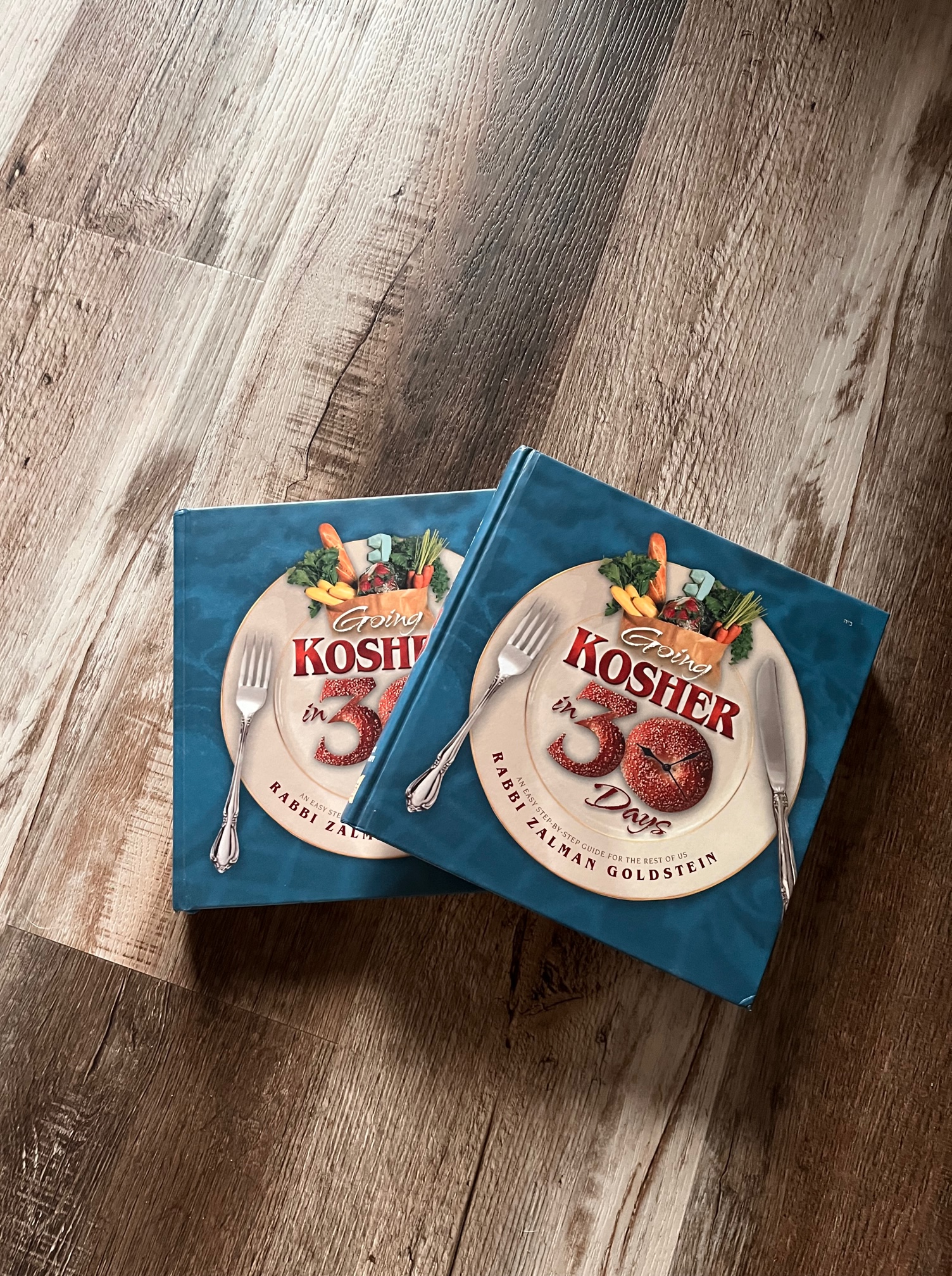
Seven, maybe eight years ago, my Rabbi gifted me Going Kosher in 30 Days. It took me a year to read the book. And another year after I lost the book and was gifted a second copy. And then one more year to digest the concepts (pun intended).
My two copies of Going Kosher in 30 Days
Why avoid shellfish?
Well, shellfish are bottom-dwellers. If you are what you eat—the nutrients and the nature—you become the substances you consume. Got it. I don’t want to be a bottom-dweller.
Piece by piece, a deeper understanding of my WHY created conviction, and this conviction revised not only a habit, but a lifestyle and a belief system.
I could dive into every Kosher-keeping concept for you, but I’ll save that for another blog because it’s fun and fabulous. And though I’ve practiced a kosher diet for nearly three decades, it took three more years to keep kosher in my heart.
I’ve read Julia Cameron’s The Artist’s Way six times, each time took close to a year. Each of Cameron’s recommended weekly challenges lasted at least a month.
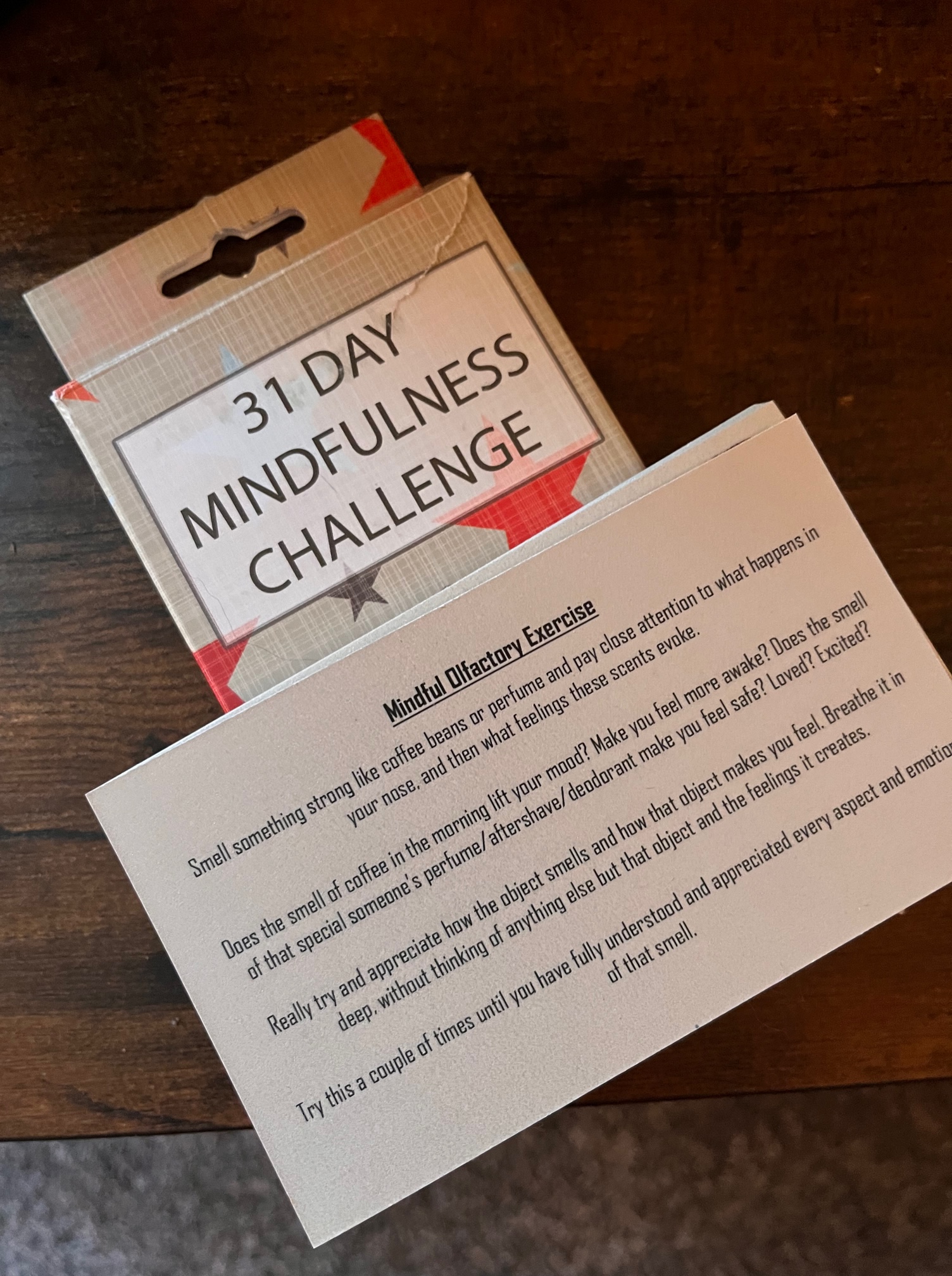
Driving my sons mad through the mindful art of smelling everything, every day, all the time.
These mindful movements feel more challenging than keeping kosher. And this one, sitting with smell, which, as a writer, is triggering significant memories and doubling my journal entries in the morning.
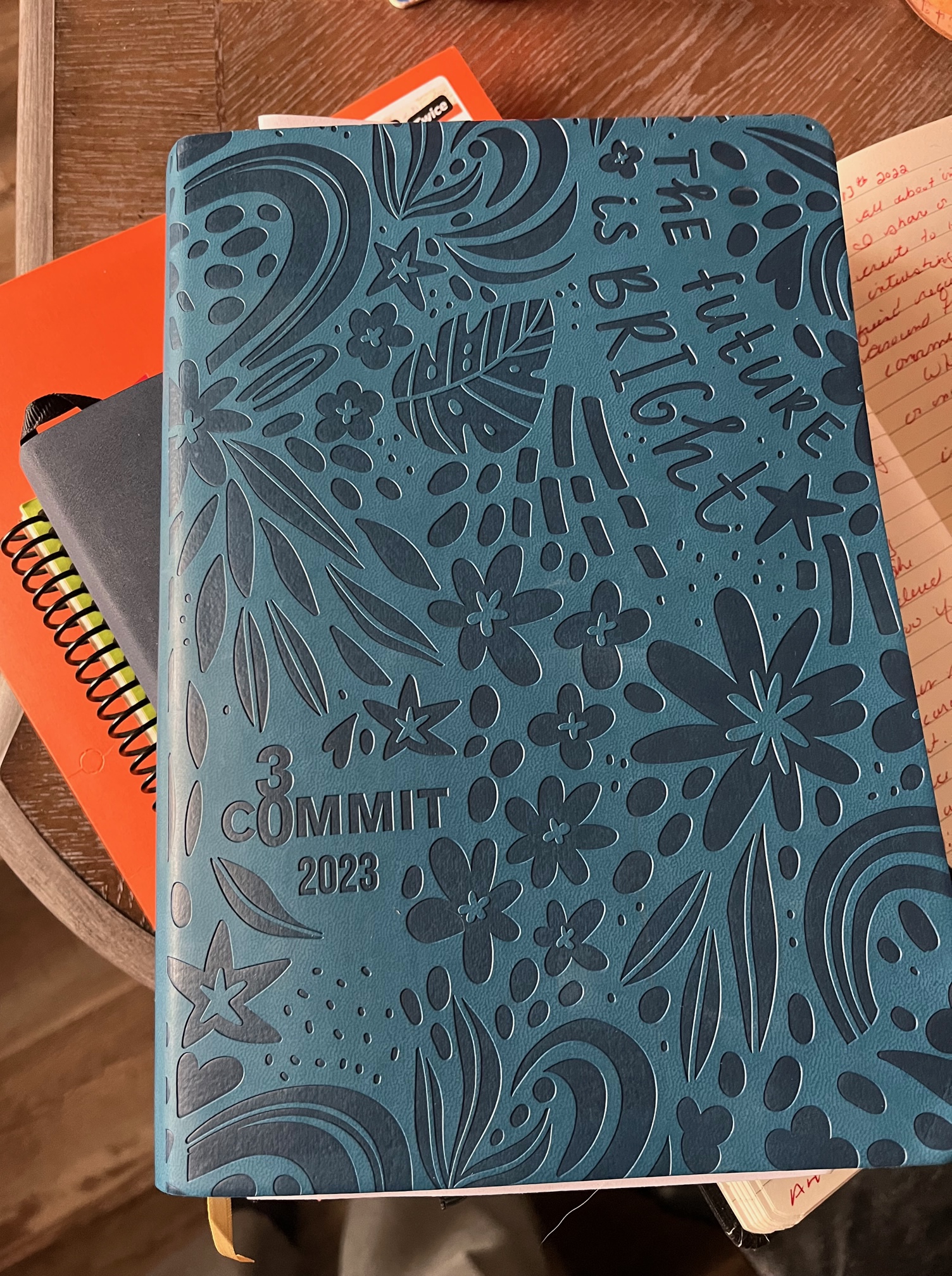
The 30-day “program,” if you want to call it a program, that works for me is Commit 30, which is really a motivational Day Planner. With this tool, I commit to a micro-movement (see how we return to this little thought from the beginning of my rant?). A micro-movement is smaller than a movement, smaller than a step or a blink. It’s more like a quarter-step or a half-blink. It’s a concept from the incredible SARK.
Love me my Commit 30 Day Planner!
In my Commit 30, I might commit to drinking eight glasses of water every day for 30 days. That’s it. That’s my big goal for the month. I’m well aware of the benefits this habit brings. I know the value of drinking more water. I already carry the conviction. I need not realign or re-inform my belief system to garner a deeper understanding.
What I need? I need to REMEMBER to drink the damn glass of water.
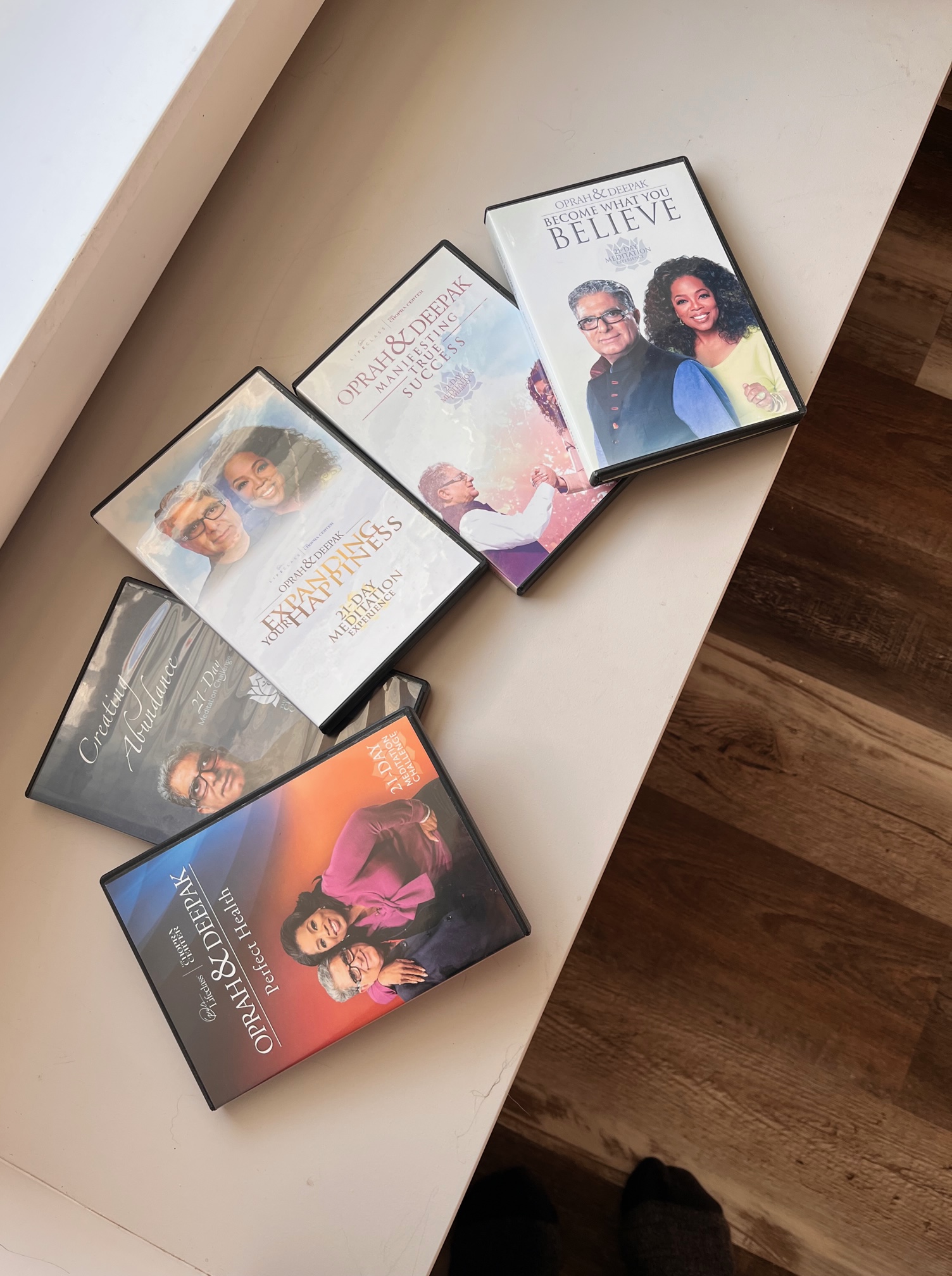
I move through my year in this micro-movement dance – drink more water, no coffee after two, cook for the week on Sundays – all habits I’ve formed, but tend to slide away when schedules turn dense, or a medical crisis arises, or perhaps, a pandemic. And while I micro-move, I slowly, slowly ingest something larger— the 21- or 30- or 31-day challenge that takes me years—creating an abundance mindset, engaging with my senses, opting out of certain foods, opting in on my best life. Through this gradual absorption, there is an ingraining, a re-blueprinting on a cellular level. A resolution beneath my skin, offering a conversion of my essence rippling into the world.
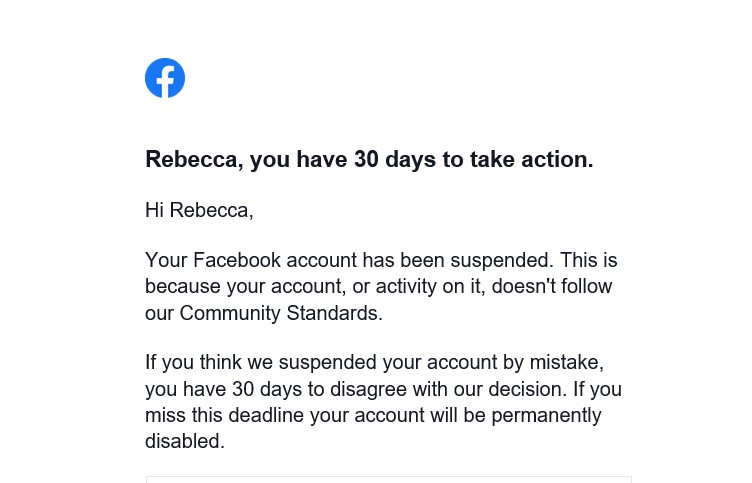
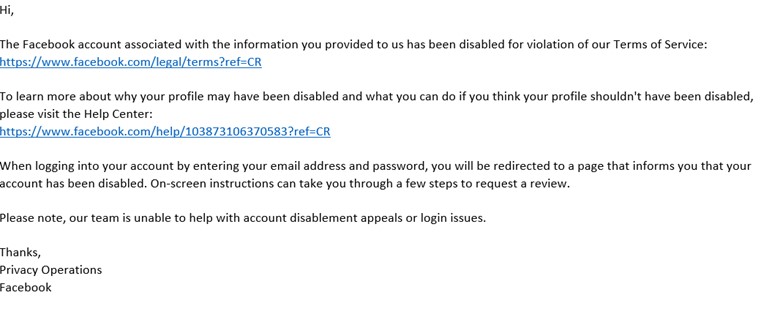
Meta disabled my Facebook account. Okay. Meta disabled my Facebook AND Instagram account. I was officially Meta-disabled one minute after receiving an email requesting I secure my account because it “looks like” someone may have accessed my account.
I tried to secure my account.
I changed my password.
I waited for the security code through a text.
I waited.
I waited with a new and pending disability.
No text. No code.
I’d only waited a minute, because the next email (a minute later) informed me that my account had been suspended. Though, when I went to log in, they did label this a “disability.”
I spent the next few hours digging the rabbit hole research that, as a writer, I normally thrive. I love finding odd and unusual tiny objects, offering some grand reveal or discovery. Like the time I Googled the type of cigarettes my grandfather smoked and then I kept going, because this is what a writer does. My grandfather penned an essay about a cigarette moment as a POW in 1944.
Thomas Noesges, Back Row, Standing, Third from Left
In my grandfather’s published essay, he said, “They took me to a barracks type of building and told me an ambulance would soon be here to take me to a Lazzarette (hospital) where they had very good doctors who would repair my ankle. While I waited for the ambulance, a German in the uniform of a sergeant of the Luftwaffe approached me and offered his hand in friendship. “I am the one who shot your aircraft,” he said in perfect English. “I am sorry for you and your friends, but for you the war is over.” I asked what type of fighter he flew. “Focke-Wulf 190,” he answered. I offered him one of my cigarettes. He accepted and together we smoked and sat in silence for a brief minute. He saluted me and left.”
Yes. Grandpa Tom shared a cigarette with the German pilot who shot his aircraft down over Prerov, Czechoslovakia enroute to Blechhammer on Dec 17th, 1944. I’m curious. I wanted to know the brand of military issued cigarettes in WWII and specifically, the brand my grandfather shared while in captivity.
NOTE: Those interested, between WWII and 1976, soldiers received in their rations, a mini-pack of either three or four Old Gold, Lucky Strike, Camel, or Chesterfields along with waterproof paper matches.
I like to think Grandpa smoked Lucky Strikes.
While in the cigarette rabbit hole, I’d a memory, as is often the case. Early in my military career, and by this I mean the first week of boot-camp at Lakeland AFB, Texas, I pretended to smoke. I pretended because I was great at pretending growing up in childhood abuse. I pretended because I wanted the extra “smoke break” afforded smokers. I also pretended so I could feel “cool” and make friends with the other, cooler recruits.
Here’s what I didn’t smoke.
Virginia Slims—menthol and filtered.
The cigarette burned away in my hand, sometimes scorching my fingers. I’d no clue how to take a drag and, after a few “breaks” the TI called me out. Which proved fine. I couldn’t afford the four bucks a carton (I think this was the commissary price in 1985), an extravagant non-habit to invest. And the smokers knew I was a faker. I’m a terrible actor. I most likely lost potential friends in my fake-week-long-almost-smoking non-habit.
I digress.
I loved the Re-search and the Re-memories of cigarettes and smoking and my relationship with myself and the world around me. In 1985, I held no identity. In 1985, I tried to fit in.
Sometimes I still do.
I thought I’d find the same joy Re-searching how to Re-enable my now disabled Facebook and IG accounts.
Here’s what I discovered:
If you look up How to contact Facebook, you will find one of two phone numbers. Both lead to recordings that guide you to log into your account.
The challenge is, if your account is disabled, you can’t log in without the code you receive via text.
If your account is disabled, you won’t receive the code.
If you attempt to log in or contact Instagram, you’ll be redirected, I think they called it “encouraged,” to log into your Facebook account for assistance.
Return to number one, begin again. And loop.
NOTE: Completely UN-fun rabbit hole.
This couldn’t happen at a more opportune time. I have a book entering the world.
I plotted a marketing plan for my book involving social media and my newsletter.
I had social media plans.
I had plans.
And, at this juncture, I really had two options:
Quit – Give Up – Throw in the Towel – and Throw a Tantrum
Re-Route and Re-Frame
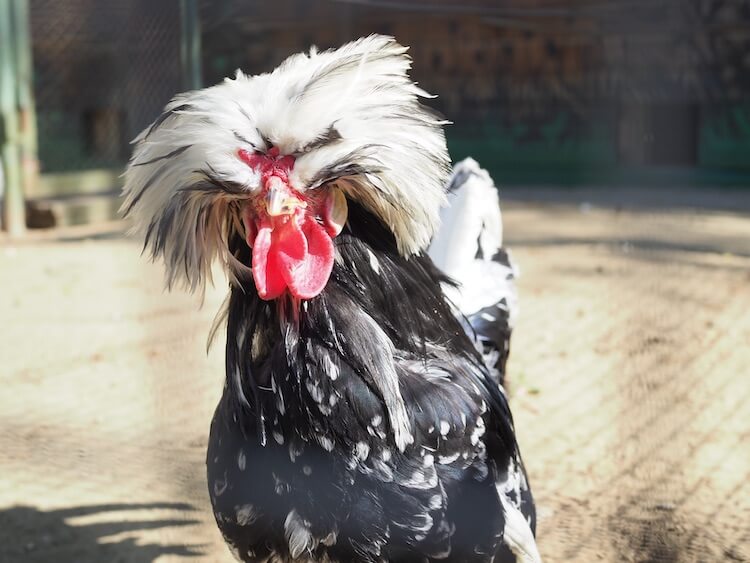
I opted to Re-route and Re-frame because I’ve a neck injury and the last time I threw a tantrum was on January 17th, 2017 after closing simultaneously on two homes and moving my three sons and myself and our two pugs and chiweenie and four chickens and a bearded dragon and a guinea pig in three 26-foot Uhauls during Snowpocalypse, Idaho.
I focused on the chickens.
My friend and handy-dude, Kevin, built—more accurately, rebuilt—their chicken coop in the back yard in two feet of snow. Okay. 15 inches. But you navigate hens and pigs and pugs through snow and I promise you, your memory will file TWO FEET.
I remember throwing my neck out throwing this tantrum. I spent the following week unpacking—and yes, I unpack without sleep until I feel settled—with my right hand numb and that firing nerve-ending pain that nothing, I mean nothing, alleviates.
The chickens survived.
I did too.
Last week, the Facebook Meta Universe felt more challenging. I Re-routed and Re-focused my marketing “campaign” (that’s what I’m calling it) on my newsletter/email list and Twitter. There’s little action and interaction on my Twitter as I mostly re-post from my Instagram. I also share Ilya Kaminsky’s Tweets because he quotes poetry, love, a worthy cause, and I admire his incredible lens and worldview.
See what I mean?
At some point, prior to my new Meta-disability, I noticed the “Share To” button on my Instagram as I re-posted to Twitter (and Facebook). There’s a community called Tumblr.
I lost myself. For a day. Okay, probably three. I fell into the great art on Tumblr, and, this community feels a lovely blend between Instagram and Pinterest. Which reminded me that I have a Pinterest account which has been without attention for six years.
I’ll just leave Pinterest right there.
In the meantime, two days into my disabling social media almost-crisis, one human (thank you, Erin) sent a text, asking if I were okay because she noticed in a group DM on FB that my account was – well – disabled.
If my new disability was more severe, say, heart failure, I would’ve perished. So I did the only thing a normal person who relies on social media (so I thought) does – I sent out a mass email. I wanted to post my Happy Valentine message, and without FB or IG, I felt limited. I wanted to share my Valentine podcast from MING Studio.
Towards the end of my email, I mentioned my current Facebook and Instagram disability.
From this email, ten out of 600 responded with sympathy and an offering to post about my forthcoming book. (Yes. I know how lucky I am).
So here, three days out from my new-distant relationship with two of my social media platforms, I sorted some math. I’m not a fan of math. I’m a writer. But I did the math.
I’ve about 5,000 close and dear friends on Facebook. People from high school, universities, the military, my Jewish community, family, my writing community, and many others who lovingly tolerate my existence.
I’ve another almost 3,000 peeps on Instagram, though I’ll assume that most are duplicates from Facebook.
Another 1300 on Twitter, 3300 on LinkedIn, 250 on Pinterest, and I think five on Tumblr (which I’m most proud).
Let’s narrow this.
Imagine I’ve only 5,000 connections total.
Of 5,000, eleven have checked on me.
This is less than one percent who noticed I no longer existed on two social media platforms.
To be fair, the majority of my close friends rarely use social media and are in touch via in-person coffee, phone calls, texts, and emails. These humans have consistent verification of my alive-ness and rarely comment on my posts, well, because we have our relationship in real time and most of what I post, they’ve already heard me process or whine or luxuriate over. And. They’ve already offered their two cents.
But if less than one percent noticed my absence, I needed to ask myself, “Why post on FB and IG?”
Certainly not for book marketing or sales.
Possibly for my ego – relating “likes” and “hearts” to acceptance and belonging. I’ll process this one with my therapist later.
Potentially to feel a sense of connection to those who live in other time zones, whom I rarely see, but I care about and want to stay in touch and social media is easier than writing letters to 5,000 (or 13,450 if you combine these platforms with my email campaign, without the five on Tumblr and 4,000 contacts in my phone).
NOTE: Yep. 4,000 telephone contacts. I’ve made friends. I circulate through a variety of communities. I connect. I try to keep in touch. I’m not very good at this. Social media has given me a method of outreach.
Most likely my ego. I’m a driven human, though not a competitive one. Yes. There’s a difference. I like to know I’m moving forward. I like the measurement stick that I’m evolving. I like to know I’m making a difference.
Maybe not my ego. I do hop on social media for 10 minutes twice a day. The first thing I do is send Happy Birthday messages. In 2014 I struggled. My neck had collapsed. As I Re-habbed, I felt isolated, alone, and with my body uncooperative, I fell into an ocean-deep-depression. I dreaded my birthday that year (and quite a few before). But something happened. I’d received over 300 HAPPY BIRTHDAYS on FB and kept checking throughout the day. I felt seen. I felt remembered. And it mattered. And so, I post a happy birthday message every morning for those I know who have a birthday.
Please NOTE: If you are my Facebook friend and you have not received a happy birthday message from me it’s most likely because my account was disabled. Or I was suffering in my own disability and not capable of reaching out that day. I’m sorry. Happy Beautiful Birth Day! I love you.
Ego or not, I try to lift others with my posts. I focus on intention – what is this about, what will this offer, how will this help? Much like I approach my writing. I post about funny things in my home, my Newfoundland puppies, my mis-adventures, my blessings. I try not to kvetch. I try to leak some sparkle into the world. I think of technology as an opportunity to bring more good – though I think we’ll soon see with AI and library closures and book banning, there will be less and less sparkle in the world.
And still, maybe not my ego. Maybe my heritage. My Jewish Pride. Every Friday, I post a Good Shabbos message with a picture of something that represents light.
This post reminds me: Come from a place of Love and Light. I don’t always succeed. I do always try. And maybe my message or image reminds someone else, there is still Love and Light. Maybe when it feels like there is not, we can be that Love and Light for one another.
This brings me back to my disabled account. Stay with me.
By the eighth day of my FB-IG-disability, after going through Meta’s Privacy Policy contact (which you don’t need account access to fill out this form), someone from the Meta Universe replied via email:
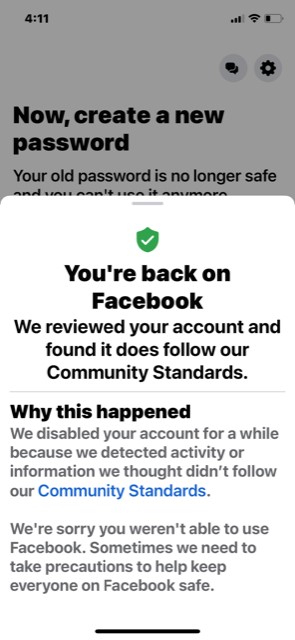
And though they said they couldn’t help me, I received a resolve the next day from both FB and IG.
AND
NOTE: For now, my account is “restricted,” though I’m no longer disabled and clearly hacked. I’m trying to understand what this restriction is and means. I can see that the hacker charged $128 for an ad campaign, and yes, my credit card was used for this, and yes, I’ve disputed this at my bank, and yet…yes, I’m restricted.
The rabbit hole always, and I mean always, offers awareness and opportunity to shine.
Keep reading.
The situation didn’t end. Whoever hacked both accounts, and yes, the accounts are connected but with different emails and passwords, posted some awful antisemitic images.
My brother said, “Don’t take it personally. Just think of it as someone spray-painting your garage with hateful graffiti.”
I’m not sure I feel better yet.
I realized that there’s this possibility: Perhaps my good-intentioned Good Shabbos messages, meant to bring Light to the world, brought chaos and hate to me.
I wasn’t angry. I was shaken.
I yoga-d, EFT-ed, journaled.
Then I Re-Grouped and Re-Framed and Re-built my accounts to a “friend-only” base and Re-moved my public-viewings.
I never journeyed down a true research rabbit hole with my Meta-disability. I ended up in my inner rabbit hole instead. I sorted my “why” on social media:
I want to offer good in the world.
I want to champion others.
I’ve worked hard to rebuild a career in writing following a sharp turn out of the fitness industry, a place I felt successful.
Social media offers me space to share my wins too. So yes, I want to champion myself as well.
And I’m wondering if I need this. I’m wondering why I need this.
I’ve never been a bottom-line success measurer.
Instead, I’ve focused on living a significant life. I teach HS teens in the Juvie system. THIS is significant. I’ve raised three incredible young men. My most significant accomplishment.
Now. I’m back on FB and IG.. Now. I’ve a new Tumblr.
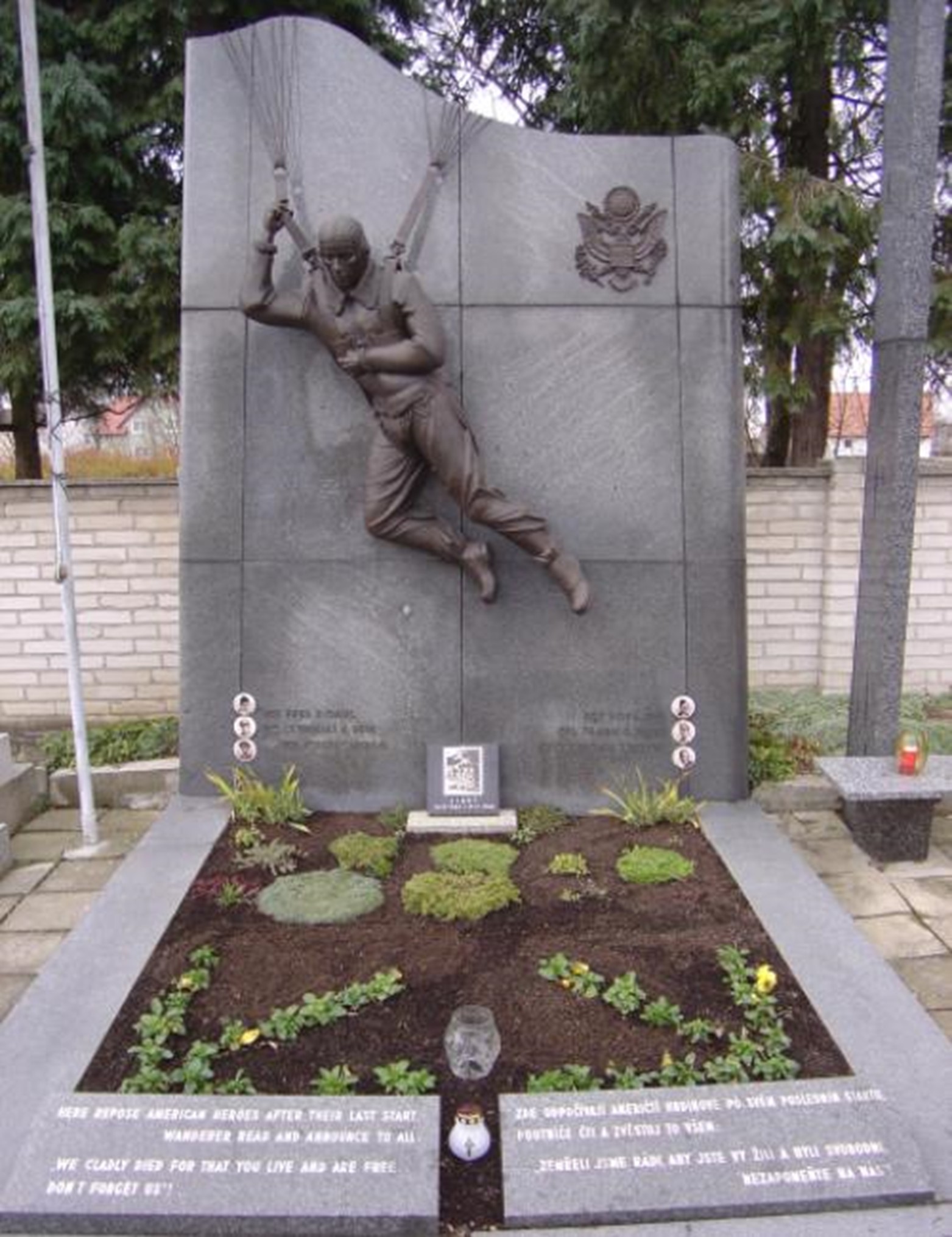
And today and still. A statue stands in Troubky, Czechoslovakia, marking the existence of my grandfather’s journey.
And I remember that I come from a lineage of warriors, including a grandfather who shared a cigarette with someone who, labeled as his enemy, became a fellow human in a shattered world. Only four out ten of my grandfather’s crew members had survived the attack.
Here repose American heroes after their last start
Wanderer read and announce to all
We gladly died for you that you live and are free
Don’t forget us.
And perhaps this is what writing and publishing, and social media posts and shares offer – a sort of bronze statue – a singular moment signifying “I existed.”
I did this thing.
I witnessed.
I was here.
(If you want, feel free to respond with your social media WHY.)
In The Artist’s Way, Julia Cameron advises, “Mend something,” or “Unclutter,” and “Re-organize a drawer, a closet, a day planner.” If you follow this, you’ll find your keys, your purse, your sunglasses. You’ll also discover rhythm and momentum in your writing. See, the way we live correlates to the way we write. One popular empowerment tool I’ve used for over two decades is the Life Wheel. This offers a visual, showcasing how categories in life overlap one another. For example, when you focus on improving your financial health, you’ll notice progress in other areas such as a reduction in stress, which improves your mental health. And if you’re less stressed, you’re most likely more relaxed and more fun to engage with, which helps cultivate relationships. And if you’re minding your money, you might find that you can afford healthier organic food (which I hate the way “better” food costs more, but that’s a different topic for another day) which, in turn, improves your physical well-being. And so on.
In the world of writing, I find that everything contributes to my writing journey.
Life fuels the writer.
Writing informs life.
The manner in which you live and the intention behind your action(s) (and reactions), impact you as an artist. How you think and your lens of the world is all a part of your narrative.
So why not consider your brain a prime training ground, offering opportunity to orchestrate and spill into better and more succinct methods as a human, as an artist?
Cameron offers de-cluttering, re-organizing, and mending as ideas. I add to this, offering: redecorating. Yes, you can execute a home makeover on a modest budget. Paint and throw pillows and tosses extend a long way, transforming image, energy, and emotion in a room.
I believe that as the brain engages and streamlines tasks in our daily affairs, such as re-grouping and re-processing, these skill sets drip over, pouring into areas, such as writing, painting, choreographing.
If you need to cut words, cut the fat, cut the word count, consider focusing on decluttering, something, anything, somewhere else in your life. One of my favorite tips from master organizer Peter Walsh suggests to completely empty a target cluttered area, say a junk or large utensil drawer, and place everything from that area in a box or container. Set the container in another room, like the garage. Each time an item is needed, add it back to the drawer or closet. After six months, you’ll gain a clear vision of frequently used items and a clearer idea of things no longer needed. For seasonal items, store them with the decorations for that season. For example, Chanukah cookie cutters could be boxed with dreidels and menorahs.
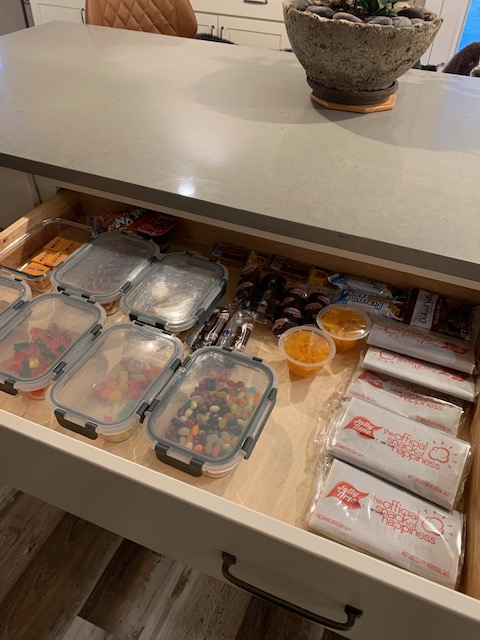
As I worked my way through remodeling, I redefined my use of drawer space, gifting rarely-used items to others. With new space, I created a snack drawer in place of a large utensil drawer. This has saved hours of searching for a quick and easy nibble between lunch and dinner.
Easy, accessible snack drawer.
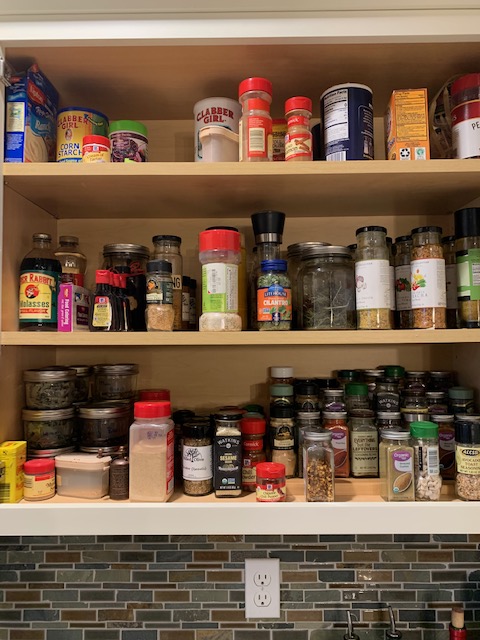
One challenge I faced during my re-model was maintaining my kosher restrictions. There’s already planning involved: where to store your spices (near the stove, of course)
…and where to place pots and pans (also near the stove) and where to shelf the oversized serving dishes. A kosher kitchen includes this process but multiplies it by three. Most kosher-keeping Jews separate meat from dairy and pareve (neutral foods, such as eggs) from both. This means that many kosher kitchens have three of everything: three sets of dishes and utensils. Three sets of pots and pans. Three sets of baking items. Many also maintain two ovens and two dishwashers, though in my house, we hand-wash instead. As I de-cluttered these areas this summer, I heavily re-organized my manuscript, clearing away poems that failed to stay in conversation with the body of the book or moved away from thread.
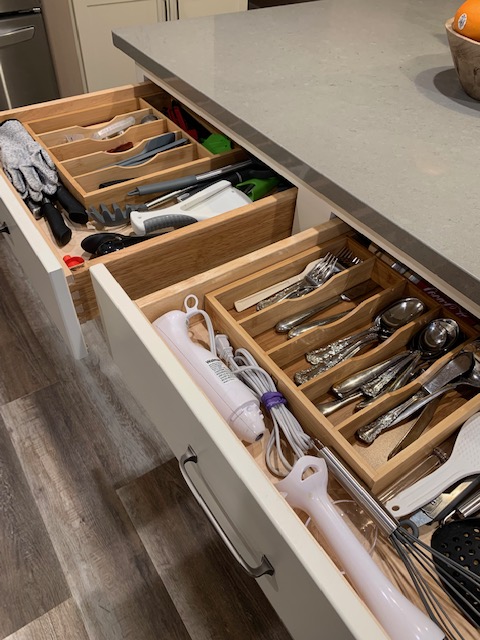
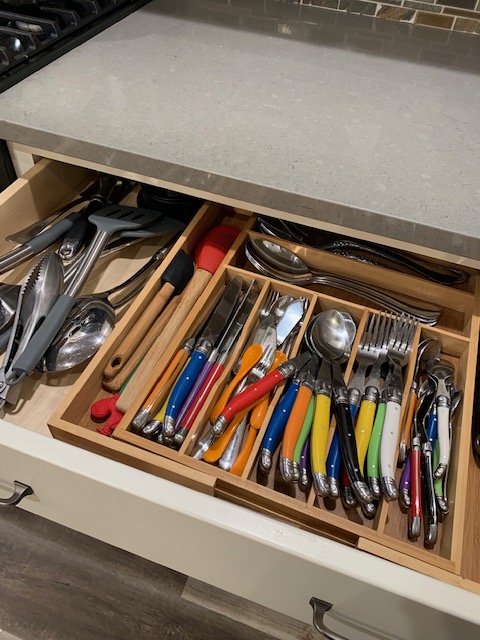
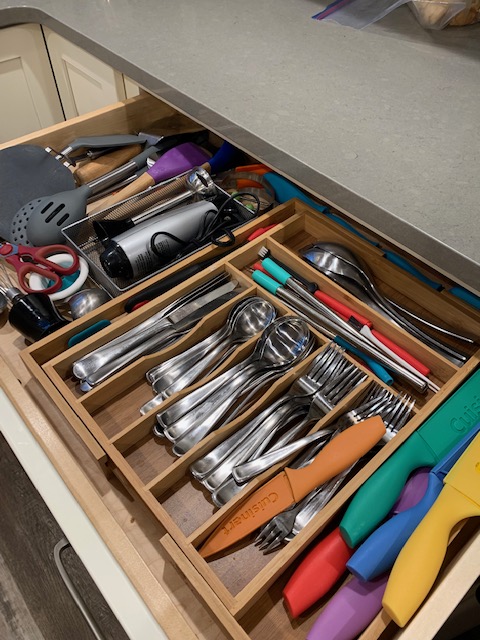
Here’s a glimpse of my “after” utensil drawers:
Pareve DrawersMeat DrawerDairy Drawer
Yes, my methods for de-cluttering feels like a ton of work, but the reward is in the ease of maintaining dietary integrity.
And…
My method of decluttering my narrative meets this same standard if I’m to maintain my writing integrity.
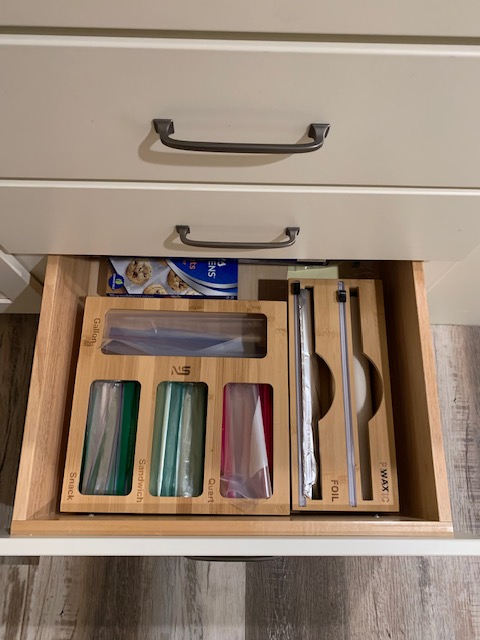
I also re-organized my “baggie” drawer:
Food Storage Drawer
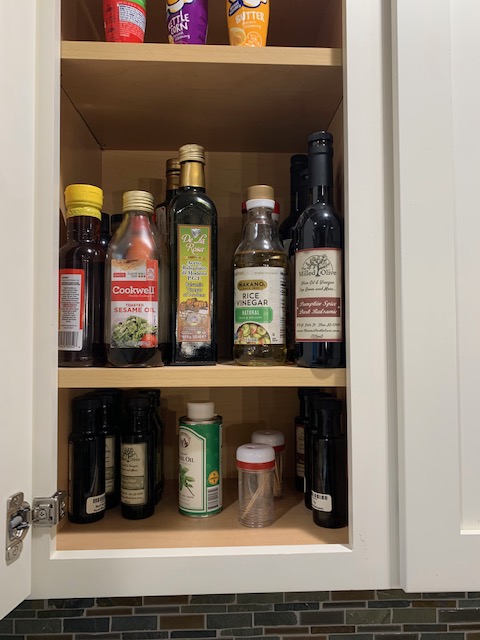
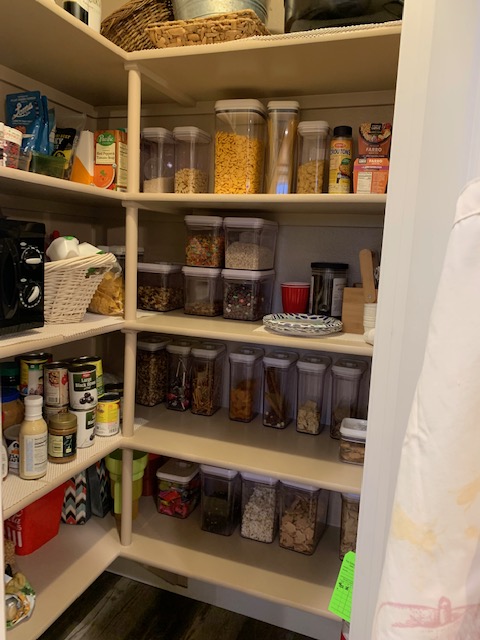
I found a similar relationship between writing and restructuring my pantry. I wanted a visual of my pantry items. I also wanted easy storage and accessibility, as much for my sons as for myself. This saves time, which affords me more family and creative time, and probably saves money. We no longer dig four boxes deep to find the cereal we want or to locate brown sugar. This type of restructuring transferred to my writing in, well, structure, especially helpful with poetry. Poetry is both a visual and a literary art. The shape and structure and form inform the work as much as word choice and language. In regards to my manuscript, I also credit my daily discipline of studying for the last 15 years—throughout undergrad and grad school (twice)—my morning habit of honing craft, no matter.
The “after” of the panty.
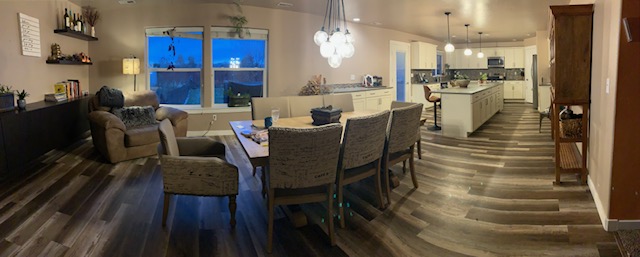
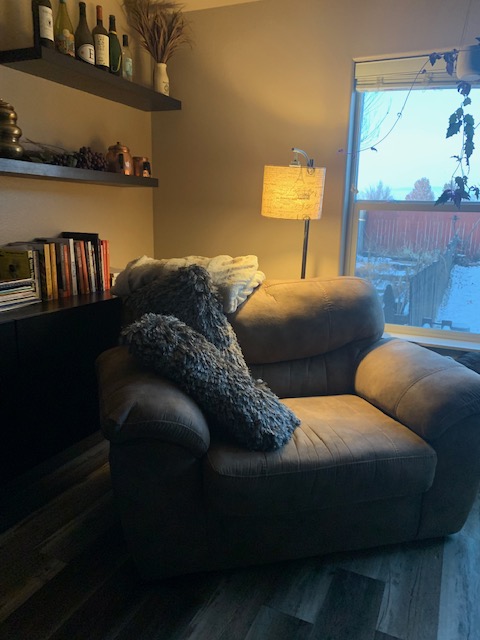
Use of space – in life and in writing – proves critical. When I purchased this home in 2017, after living on Food Stamps and in Section 8 housing, I wanted only a haven and a sense of permanency for my family. I longed for each room to feel like a hug, an invitation. Each nook holding sacred space to create, read, write, sketch, and dance. Even in a corner of the kitchen there sits an overstuffed chair with a floor lamp, a place to linger with tea and words, should you choose.
Cozy Space to Linger
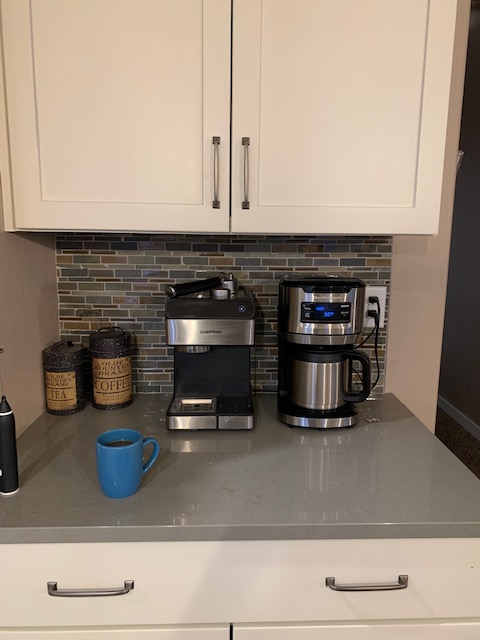
If you know me, you know I love my coffee and tea. I also sip dark chocolate and what I call my Gold Rush (turmeric, cinnamon, cardamon, and ginger). I have a cappuccino maker, a pour-over, an espresso steamer, and an old-fashioned stove-top glass percolator. I’ve a warming frother and a frothing wand and a honey jar and spoon. I’ve tea infusers, a matcha whisker, and sugared maple to sprinkle on top. A coffee station felt like a spoiled requirement.
Coffee and Tea Station
And yes, there’s a second mini station in my bedroom.
I’m sure there’s a direct link between the slow process of brewing coffee or tea and my writing life. I admit I’m a painfully slow reader. I sit with a book like a long-lost friend. I study every line and underlying emotion, and in each, I seek the shape of my own existence. All the while, I sip something soothing, a hot beverage all day, most days, and every season.
Perhaps I developed this way of thinking over the years, as a competitive athlete, or during my time in service in the Air Force. Regardless, I work my brain out every day. I love puzzles (especially Sudoku) and still wrestle brain gym methods before I meditate.
Yes. I meditate.
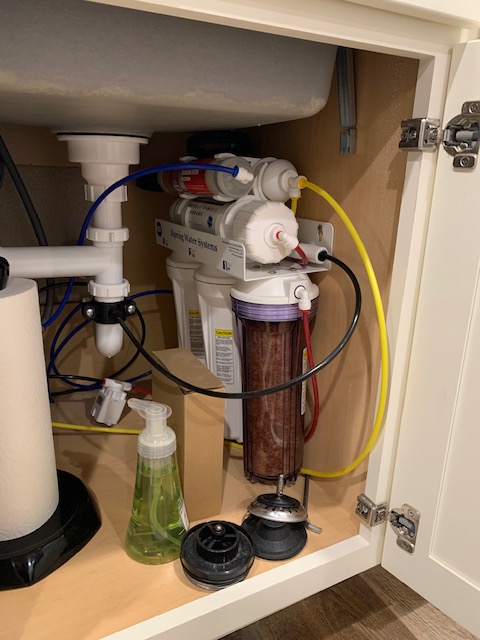
One important phase of this remodel included installing a reverse osmosis (with remineralization) water system. I know there are differing opinions surrounding these systems, but science supports their removal of bacteria, viruses, lead, nitrates, mercury, particles, and that’s enough for me.
Under Sink Reverse Osmosis and Remineralization System
I combined two rooms, spread them into one kitchen and dining area. I extended the island into nine glorious feet, built a butler sidebar. Like many families, the kitchen is where we gather for food and friendship. We also needed space to maneuver around while cooking. Sharing my love of cooking with my sons has been a cornerstone to parenting. Cooking offers the measurement of science, the pleasure of art, the background of music, and the joy of creation. As a family, we braid challah, roll homemade pizza dough, slice home fries, and move food from garden to table throughout the summer. There’s infusion in this work—intention and energy—you can taste the love in food that has been orchestrated with care. There is also the spiritual infusion, the energy exchange, heart to heart. In the braiding of bread, there’s meditation. I found this same intentional meditation while braiding narratives, even in poetry. I love the six-braided challah. I love the intricacies of braiding story, poking at the intersections on the page and in life. There’s a knitting, a stitching, in life and in storytelling.
We can train the brain to work through these patterns in daily or weekly tasks, transferring them to our art.
I think of Chelsey Clammer’s work, her beautiful weaving and knitting in her essay collection, Bodyhome. It makes perfect sense that she is also a masterful knitter – sweaters, scarves, hats. I see the correlation between her art, her hands and her mind, as she stretches through complexity, towards clarity, into a polishing.
The kitchen, our kitchen, not just for food.
We create soap, satchels, candles. We use the garden, we use it well—lavendar, rosemary, lemon balm. We jar jams. This year, we crushed Concords off the vine and into juice. We sun-dry tomatoes, freeze peaches and pears for smoothies. We clear the table for board games, card games, and now, my youngest, hosts a weekly DND.
Home. Haven.
If you knew my story, you’d know, I left home as a teen with only a garbage bag stuffed with Levi’s, track spikes, and some 8-track tapes. You’d know I left the military, left one marriage, then another. You’d know I left with my three sons and a duffel full of medical supplies and a single change of clothes for each of us. You’d know, I started over. And over. And this remodel, this year, felt like a complete rebuilding of self and work, built on hope and heart and hard-earned healing love.
Now excuse me while I stitch and patch a pillow—a victim from the latest family pillow fight—and then I’ll return to my memoir, stitch the ending lines, threading and tying the small details, weaving through worlds and words.