Featured

Writing & Wardrobing

If you’ve met me, you know I’m a fashionista. If you know me, you might say I’m a shoe slut, a tote tart, a closet-curator. I love fashion.

The truth about fashion—whether in your home, on your body, or within your body of work—is that art lives within polishing, revision, the details.

I loved fashion as a teen, and because I left home at 14ish, affording the “look” was not a budgeted item. What I had, back then and still, is my creativity and resourcefulness. With my small nest of mostly denim, I could invent a signature, repurposing—shorts into skirts, tees into tanks—with scissors and few quick stitches.

This most likely began in first grade when I felt bad for my Baby Tender Love.

Baby Tender Love, Circa 1970’s

She had one outfit. We had no money. Our family carried mostly dysfunction and chaos. Dressing that doll became my obsession. I’d found a basket or box or trash bag full of scrap cloth and I dug through an old sewing basket for buttons, a needle, some thread.

Baby Tender Love’s “dress” consisted of one piece of material, arm holes, and a button. I traced the original on a sheet of paper. I’d no clue that I created a pattern. I used and re-used that sheet on every cloth big enough. I probably used scissors for the first time in my life. At least adult ones, sharp and pointy and too big for my hands. I over-cut at first. I remember my tears, the heat of my face, the tossing away of pretty material I thought perfect for my impoverished doll.

Threading that needle to sew a button turned me into a tornado. Perhaps my first symptom of drive, determination, or my ability to singularly focus on one small task. Most likely coping method I still use today. I can’t remember how long it took me to teach myself these skills. I do remember the stack of clothes my doll had in the end and, later, my adopted sister, Tina, asking me where they came from.

I made them.

In middle school, a teacher hired me to purchase clothes for her small boutique in Wheatfield, Indiana. The teacher, older—probably my age today, late 50’s—chose me because she loved my style, because she wanted a young, fresh “look” in her store. I paged through catalogs, the pages brimming with ankle boots, short skirts, and one-piece jumpsuits patterned in flowers.

I loved this job. This summer job. My payment in clothes.

Once I joined the military, fashion became an identity. When you live in a uniform—dress blues, combat fatigues, charcoal chemical warfare suits—maintaining a sense of self feels much like oxygen. I finally had money. It felt like a ton of money. Food and shelter, covered by the USAF, meant I had extra money. I shopped. I shopped often. Sometimes I stole items. Sorry, a different essay for a different day.

Scarves, totes, belts, and shoes.

At the time, I barely topped the scales at 100 pounds. I struggled with Anorexia and Bulimia, though I’d tell you, then and now, I’m fine or I burn fat when stressed. I told myself this too. I believed this. And because of my body-shame, wardrobe offered a place to hide. I could mask my thinness in layers. I could also keep my body safe from predators. My outfits became bulky, but still, fashionable, at least to me.
During my military stint, I journaled, almost daily. I did not deep dive. I did not seek an understanding of self. I avoided any emotionally charged idea. Instead, my journals appeared like a catalog, capturing events, places I journeyed throughout Europe, sketches of the world around me.

Outside of me.

I kept everything outside of me.

Including me.
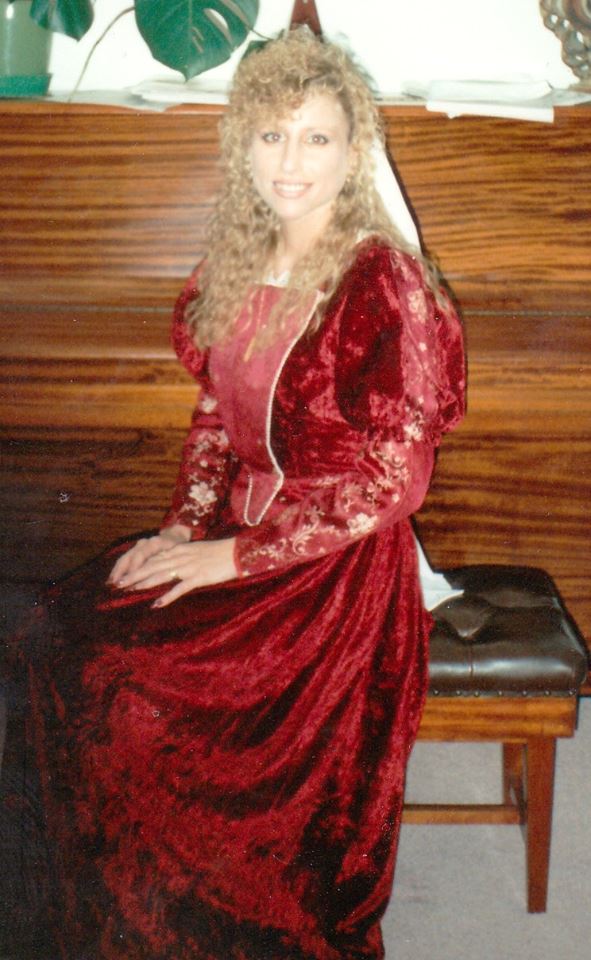
There’s a long narrative between my exodus from the military in 1993 and my entrance into pageants in 2004. Most of this time has little to do with fashion or writing and more to do with surviving. What you need to know about this decade:

  • I hid in my walk-in closet to write at 3 am because my then-husband thought writing too much a luxury and my time should be spent on my chores—caring for my sons, keeping our home pristine, looking perfect.
  • One “requirement” of my then-husband was for me to look perfect—body, hair, make-up—so, after I wrote, at 5 am, I put on my face and a cute outfit. I looked good. I felt numb.
  • During this time, I taught and trained and coached high-level athletes at the gym. This offered the opportunity for me to keep up, keep low (body fat), keep going.

I didn’t understand the complex duplicity of my life. In the military and later. I didn’t understand how wardrobe defined who I needed to “be” at any given moment.

Spandex = Gym Diva

Gown = Pageant Queen

Uniform = Disciplined Airman

Fashion Outfit = Perfect Wife
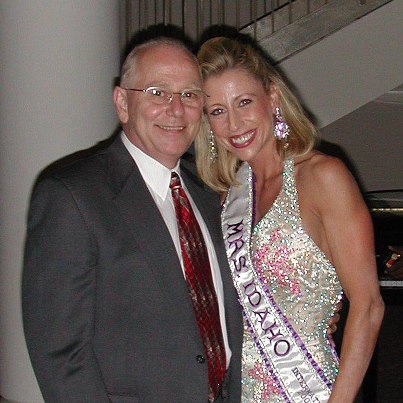
When I became Mrs. Idaho International in 2004, a dear friend and incredibly talented fashion stylist dedicated months to helping me re-shape and re-define my image.
Her first challenge?

Cutting my wardrobe. Most of my clothes were two-, maybe three-sizes too big. I still suffered with body dysmorphia and occasional episodes of Bulimia. I thought myself “healed.” Thought that this was as healthy as I would be.

She gathered clothes that did not “fit,” hanging them on one side of my closet.

I took to a bottle of wine.

I feel this is where writing and wardrobing clearly intersect.

Here, my “base” wardrobe simulates an early draft. Here, we cut and cut and cut. Take away everything that does not belong.

  • Images that are out of range of theme or tone.
  • Repetition that fails to build or shift the narrative.
  • Wandering story lines.
  • Excessive words—articles, adverbs, etc.
  • And my favorite cutting—weak verbs.

And yes, shaving a narrative feels like revamping my wardrobe in 2004. Some days I want to reach for a bottle of wine. It’s uncomfortable. I’m attached to words and shoes and comfy sweatshirts. But I’ve learned that cutting at the foundation allows me to build something that truly works—on the page and my body.
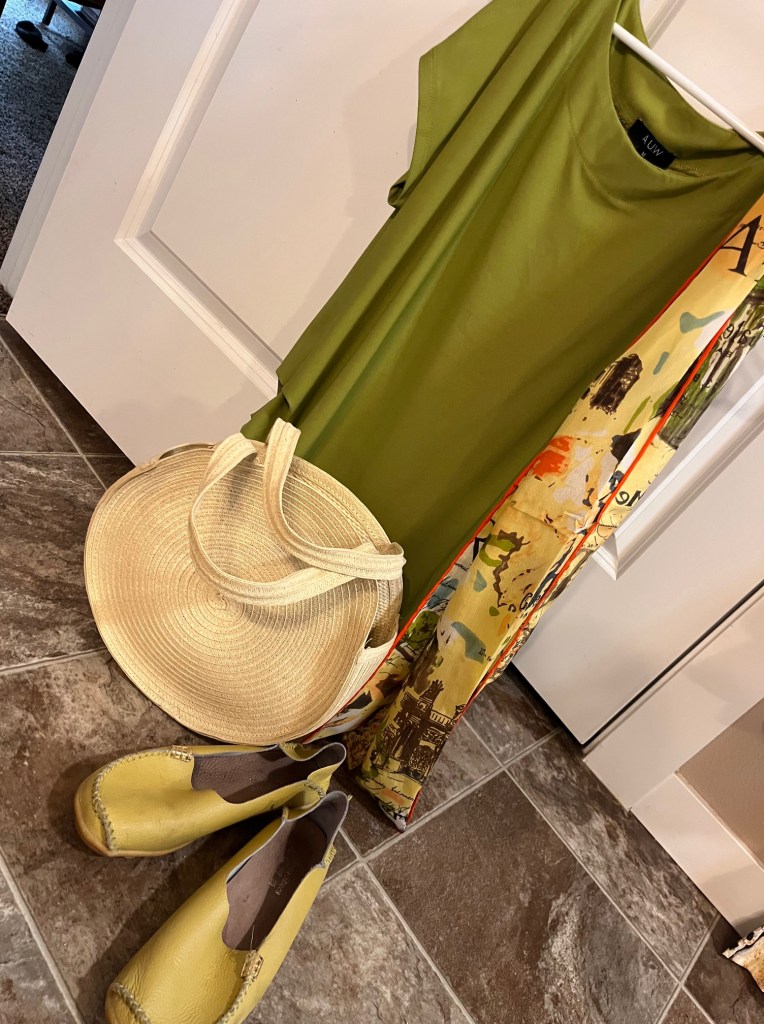
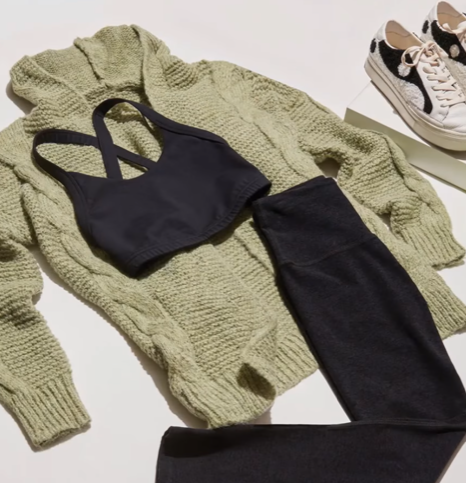
Much like this off-green blouse. The arrangement is simple. A scarf, shoes one tone lighter, a woven handbag.

I could keep adding to this ensemble—pending on the weather—an off-white denim jacket, sunglasses, a hat.

This is true of penning a decent essay. You could keep adding. But it depends. Weather matters. Is there a storm brewing or a breezy beach day on the horizon?

Back to 2004 and re-defining my style. My fashion stylist-consultant-counsellor’s next step involved color. The foundation here is a bit Socratic—Know yourself. Which colors enhance your complexion? Which drains? This is both simple and not-so-simple. The stylist held fabric swatches near my chin beneath great lighting (meaning: NOT fluorescents). I could see the difference in my skin, how my tone shifted based on hue alone. Pastel and jewel tones offered a healthy sheen for me. Earth tones brought a jaundiced-death look.

We decided I’m both a Spring and Winter.
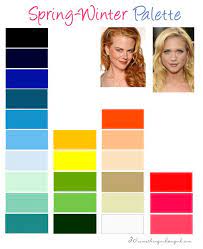
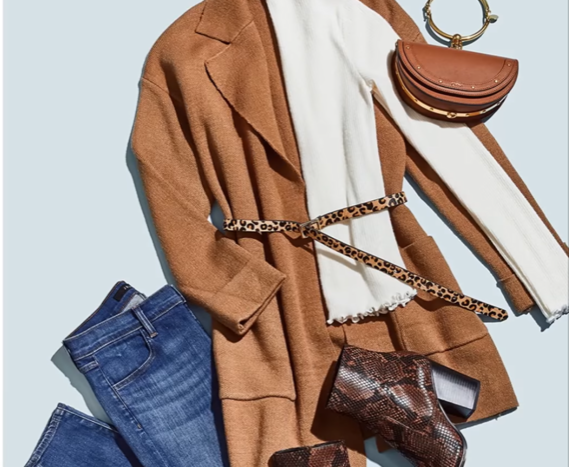
My one earth-tone exception was camel. I look amazing in camel. Teal became another signature color for me. Odd enough, both colors were absent from my wardrobe. My stylist found a camel suit, top coat, slacks. Teal blouses, tanks, sweaters. The challenge for me was not the shades but the size. I felt awkward and exposed wearing clothes that cinched my waist, tugged my thighs, showed my body.

My conflict? I love fashion. I dislike male attention regarding my body. How can these two co-exist peacefully? How can I live comfortably in my skin AND wear clothes I love?

I do not have an answer.

I still struggle with this today.

But writing teaches me about this.

Think FORM.

Form in wardrobe moves past size and color, focusing on body shape and how to enhance it.  For example, a V-neck looks fabulous on a large-busted form. A cowl or turtleneck on the same body type is less flattering. Necklines, collars, hem and sleeve lengths, trouser leg width, all of these details matter.

Using form in writing is parallel to this.  

The paragraph might work well, even read well, much like the turtleneck, but a list could serve the piece better, like the V-neck. It isn’t a matter of right or wrong. Think great versus good. I think of form in writing as our greatest opportunity. We can alter that same paragraph into a Haiku or short staccato sentences or one long stream of thought. We can push the entire structure into a poem, a hybrid, a flash, or long-form. The critical element in form selection in writing equates to form choices in wardrobe – is this the best shape for this body?

I witness writers pushing poetry into the middle of a narrative when the project doesn’t call for that shift. The pressure of hybrid form and acceptance into a literary journal will sometimes force an artist to add an element that goes against instinct. The same is true of wardrobe—social pressure, approval, acceptance can influence us, pulling us away from our guts and into the darkness of…fads. Of course, art is subjective. The hope for the artist, the human, is to make choices that honors their nature, their desire.
In writing, we begin again as well. Walk through, remove the lines that no longer serve.

Return to texture.

Think of white space on the page as the first layer of texture in writing. Here, we decide. Do we begin in scene? In dialogue (which is in scene)? Does the sentence stand alone? The word? These choices alter the feel of our work. These choices change the way we breathe in our words.

Of course, wardrobe holds texture too. In 2021, I fell ill with an autoimmune disorder, another layer on top of my already dis-abled body. I returned to my closet. I walked through, much like my stylist taught me. I touched every item, massaging fabric between my palms, on my face.

I kept clothing based on touch alone—the softest, the silkiest, the items that felt like butter. I love blossoming trousers (which work for my body-type) and breezy sweaters. Maybe I long to feel like a petal or a butterfly. Maybe I’ve this need because my body holds so much pain.

Soft against hurt feels a salve.

Spandex tank, silk blouse, non-binding trousers – comfort is key.

This is true of word-texture. How does a word feel rolling off the tongue? I find the use of beautiful language to describe the ugly and difficult can offer less friction, it goes down smoother.

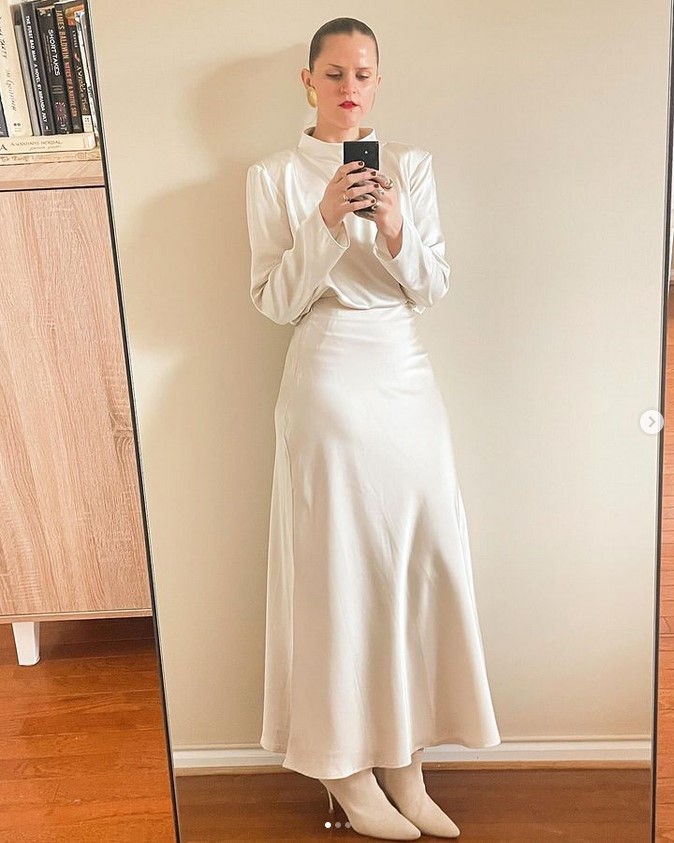
I think of Hannah Harlee’s incredible styling—elegant, classy—and her choice of texture. Butter-love!
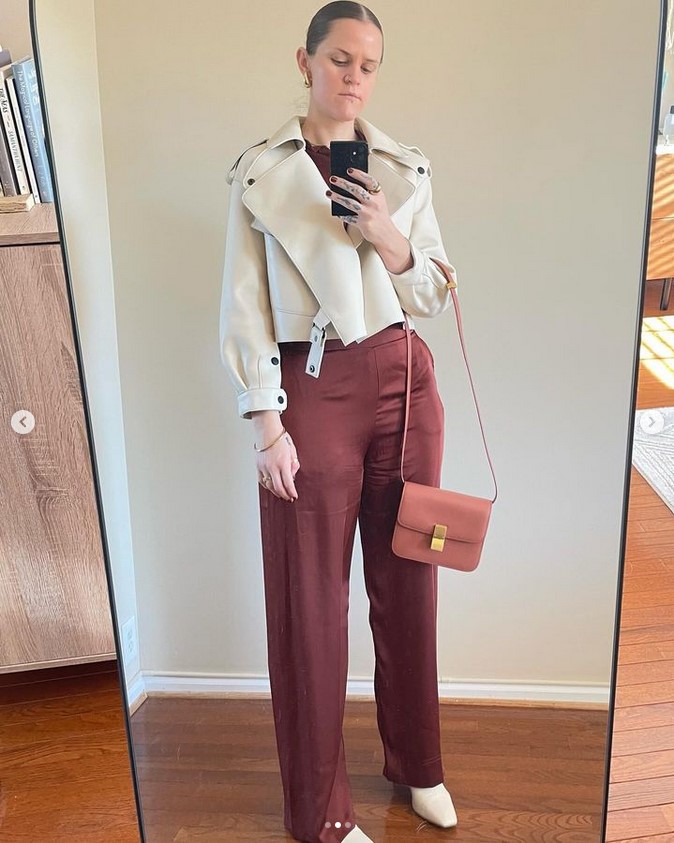
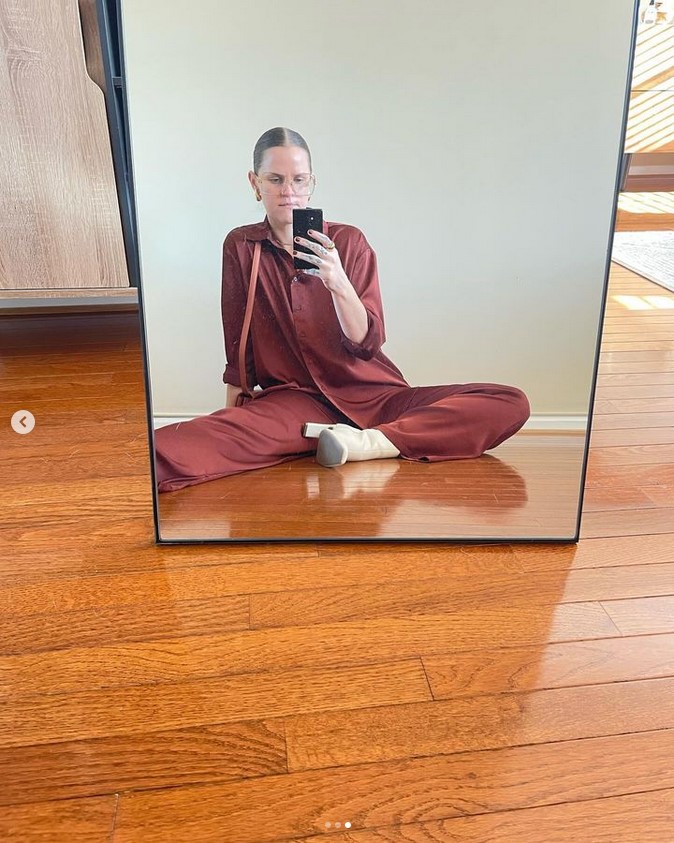
What I fail to mention in this essay, Hannah captures perfectly—the rest of the product. Lips. Hair. I mean, look at her red lipstick contrasted with this white ensemble. Perfection.

Again—this mirrors writing. You can manage a gorgeous, even streamlined narrative, but if you don’t land the ending (the rest of the product), you’ve failed.

If you read Hannah’s essays, you’ll see her alignment between wardrobing and writing. Elegant. Classy. Specific. Butter. Love. Nailing-It-Stellar-Endings.

For me, the fun, the true adventure—in wardrobing and writing—lives in arrangement.

As I arrange an ensemble, I begin with my lower half—leggings, capris, jeans. Dress? Skirt? And, like Hemingway’s reminder, don’t forget the weather. Idaho Spring and Fall offers continuous shifts in temperature—snow to sun within the hour—so layered-dressing is a must.

My selection continues—blouse, camisole, sweater.

This process resembles line breaks, enjambments, punctuation—em dash, semi-colon, period?

From each break, I move words, a sound-by-sound exchange. I focus not only on the best word, but the best sound. This attention to sound is like the attention required for true style and taste.

The small speck of teal in a shirt might become my main accent—my focus color—choosing shoes or totes or bangles to pull that tiny hue to the surface. To grab notice of something seemingly spare.
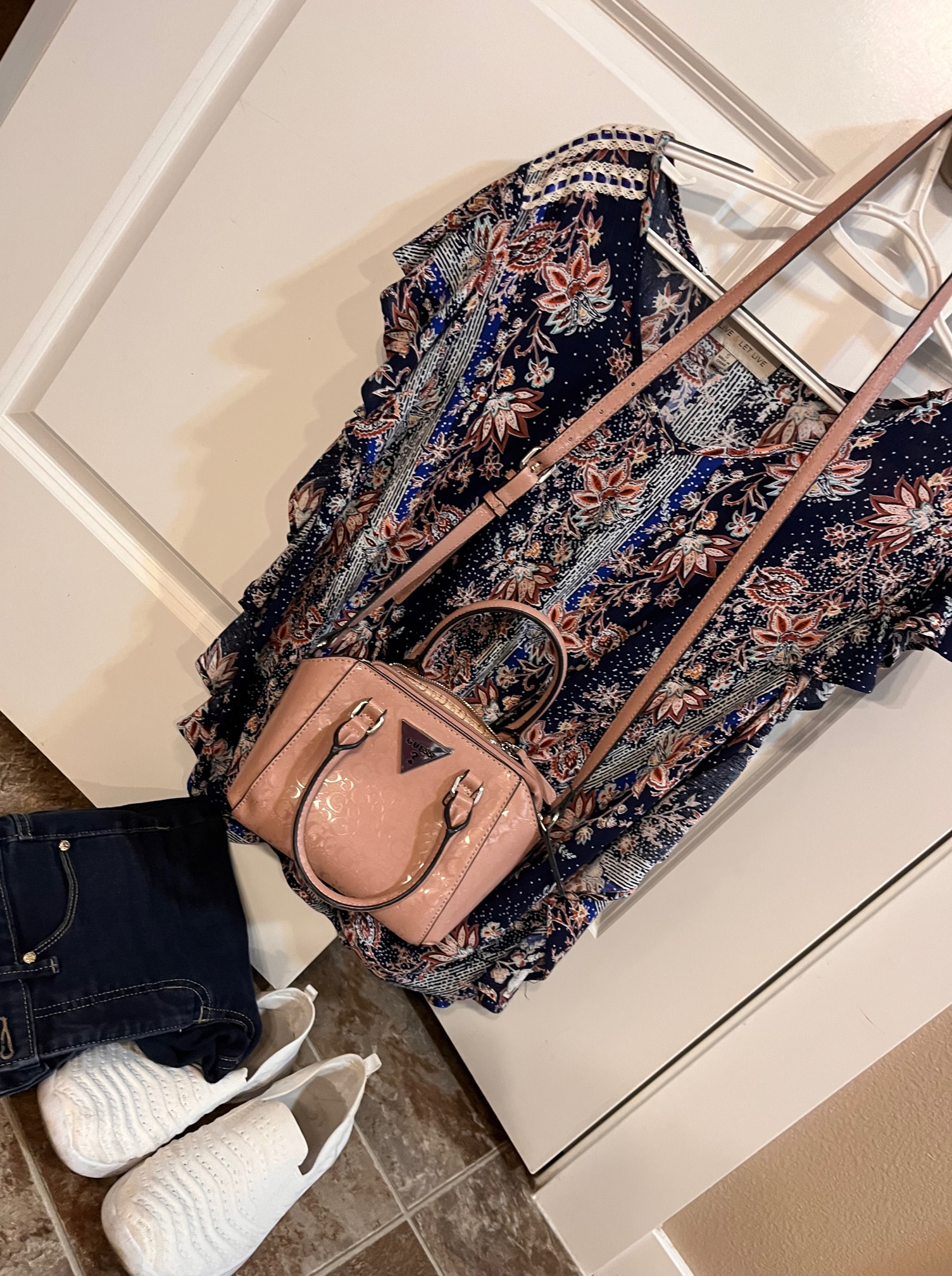
Note the pink-taupe barely peeking through the shirt but accented with the handbag

Words work this way.

The soft S. The hard K. I search for music.

I’ll rarely repeat an ensemble – on the page or on my body.

This does not mean I avoid repetition. I seek re-invention with every piece, maintaining an art form all its own. In a collection of essays or poetry or hybrid work, this array offers range. THAT form served THAT part of the narrative and only for THAT moment. Or, perhaps, a repetition for THAT type of moment throughout?

When I write the way I wardrobe—I maintain a sense of abandonment. I want to feel surprised. I want to love the process AND the end result. I long to linger, to delight, in both forms.

Wardrobe and writing inform one another. The more you pause for details in the small, daily matters, the more you include details in your writing. The more specific and detailed the writing, the more universal the meaning behind the words.

This type of writing (and living) is a mindful, intentional approach. There’s a sense of zen and grounding and earth within it. There’s also a deeper sense of self, of gratitude. I could compare writing to every aspect of my life—shopping, cooking, gardening, sleeping, loving, hurting—they continuously intersect, overlap, and instruct one another.

For the writer, writing is not a separate category of life. We find our stories in the every day. And should our creative well run dry, we can run our hands along a seam, trace the flower in a pattern on a sleeve, remember that the detail, the selection we made from the start of the day can be a major contributor to our art.

~

NOTE: In April 2023, I underwent a double mastectomy. After I healed, I returned to my wardrobe and undid the necklines, altering and revising yet again into something more in alignment and true to me.

If you’d like to order my FREE Zine, A Little Guide to Clothes I Wear All Day, just send a SASE to: Rebecca Evans

PO Box 373

Star, ID 83669

(with gratitude to the Idaho Commission on the Arts and The National Endowment for the Arts in making my Zines a reality).

Image credits: From Instagram, public domain, 2024, Ageless, Stitch Fix, Dailylook and, with permission, Hannah Harlee. The remaining images are from my life.

You can find Hannah’s LookBook on Instagram at: @hannah_a_harlee and info regarding her Literary Journal, Art Wife, @artwife_mag.

Hannah’s websites: https://hannahharlee.com/ and https://www.artwifemag.com
Featured

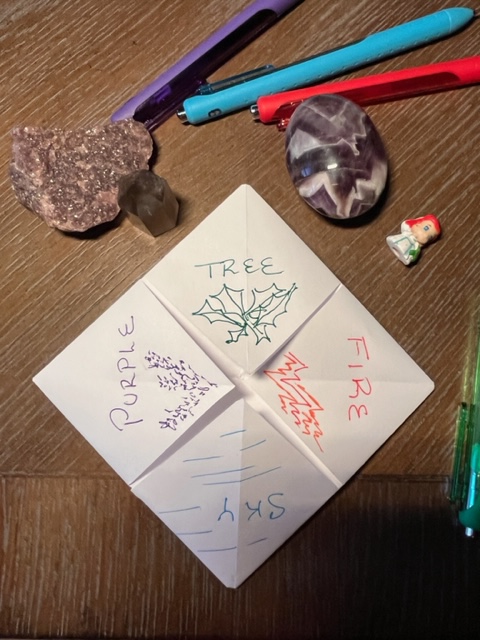
To Catch & Contain Oneself or How to Repurpose a Cootie Catcher to Meet Your Emotional Needs When Writing the Difficult Narrative

NOTE: If you pen or journal or sketch difficult experiences, this tool might prove a useful method to “contain” yourself once you exit your writing. Of course, you can “catch” yourself anytime you’d like.

~

Gather what you need

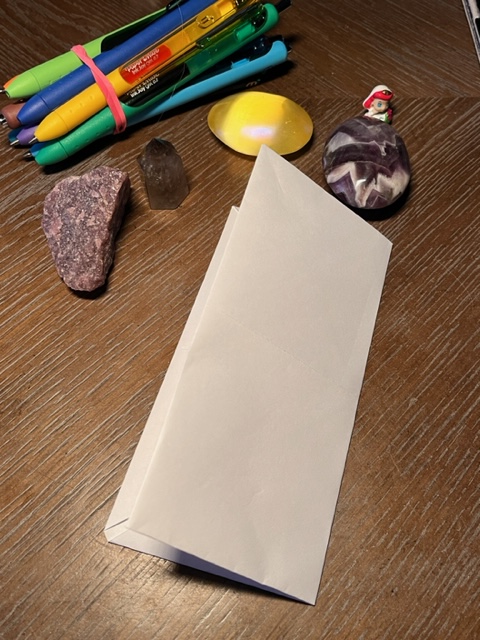
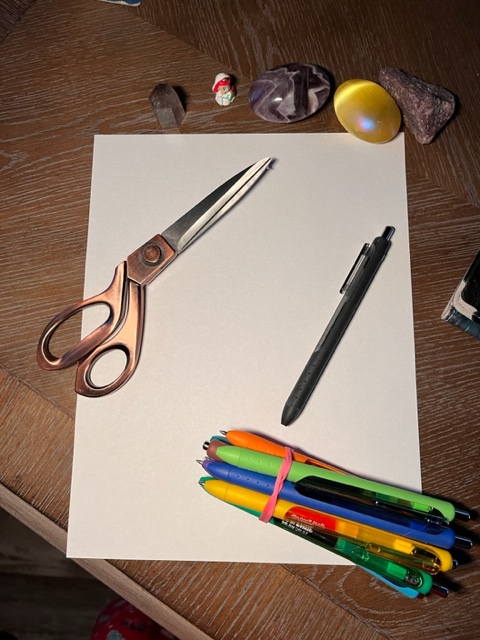
Paper…Colors…Fave pen…Scissors…A small witness…Stones…Crystals

~

Fold paper diagonally, lining up two sides

~

Cut the top edge so you are left with a…..

~

square

~

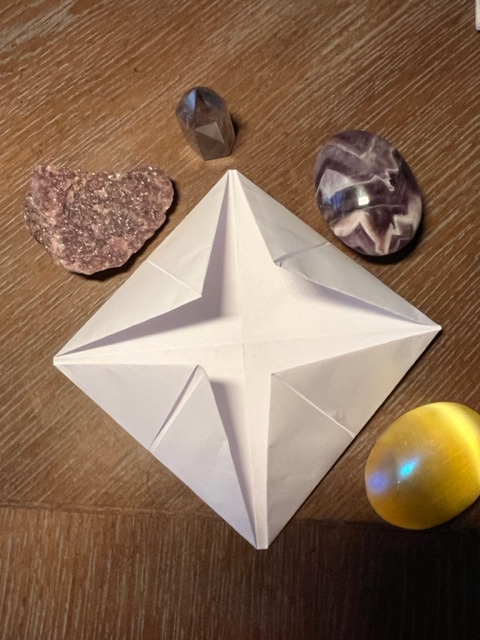
Fold all corners

~

Towards center

~

Seek your center

Have you forgotten…

…you have a center?

~

Fold your square in half

How many times have you folded in half?

~

Fold the corners towards the center

~

Keep folding…

~

Yes

Sometimes you must repeat yourself

~

Fold the square in half

~

…and, yes…

you are again repeating

~

Slide your pointers and thumbs under the four flaps

~

Yes

It resembles an open mouth

Yawn if you must

or

Howl

~

Like you, your Catcher lives in layers

First Layer: Label colors

~

Second Layer: Label Senses

Yes, you’re a writer

Have you forgotten?

Be specific

Include sensories you love—your musts, your longings

~

Divide your Final Layer, your Deepest Layer

Don’t hurt yourself

Use a pen

~

Deepest Layer: Label an activity that centers you, grounds you, elevates you

Fill in remaining triangles

~

Now play

You only need yourself

Did you forget?

Place your thumbs and pointers back under the flaps

Choose a color from the first layer
Move the flaps in and out and side to side and, in time with the letters, spell out the color

Stop on the last letter

Note the sense

Move the flaps in and out and side to side in time with the letters, spelling the sense (ie, smell)

Stop on the last letter

Note your destination

Catch

&

Contain

&

Restore a piece of yourself

You might end up taking a bath while listening to cellos surrounded by lavender

You might find your center

Featured

Why Bother Re-Printing Published Work?

When I read the call for The Elpis Letters from Kayla King, my thoughts turned to my adopted sister, Tina. If you’ve read my poem “I wanted to be your wall,” (earlier versions published as stand-alones and an extended version in Tangled by Blood, my memoir-in-verse), you already know Tina and you’re already familiar with this poem.
What you might not know is that when I first wrote this poem, it wasn’t a poem.

It was an essay.

And it wasn’t written from the POV of Tina.

It was written from the POV of my bedroom walls.
It opened like this: “Pale blue like a time somewhere before sunrise, they drip with tears. ‘Did you notice your sister’s sacrifice?’ they ask.”

Not my childhood bedroom – but one I dreamed of dwelling.

When I revised this work, I switched the POV to third person and fictionalized my childhood trauma. I couldn’t capture the “story” this way either. Perhaps because it was still too far removed.

Perhaps because it felt like someone else’s story.

Poetry became my key, allowing access to my difficult experiences and, after studying with Brian Turner, Lee Herrick, Laura Wetherington, Gailmarie Pahmeier, and Patricia Smith at the University of Nevada, Reno during my second MFA, I found my way into my history, into my body-story, into my heart.

“I wanted to be your wall,” turned into an offering of agency and autonomy for Tina, for me, for other victims of childhood sexual trauma. The poem granted Tina a voice, me my voice, and, it is my hope that it gifts a voice to those who’ve been silenced far too long.

Why bother sending this poem for a re-print in an anthology once it has already entered the world?

Why bother reprinting any piece of writing?

I’m not comparing myself to anyone as gifted and brave as Ilyse Kunitz or Brian Turner, consider this only an example. We—Ashley Kunsa and Shaneen Harris and myelf—the editors of When There Are Nine (Moon Tide Press, 2022), opted to re-print (with permission) Brian Turner’s, “Milh” and Ilyse Kusnetz’s “Harbinger.” In doing so, we curated collected poems and created a conversation. Both Brian’s and Ilyse’s poems continue to live on and in a new way within this anthology.

Every time a poem is set or read alongside another body of work, including music and visual art, it shifts, altering the way we observe and absorb the words. It transforms how the poem enters the world and our hearts.

Offering “I wanted to be your wall” as a letter—an opportunity to share space with many other difficult and beautiful letters—changes the way the poem reads and feels. It also keeps the conversation going—the #metoo, #survivor, #childhoodabuse, and more.

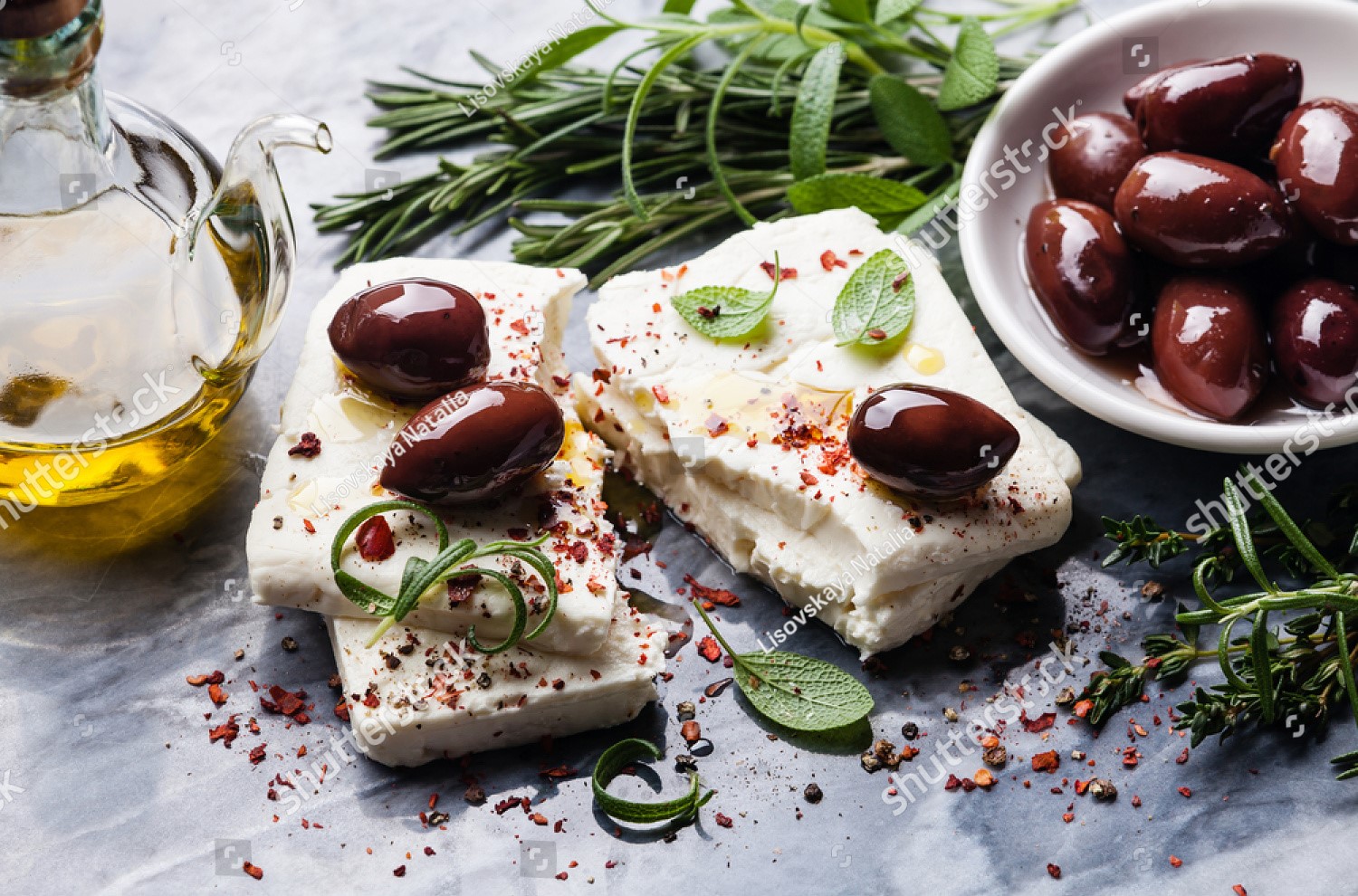
So, even if you’ve read my poem a hundred times or once, I hope you’ll gather a few quarters, order The Elpis Letters, sip a cup of tea or glass of wine, nibble from a platter of cheese and olives, and read and re-read the letters within the pages of this gorgeous anthology.

Featured

Takes Me Years to Complete 30-Day Challenges

I finish most 30-day programs in about a year. No. Usually a few years. I used to pummel myself over “slacking,” until I realized I’m not a slow learner. I’m an applied learner. Maybe I adopted this trait after a few decades in the fitness industry. The it-takes-21-days to change a habit attitude. Somewhere between counting crunches and lunges, I started focusing on the change, not the numbers.

True habit-changes live within micro-movements and value-system shifts, not exterior physical acts, which can often become, well, an act.

We’ve all gone through the motions.

We’ve lived the fake-it-til-you-make-it movement.

We’ve also faked-it-to-get-through-it; those sappy dates, the bland entrées at friends’ dinner parties, the bad hair days (or weeks or months).

Stressful hair at the start of the pandemic, 2020

I argue that faking cannot bring lasting change. When I masquerade, I feel I’m bluffing. Like I don’t really mean it. Plus, I found that in my impersonation—the faking-it—I often merged into a shape-shifter—a chameleon, really—altering myself for approval or a sense of belonging, me pretending to be (or not to be) my truest self.

This is not the change I seek.

I’m talking about fostering values as you form a new habit or as you quit a less-than-good one, which often requires more than 30 days. I like to quip, Fitness is an inside job. Emotional Fitness. Spiritual Fitness. Family Fitness. Career Fitness. And yes, Physical Fitness.

For example, I’ve maintained a kosher diet for almost 30 years, but I kashered my kitchen for the first time in 2017. For decades, the dietary principles of kosher living made sense:

  • Don’t mix meat with dairy.
  • Avoid pork.
  • Avoid shellfish.
  • Hand-wash and recite a blessing before consuming bread.
  • Recite a blessing for various food types/groups.

…and so on. I applied these almost overnight, mostly as a desperate attempt to control my Bulimia and Anorexia while serving in the military. Going Kosher meant un-doing self-harm. It also meant a false sense of control in one area of my life I felt utterly out of control.

Surface change.

And yes, this works, but with limits. I’d fall away from my new habit in times of weakness and stress and boredom. I’d fall away because I lacked conviction regarding this habit.

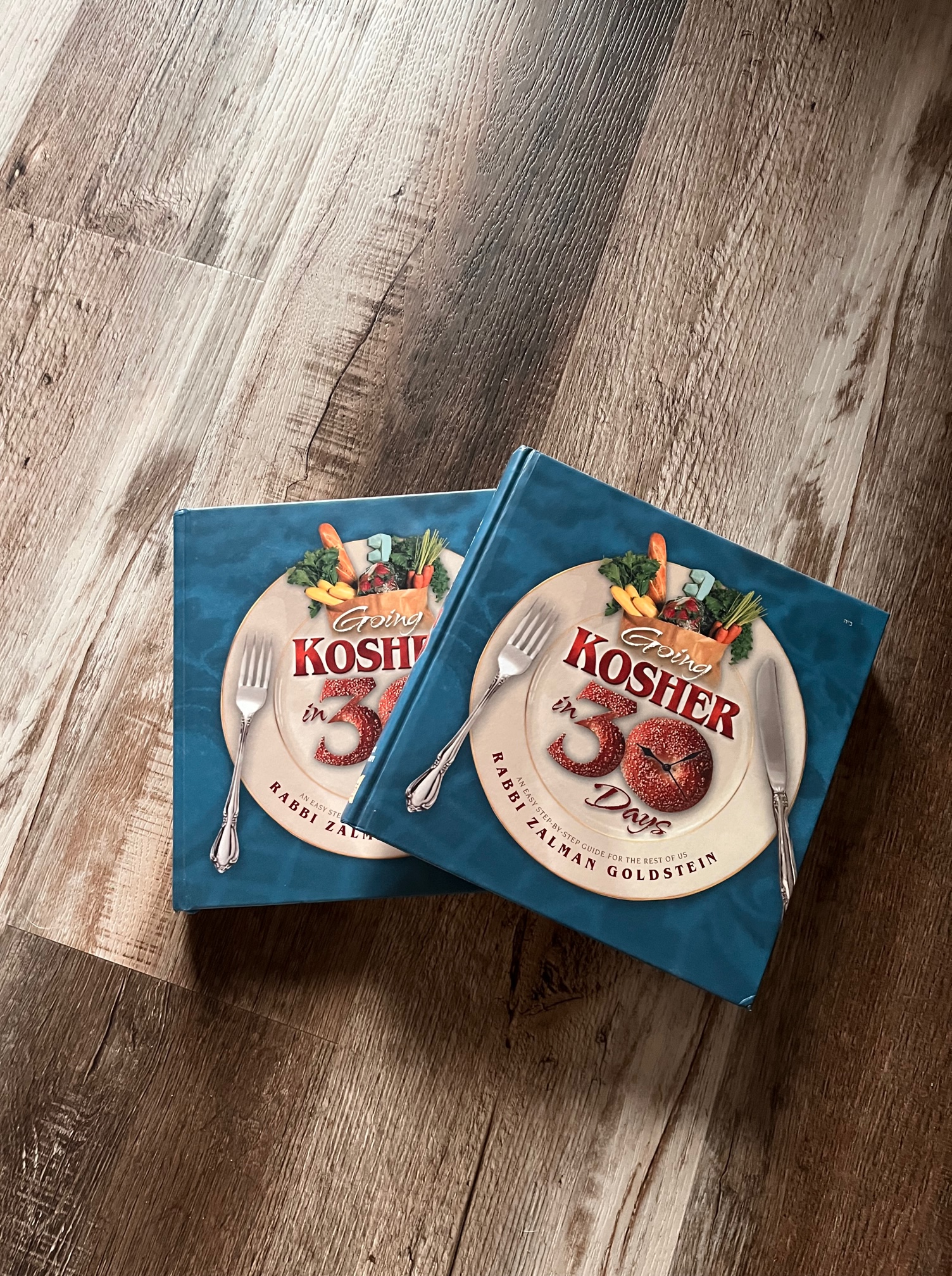
Seven, maybe eight years ago, my Rabbi gifted me Going Kosher in 30 Days. It took me a year to read the book. And another year after I lost the book and was gifted a second copy. And then one more year to digest the concepts (pun intended).

My two copies of Going Kosher in 30 Days

Why avoid shellfish?

Well, shellfish are bottom-dwellers. If you are what you eat—the nutrients and the nature—you become the substances you consume. Got it. I don’t want to be a bottom-dweller.

Piece by piece, a deeper understanding of my WHY created conviction, and this conviction revised not only a habit, but a lifestyle and a belief system.

I could dive into every Kosher-keeping concept for you, but I’ll save that for another blog because it’s fun and fabulous. And though I’ve practiced a kosher diet for nearly three decades, it took three more years to keep kosher in my heart.

I’ve read Julia Cameron’s The Artist’s Way six times, each time took close to a year. Each of Cameron’s recommended weekly challenges lasted at least a month.

Do I really need a caption for this?

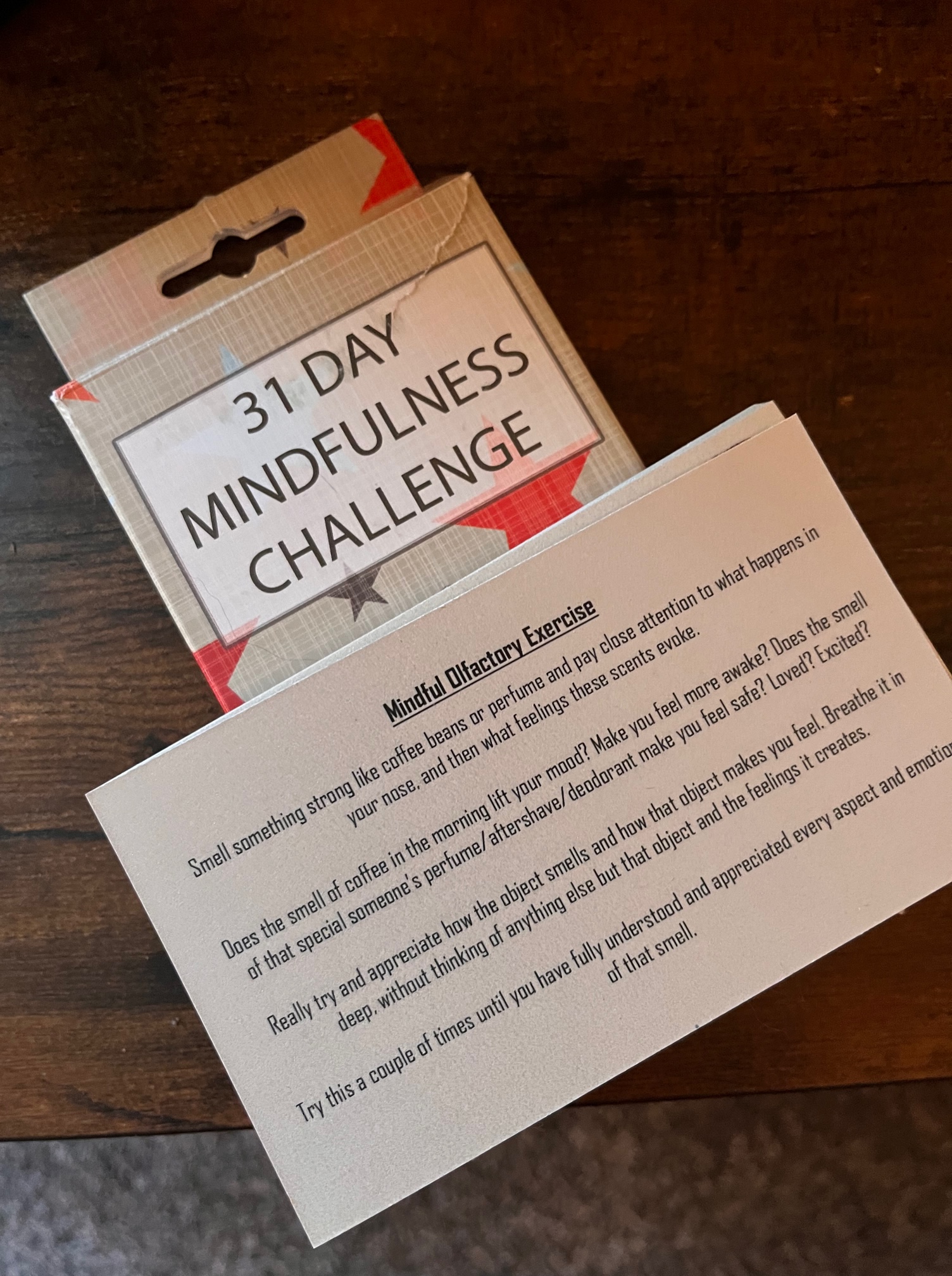
In January, I launched into a 31-day Mindfulness Challenge. As summer approaches, I’m on day eight.

Driving my sons mad through the mindful art of smelling everything, every day, all the time.

These mindful movements feel more challenging than keeping kosher. And this one, sitting with smell, which, as a writer, is triggering significant memories and doubling my journal entries in the morning.

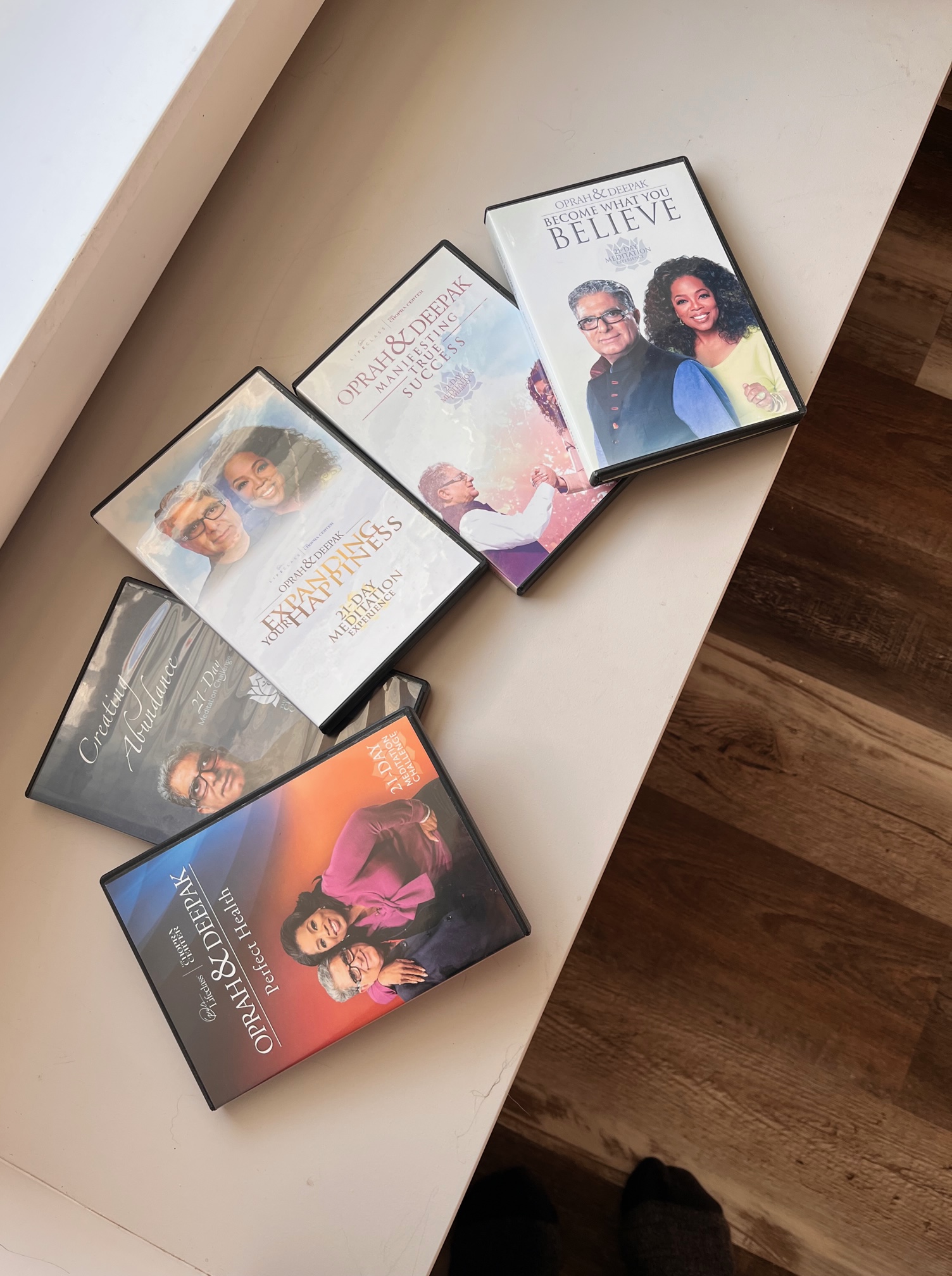
And there are the 21-day Mindful Meditationhttps://www.oprah.com/inspiration/deepak-chopras-21-day-guided-meditationss from Deepak and Oprah I’ve spliced into my yoga and meditation schedule over the years, each one demanding, well, at least a year.

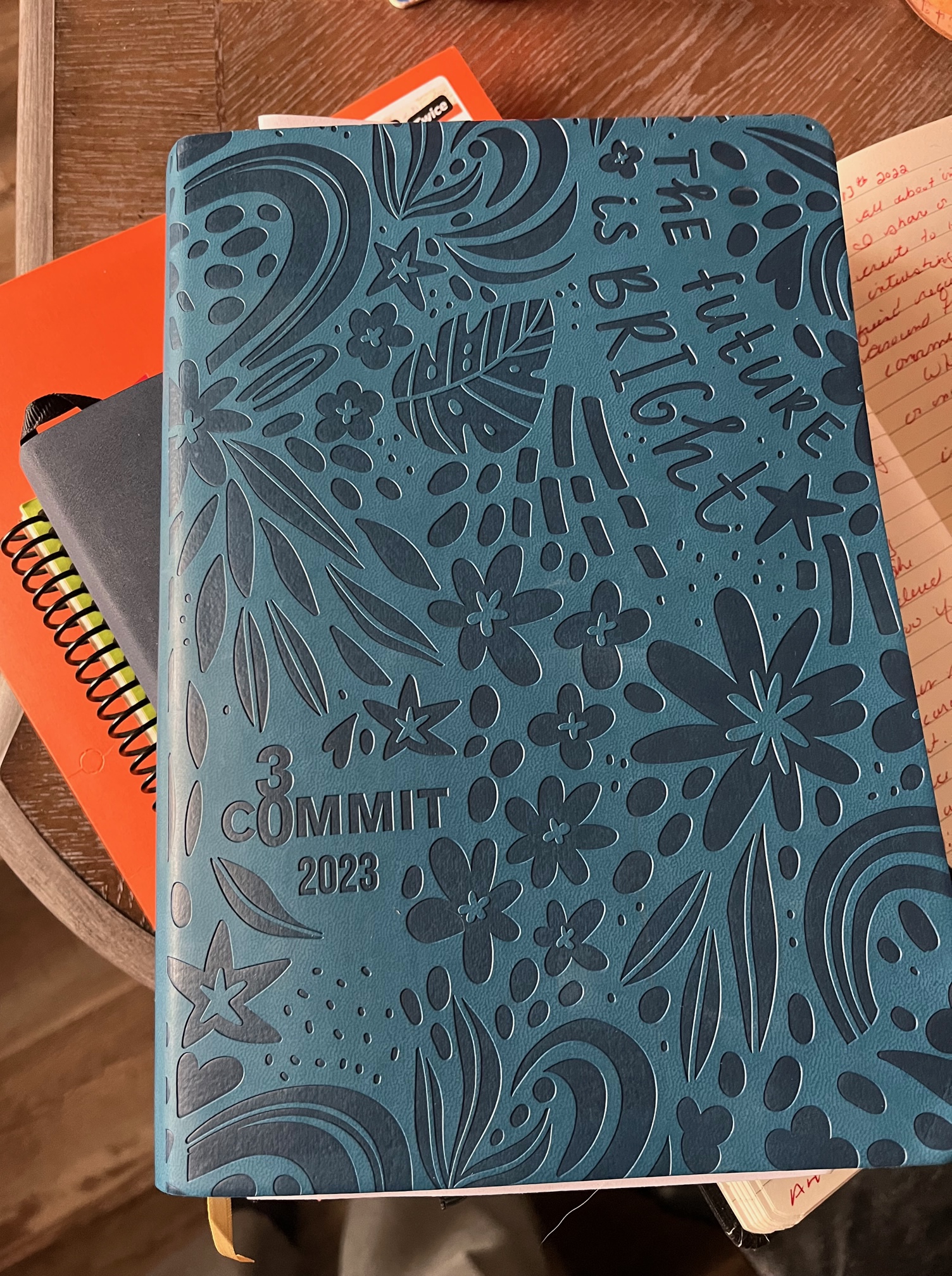
The 30-day “program,” if you want to call it a program, that works for me is Commit 30, which is really a motivational Day Planner. With this tool, I commit to a micro-movement (see how we return to this little thought from the beginning of my rant?). A micro-movement is smaller than a movement, smaller than a step or a blink. It’s more like a quarter-step or a half-blink. It’s a concept from the incredible SARK.

Love me my Commit 30 Day Planner!

In my Commit 30, I might commit to drinking eight glasses of water every day for 30 days. That’s it. That’s my big goal for the month. I’m well aware of the benefits this habit brings. I know the value of drinking more water. I already carry the conviction. I need not realign or re-inform my belief system to garner a deeper understanding.

What I need? I need to REMEMBER to drink the damn glass of water.

I move through my year in this micro-movement dance – drink more water, no coffee after two, cook for the week on Sundays – all habits I’ve formed, but tend to slide away when schedules turn dense, or a medical crisis arises, or perhaps, a pandemic. And while I micro-move, I slowly, slowly ingest something larger— the 21- or 30- or 31-day challenge that takes me years—creating an abundance mindset, engaging with my senses, opting out of certain foods, opting in on my best life. Through this gradual absorption, there is an ingraining, a re-blueprinting on a cellular level. A resolution beneath my skin, offering a conversion of my essence rippling into the world.

A Night Well Spent

Photo by Andrea Music on Unsplash

Say I told you that I spent a good, no, a great, part of my life in numbness training. Men thought me emotionally stable because I wanted nothing, asked for nothing, accepted even less. Women thought me a threat because men thought me well.

I was never well.

Say I told you that in my numbness training I learned to swallow pizzas whole, the thicker the better, anything to block my voice and keep my tongue pressed to the roof of my mouth. And say, in this training, I began to consider my ability to bring food back up an art, a talent, a superpower. Co-workers thought me hyper-productive and slightly masculine. My boyfriend, who watched me eat more and still dwindle to sinewy bone, thought me dying, Surely something terminal? he asked me over fish and chips and a pint of dry cider.

I was not terminal.

Say I told you that I paused numbing to grow a baby and the love that I felt nearly killed me. I didn’t know a body could hold anything outside of violence and buffets. And say, in this new holding, lived a desperate fear of losing all that was new—a boy inside of me because I planted him there. A boy inside me by my choice instead of through invasion. A boy inside of me nourishing off all that I would consume and keep. And say, I learned something new in this numb-pausing. I learned to allow food to settle on my lips, linger in my throat, move through the tracks in my body.

I thought I was nearing well.

Say I told you that after the baby, I returned to numbing because feeling—everything, anything—felt like a plastic bag over my head, felt like sucking air through a clogged straw. Anything good only reminded me that, once gone, the gape would be greater, the wound wider. Anything bad, let’s just say, I called this my norm.

I returned to unwell.

Say I told you that I’ve spent five years learning to sit with myself—mid-flame, midnight, mid-bite—and have tried to find the beauty in it. Whatever “it” might be. And say I realize how little I’ve learned in these five years except the way the body defaults to its earliest training. Say, I understand the way unholding a baby will do more damage than any war. Say, last night I went to an empty playground and sat on a rubber swing, kicking my feet into sky and, after, I laid wide on the ground and turned into a snow angel, gravel beneath my nape grinding into me, imprinting a memory that I hoped to later feel. To feel. To feel. I needed some echo or reverberation or even…oh, wait. I’m remembering.

Say, as I flapped and fluttered, I also howled and, after, fetaled myself into earth and watched the swings, empty, yet still swaying. Say that I wondered how they could hold all of me long after I stopped. I wondered if they felt me, if they feel me still.

Say I told you, This, a wonder.

Say, This, a night well-spent.

Un-Shiva-ing

My brother phoned me on June 13th, 2025. I was driving my oldest son to his weekly PT. I probably wore leggings and a soft tee. Maybe a loose sundress. I should tell you, my brother rarely calls. When I say “rarely,” I mean, like once or twice a year. I should also tell you that my brother and I love each other. We just don’t talk often. I should also tell you, I rarely talk on the phone.

I answer his call.

I’ve bad news, he says.

OK, I say.

Mom died.

I didn’t expect that, I say. I might’ve exhaled first. I don’t remember.

I do remember, pulling over into a gas station, worried that I would begin to cry. I didn’t. Cry, that is.

Her funeral’s next week, he says, and, I’m going.

I don’t know that I’ll attend, I say, and, Can you send me the details, just in case?

Sure. I’ll send you what I found on line.

Thanks.

I’ll call Ava (my mother’s sister), he says, and, I already told Julian (my mother’s brother).

Thank you, I say, and, I don’t know how I feel.

Understood, he says, and, I love you, Sister.

I love you, Brother.

I pull back into our drive, turn to my son, and say, Give me a minute, because he was in the middle of unpacking a new scene he’s writing when the call came.

I wait a day and send a text to some of my friends:

I’ve not shared this news with anyone. I’m still processing. My brother phoned to let me know our mother passed. As you know, I’ve had no relationship with her since I left home at 14. Still, the matters of our hearts are so complex. I will be sitting shiva for a week in hopes of healing, her and me. This means I will be home in reflective space. If you’d like to come with food or love or hugs, that is tradition. If I’ve not expressed my gratitude for you enough, my apologies. Much, much love. R

What I didn’t know, because I’d yet to talk to my Rabbi, is that I wasn’t going to sit shiva. Not traditionally.

What I noticed, were the friends who responded. Some with kind thoughts. Some with calls. Some came with comfort food of noodles and bread and wine. Some did not respond, which is a response. Maybe they didn’t know how.

If you’ve read Tangled by Blood, my first collection, a memoir in verse, you know the harmful impact of my mother’s non-protection of me as a child. It’s complicated to respond to me, I’m sure, regarding my mother, my childhood, my assaults.

It’s also very likely that it’s just complicated to respond to me.

When I talked to my Rabbi, he asked, When did she die?

I’m not sure.

We need to know. We need to know how long she’s been gone. We need to know if her body has been cremated or not. If it has, you cannot sit shiva.

I should mention, I don’t know how to sit shiva. I’ve never sat shiva. My mother did not raise me Jewish. I usually say, She raised me quite confused.

While serving in the military (forty years ago), I studied a variety of spiritual paths, including Taoism, Buddhism, and Christianity. Judaism, or more specifically the esoteric underbelly of Kabbalah, stuck. I’ve woven in other practices over time, like moon bathing and crystal energy. I’ve woven in methods to heal, ways to balm my heart.

It takes three more calls between my brother to learn that she died on May 23rd. To learn that no one knows if her body has been cremated.

I’ve probably sat shiva long enough, I tell my Rabbi.

He’s quiet. He holds space.

I continue, I mean, I think I mourned the loss of my mother before I entered the school system. When she witnessed her husband, my stepfather, sexually assaulting me. I was not even five.

Quiet.

Or maybe when I fled home at 14 or 15. And she told me that any man is better than no man, when I told her after ten years of rape, I could not stay anymore. I told her this at the diner she waitressed. I can’t remember if I had my lawn bag with me. The bag I filled with Levi’s and 8-tracks and my track spikes.

Quiet.

Or maybe later, at her mother’s funeral. I was 32 or 33 and hadn’t seen her since I left. And here, she waltzed around pretending she knew me, pretending she had some bond or something. I pulled her aside, told her that I’d love to have a mother but we would need to acknowledge the damage

She held her hand up, Stop, it said. Then she said, If that’s what you need then I need to wash my hand of you.

That was it. The official, End.

Quiet.

Somewhere before the age of five and my grandmother’s funeral, I sat shiva over the loss of my mother. Shiva looked like eating disorders and dating and marrying inappropriate partners and drinking shots of tequila chased by Bloody Mary’s. I didn’t know I was sitting shiva. Didn’t know I was mourning. I thought I was living and nearly dying through starving and suicide attempts. I thought watching destruction during the war catapulted me into a deeper death.

Quiet.

How many times can you die? Or sit shiva for another? I ask my Rabbi.

Here, 29 years after my grandmother’s funeral, and now, she, my mother, has left her body.

You can be thankful she is no longer suffering, my Rabbi offers.

Now I’m quiet. Oh! How much she probably suffered. How much those who bring suffering are also in pain. I don’t know what to do with this thought. I set it aside. For now.

What do I do while sitting shiva? I ask.

IF you can sit shiva, he reminds, and, the goal is to find good memories. To allow her memory to be a blessing.

I have none. I have nothing, I say.

You’ll think of something, he says.

We never find out if my mother was cremated or not, so I sit un-shiva and pen in my journal.

I call my brother.

Do you have good memories of Mom? I ask.

We always had food. She worked hard as a waitress, he says.

At more than one place, I say.

Quiet.

Thanks, I say.

I love you, Sister.

I love you, Brother.

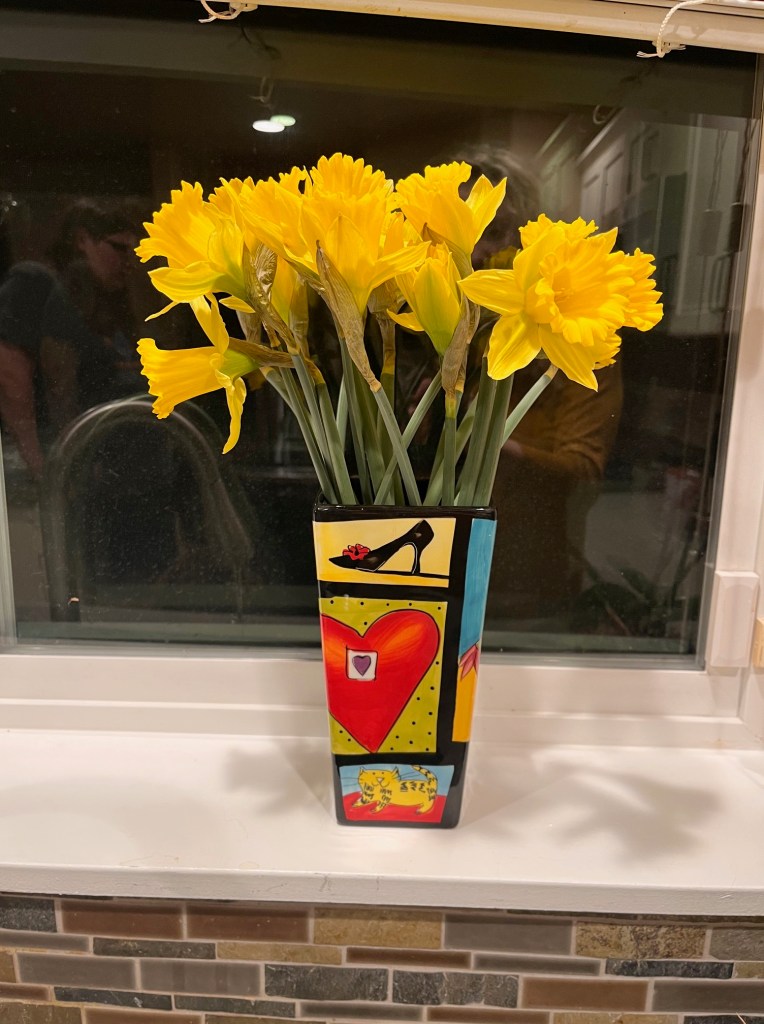
Someone, I still don’t know who, sent flowers.

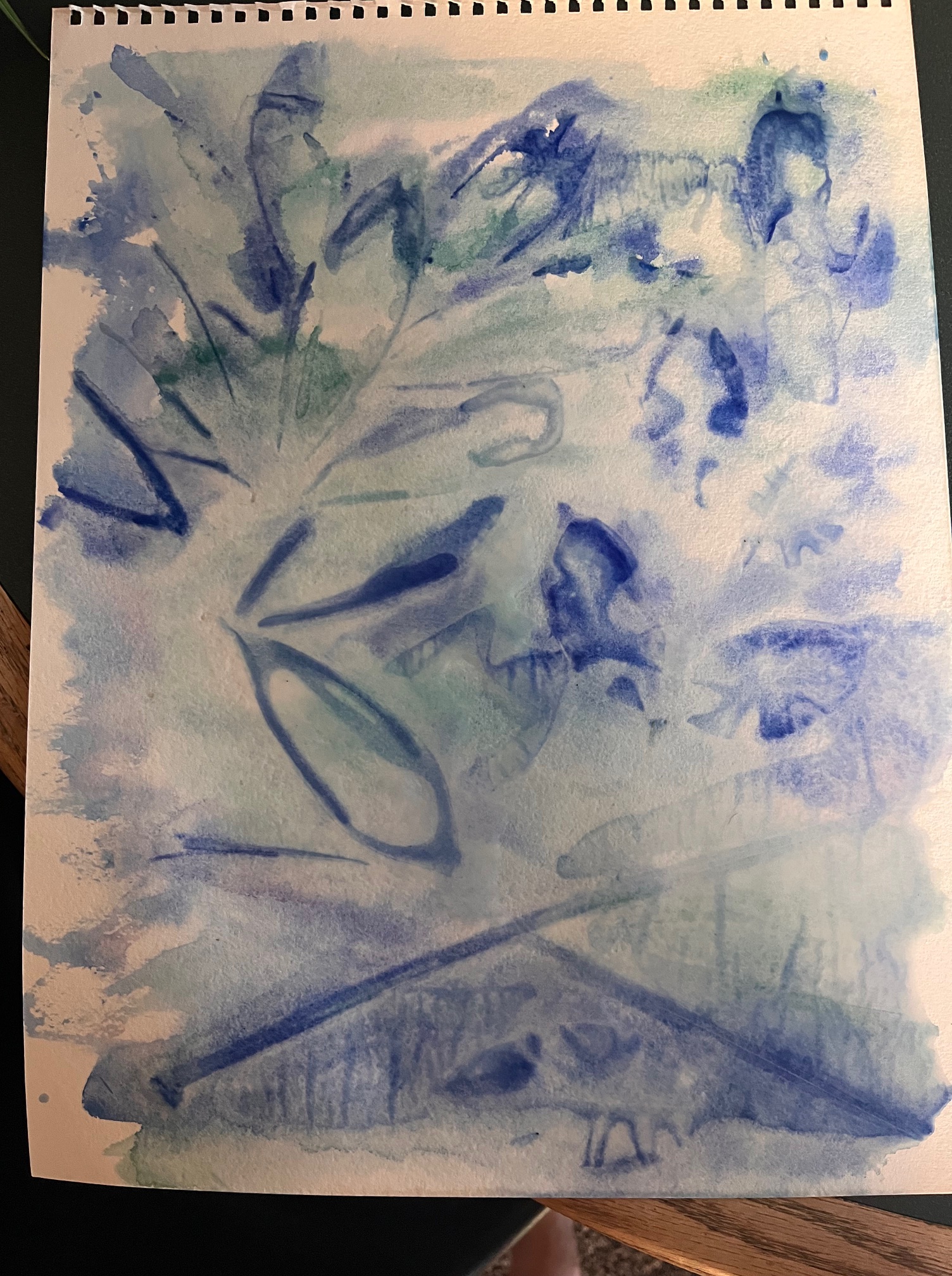
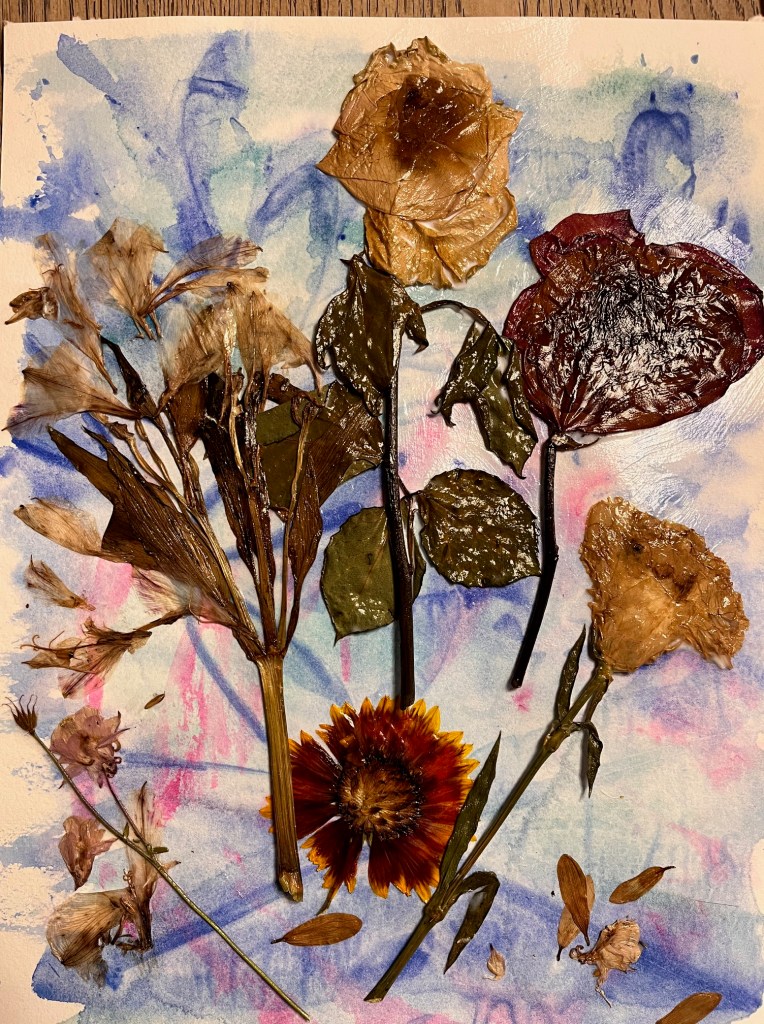
When the flowers begin to wilt, but still hold color, I clip the stems and leaves and “stencil” watercolor onto pages.

I’ve not worked with foliage and watercolor. I’ve not turned foliage into art, unless you count my backyard, my fruit trees, my gardens. I’m not sure why I’m making art with flowers for my mother’s death from an unknown, yet caring, person.

I’m not sure why I don’t ask my list of friends, Did you send the beautiful flowers for my mother?

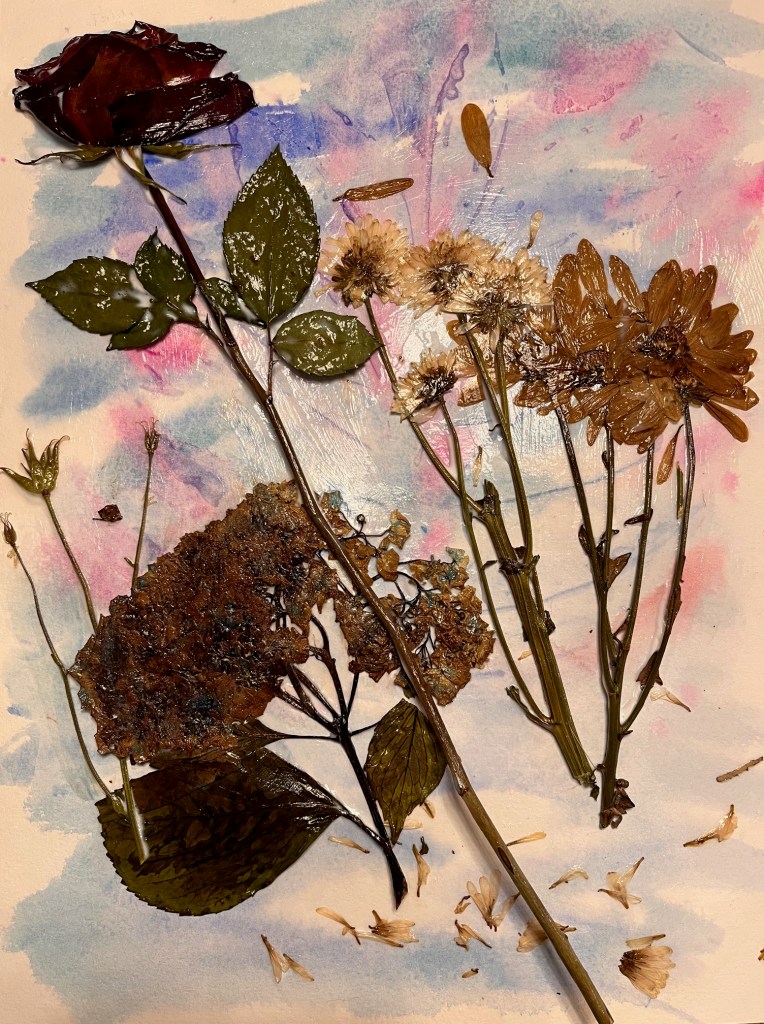
I save the flowers. I press them between wax paper and place in collected cookbooks: Moosewood, 52 Shabbats, and Fire + Wine. I don’t know why I’m saving them. I’m not sure what I’ll do with them. My plan was to cut the watercolor stem stencil pages into bookmarks and gift them.

I don’t.

I’ve tried to journal about un-shiva-ing each day since the call from my brother. This practice has churned into an interrogation of mothering. I wonder if I’m a good mom. I wonder how my mom felt (if she felt) about her mothering/non-mothering ways. I sort through this in my journal, in my garden, in my dreams.

By now, I’ve purchased modge podge and cheap brushes and art tweezers. I purchased these, not for the flowers, but remembering a friend’s dresser, circa 1999. She’d completely coated the furniture in cuttings and images and paint. I loved the whimsy. Loved the idea. I’ve thought about this type of curation a lot since then and have wished to apply this to my lessons with my high schoolers in the Juvenile system.

Last night, a friend visits. Our plan was to “work.” When I say work, I mean the business side of art. But I’m tired and I tell her, I want to create something beautiful. She smiles. She nods. She’s like that.

She works until her laptop battery runs dry.

I interrupt her.

I’m making some sort of modge podge collage from the bouquet of flowers for my mother when she died, I say.

I think I’ll make two. Use both sheets of watercolor prints, I say.

I’ll give one to my brother, I say.

I practice modge-podging on a smaller sheet of watercolor paper.

It works.

I like the way the flowers are dead and preserved at the same time. Like the way they’ve textured the paper. Like how there’s some fur-fuzz from my Newfoundlands who are standing by.

I podge. I modge. I need the tweezers to put flowers back together. I leave petals to fall where they will, like in my garden. Like in my heart.

I make one.

I’m surprised by the way the rose still holds her hue.

I make the other.

Here, my friend turns the rose for me. I didn’t see how I had the front face-down and I wonder how many times something in my life has sat this way without my noticing.

I don’t know if my brother will like the art. Here, my way of creating a soft memory where none exists. I don’t know if he’ll understand what I’ve tried to do. I do know that it doesn’t matter.

After my friend leaves, after the pups fall to sleep, I stand beneath the Full Blood Moon and empty my hurt and some anger I that I thought I’d already released. I understand that my mother never did wash her hands of me. I understand the way her non-protection and her abandonment has curated much of my narrative arc. I understand that there is no “end” in relationships. Only movement. Forward or backward. We decide.


My un-shiva-ing is most likely also not over.

This, too, I understand.

In Matters of the Heart

On April 14th this year, my oldest son, Zach, underwent his 40th procedure. He’s 24. You might’ve kept up with this event through my social media posts. You might’ve thought me worried. You also might’ve believed me strong.

Let’s not be fooled.

If you asked me, How are you? those two months leading up to Zach’s procedure, I would’ve responded, Great. This is an easy one.

I would’ve believed this response to be true.

Today, now two months out from that surgery (yes, Zach is doing fantastic), and I’ve journaled about this experience in hindsight. I wanted to share a few of my entries.

We knew this surgery was coming.

We’ve known this surgery was coming for almost two years, probably longer.

We were ready.

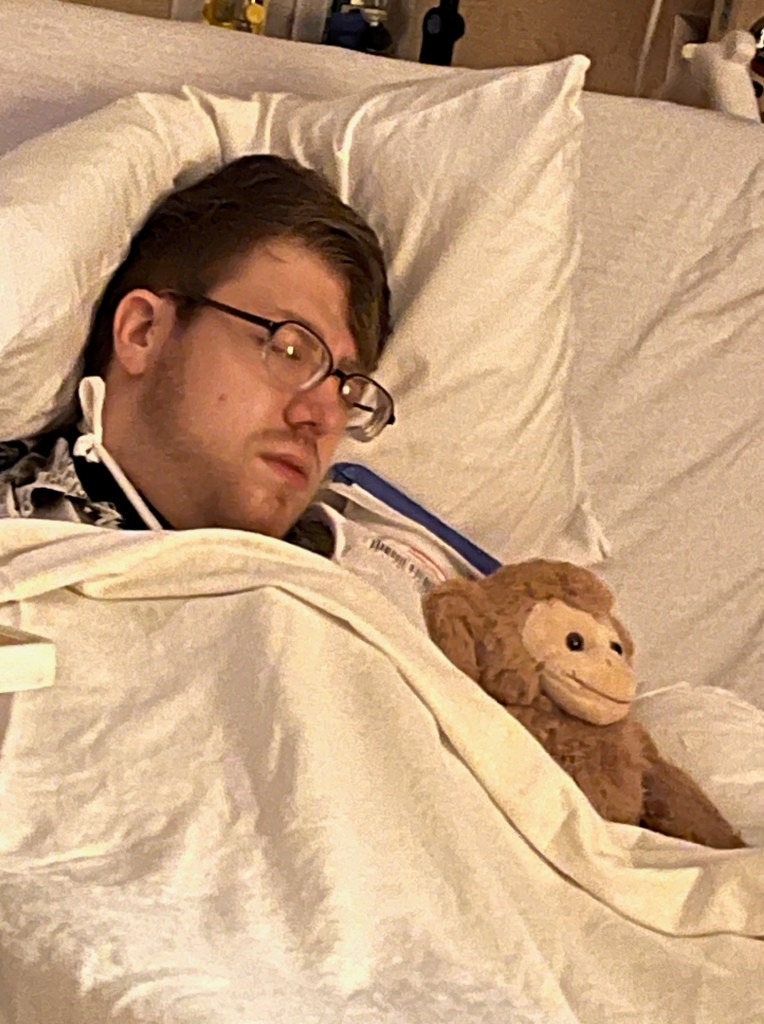
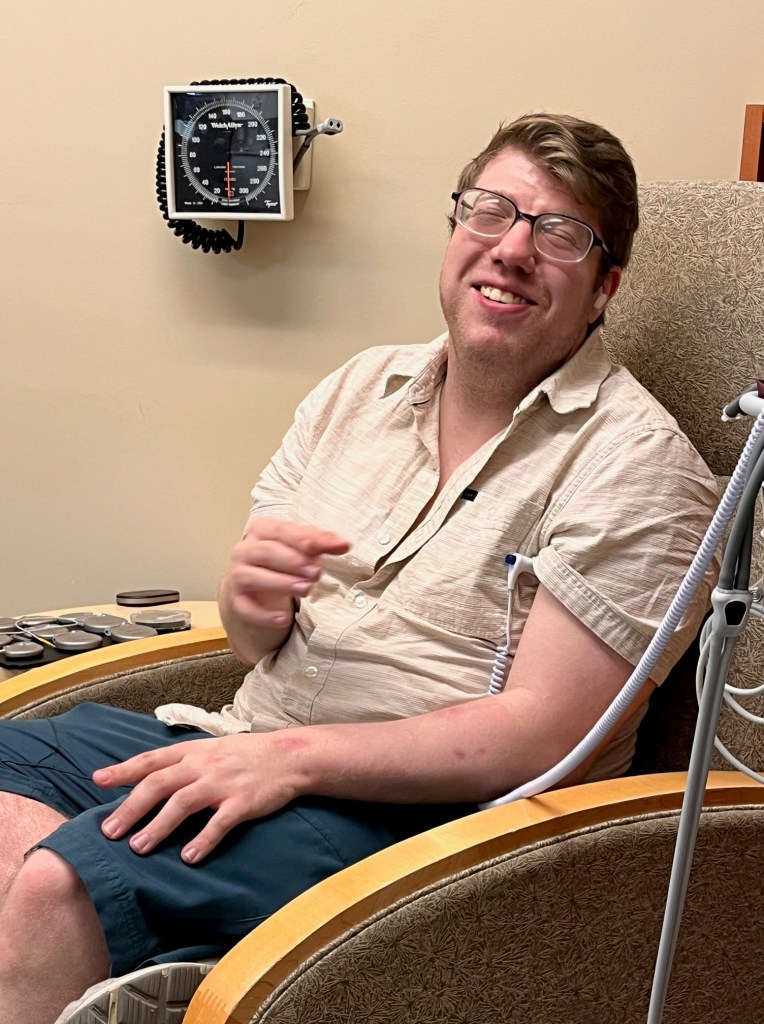
Image: Zach at his pacemaker interrogation, Feb 19th, 2025.

At birth, Zach barely weighed four pounds. He had a heart defect and could not breathe on his own or eat. His limbs were twisted. By the time he was three months, I’d learn that he was visually impaired and deaf in one ear as well. And more.

Image: Zach only a few hours old, briefly held by me and the nurse before returning to his isolette and vent at St. Lukes NICU, Boise, March 27th, 2001.

Image: Zach in his isolette, St. Lukes NICU, Boise, March, 2001.

I wouldn’t know until Zach was nearing 18 months that he had a secondary heart defect, bradycardia. His heart didn’t just slow, it stopped, though I didn’t know his heart was stopping. His body trembled as if he were seizing.

It took months with monitors before I captured an “event” for the specialists to accurately diagnose him.

Image: This is Zach walking his little journey with all those monitors, Fall, 2003 and by now he’s endured nearly 20 procedures.

Zach endured his first heart surgery, a pacemaker implanted into his abdomen because his body was too small to “store” the device anywhere else. We’d flown to Chicago for this procedure. The “seizure-like” activity ceased within minutes of the pacemaker installation.

I didn’t understand then that with every “event,” Zach died. Over and over.

By 2013, we (Zach and me) traveled to Sacred Heart in Spokane, Washington for another pacemaker-related surgery. This, a simple battery change.

Things did not go well.

I wrote about it.

The book was published by Moon Tide Press in 2024.

Safe Handling is a collection-length poem, but really, this poem is a love letter to Zach, to a surgeon, to my two other incredible sons.

Fast forward. Here. 2025. We know the battery must be replaced. Every year at Zach’s heart interrogation, we are given the countdown. We are told how much life is left in the battery. We are told whether leads need to be exchanged. We are told how many “events” occurred and how long each one lasted.

We are informed.

We are prepared.

When I say “we,” I mean Zach, my other two sons, and me.

A heart like Zach’s means two different surgeons. One monitors his defect (back flow, aortic fusion, and more), while the other monitors his bradycardia and the pacemaker.

A heart like Zach’s handles life with love, with clarity, with complete tolerance and truth.

(I wish I had a heart like Zach’s)

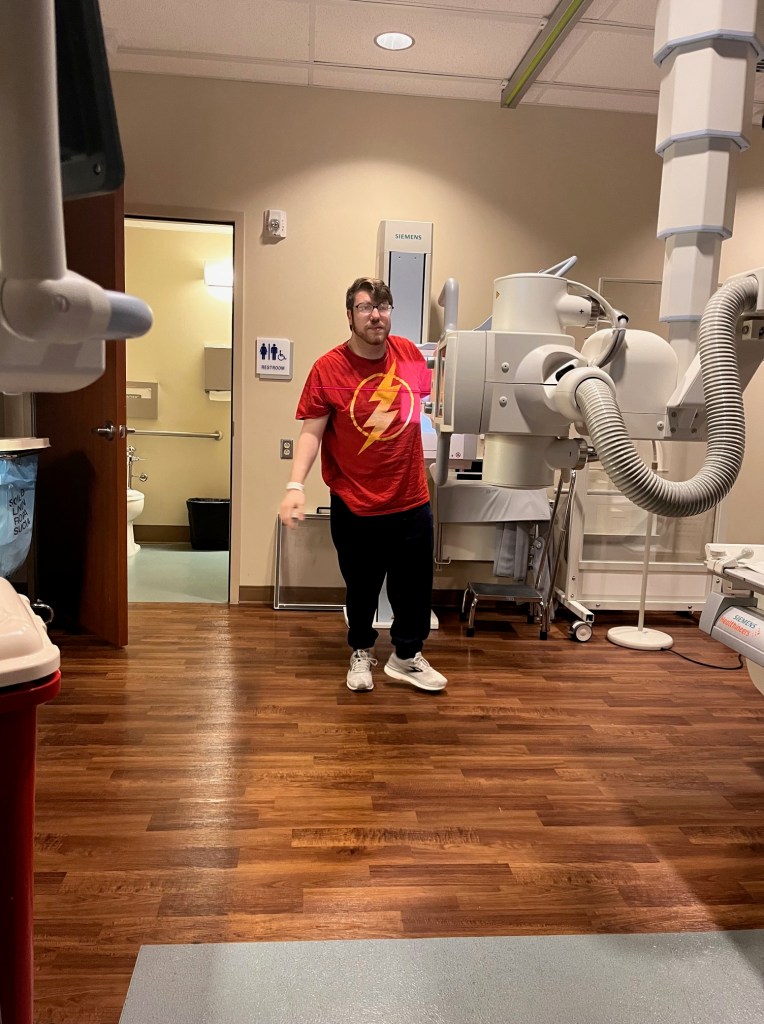
Image: One of the many pre-op appointments before Zach’s 2025 procedure.

The size of it all.

This surgery is not a battery replacement, but is another very simple surgery.

I call these little operations “tune ups.”

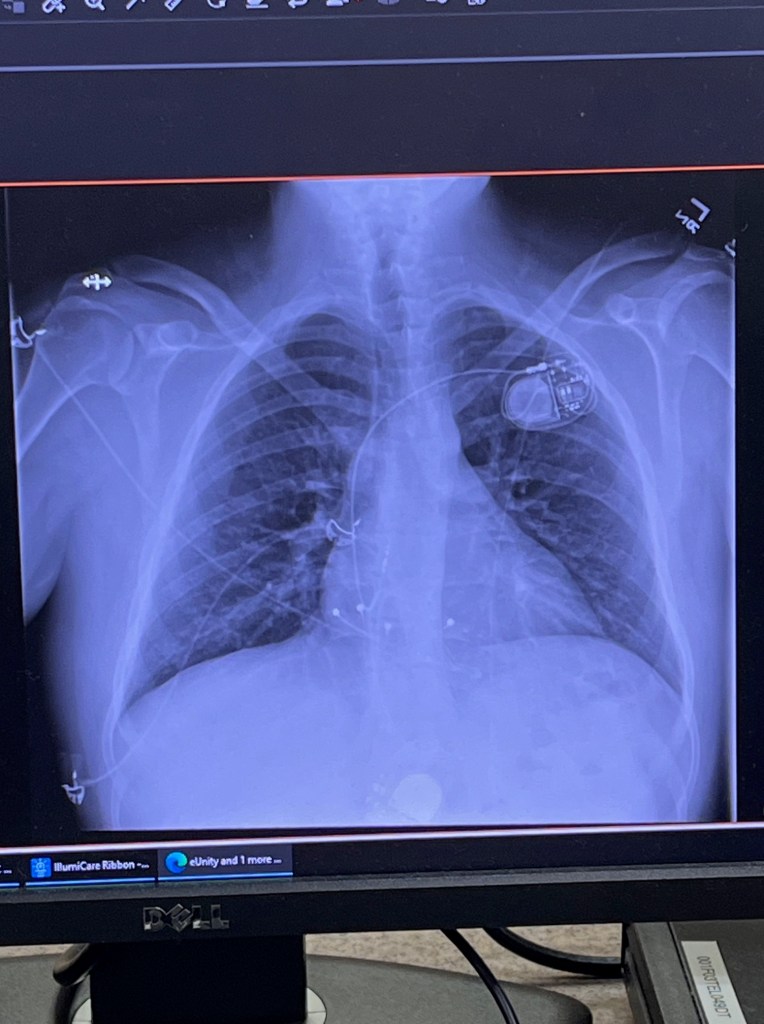
They, the surgeon, will place a new pacemaker near Zach’s left shoulder.

This device (similar to the one that is soon to be installed) is much smaller than the one in his abdominal cavity.

Here, Zach is so excited to have his new pacemaker.

Perhaps because we’ve been counting down to this surgery for a few years, I countdown.

I countdown on social media.

I post, not for sympathy, but because these types of journeys are rarely shared. They are usually quiet, isolated, tests of endurance and faith.

Here, April 6th, and we are eight days out.

Much like most matters of the heart, this, Zach’s heart, has been clearly part of my own rhythm.

I penned a poem somewhere between his birth and 2022, “Life Lines.”

This poem ended up in my first full-length poetry collection, Tangled by Blood (Moon Tide Press) in 2023.

Here, seven days out in my countdown and I talk about Zach’s heart.

The responses on SM helped. I felt less alone. I was also managing a cleaning spree in my home.

I washed my cabinets and walls. I repainted base boards. I vacuumed between the concrete cracks on my driveway. I thought my frenzy simple distraction. Thought this a healthy way of managing stress.

Or maybe I thought, I’m just over-prepping the house for Zach’s return.

My neighbors did not ask. Some of them have started vacuuming their driveways and I feel I might’ve launched an unhealthy trend.

I’m cleaning. I’m counting. I’m counting down. I logically understand that though this is a simple procedure, there is risk.

I even correlate my brain to the last heart surgery, the battery exchange, where Zach ended up with a staph infection and nearly died.

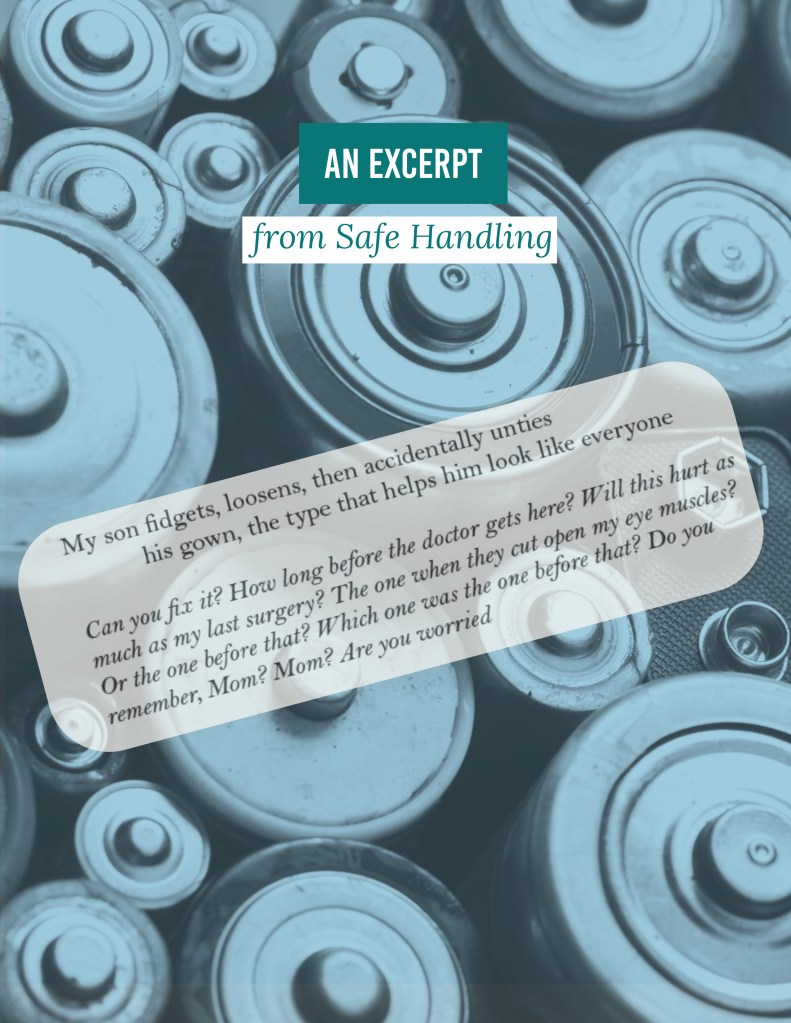
…an excerpt from Safe Handling, from that 2013 experience with Zach, with his heart.

Oh…in the countdown…the list.

Here, all the pre-op needs.

…and the “other” pre-op preparations.

These are the things we rarely talk about, especially as a single parent with a special needs child.

Oh! the extra prep and planning.

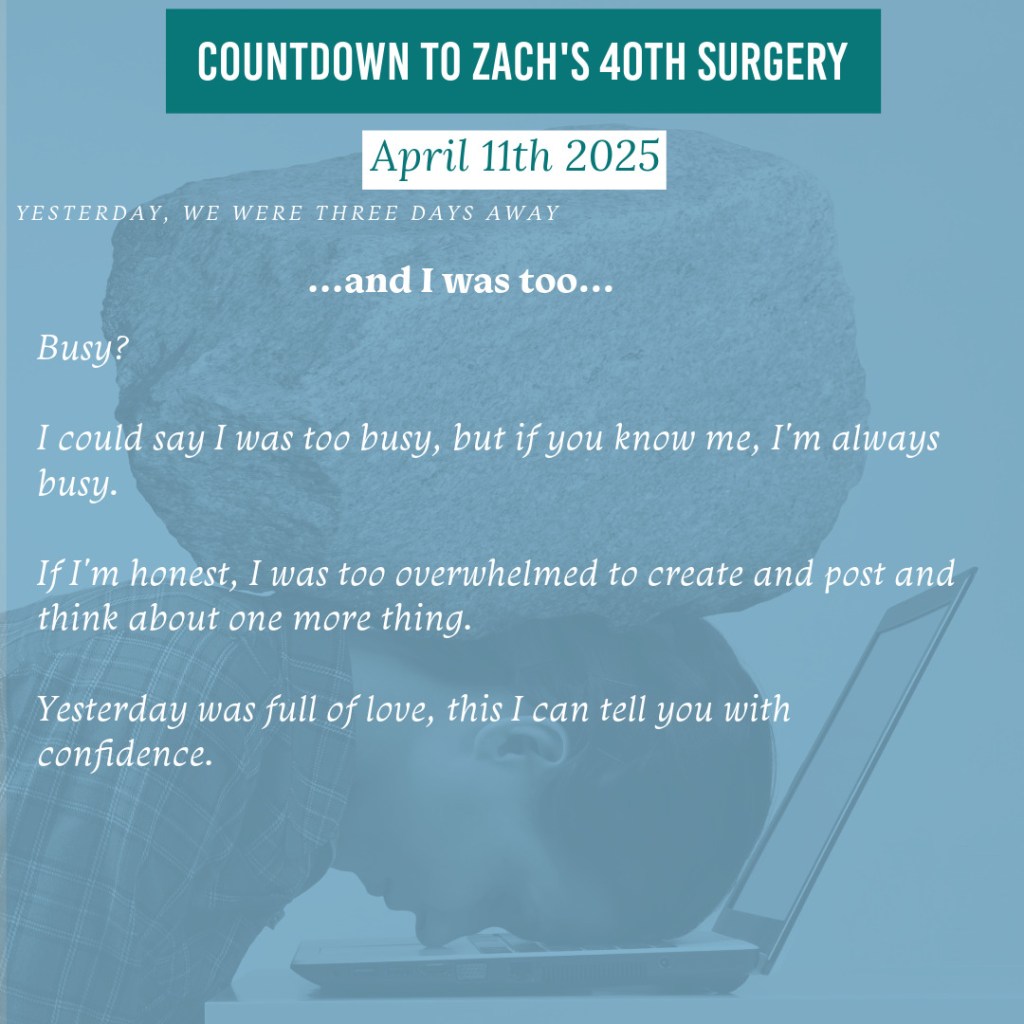
By April 11th, three days out, I’d missed posting on social media. I feel bad. I feel like I’ve let someone down.

Perhaps I decided to do the countdown publicly for my own need. Perhaps I needed one more task to ensure the busy, distract the worry.

Though, I didn’t think I was worried at the time.

Here, the day before surgery and Zach has been receiving so many messages. I read the responses aloud each day.

All that out-pour of love.

I forget to say, Thank You.

I still need to say, Thank You.

How small Thank You feels right now, two months later.

We arrive.

We wait.

Zach is ready.

This new pacemaker will change his life. He will be able to operate (and be near) a microwave, which means more independent living. His old pacemaker, which brings him much discomfort, will eventually be removed (another surgery for another day).

Image: Zach at St Lukes, Boise, April 14, 2025.

I sit in the small waiting area, an open book on my lap that I don’t read.

The surgeon comes in, says, He’s in recovery. You can come back in five minutes or so.

And here, I crumble.

I did not know how much stress my body held. Did not know the worry I carried. I can’t even catch my breath and the other waiting families, concerned that I’d lost a child, gather `round to console me. It takes a minute before I can shape the words, He’s ok.

When I enter his room, my knees buckle.

Here, Zach, peaceful.

Here, a complete echo of his 2013 procedure, the one where he nearly died.

You see it, don’t you? The image for the cover of Safe Handling and here, 11 years later?

Image: Zach post-op and in recovery, St. Lukes, Boise, April 14, 2025.

Before Zach’s released, we ask his surgeon if we can see what the pacemaker looks like in his body.

Image: Zach’s new pacemaker, April 15th, 2025.

If you know Zach, you’re one of the lucky ones.

If you know me, you know how inter-woven my existence is with my sons.

You also know my gratitude.

You probably also knew my stress pre-surgery and with all your love, decided not to call me out, but instead, offered grace.

Image: Zach post-op check up, St Luke’s, Meridian, April 29th, 2025.

Seeds

The small, slow steps work. Every time.

This is true of difficult decisions. True of preparing a gorgeous meal. True of creating beautiful art. The fastest track might yield “results,” but rarely offers a deep sense of fulfillment.

For the last three years, I’ve suffered a variety of medical malfunctions. Maybe I’ve suffered this way most of my life. After yet another surgery in January, my body began her shift, away from fighting and into healing. I wanted to expand, to add back routines and events that I’d neglected.

Instead I paused.

I asked, “What needs tending?”

I began within me and within my home. I could tell you all that I think I’ve “fixed.” But I know better. I know that healing is not “fixing” or “adding.”

True repair is a “returning.”

One of my “returns” involved my gardens.

When I say garden, I don’t mean only the beds where I grow herbs or vegetables. I don’t mean only the spaces I plant pollinators. I mean my heart, my family, and my mind. We are in a continuous space of rooting, seeding, rebirthing in our relationships and in our thoughts.

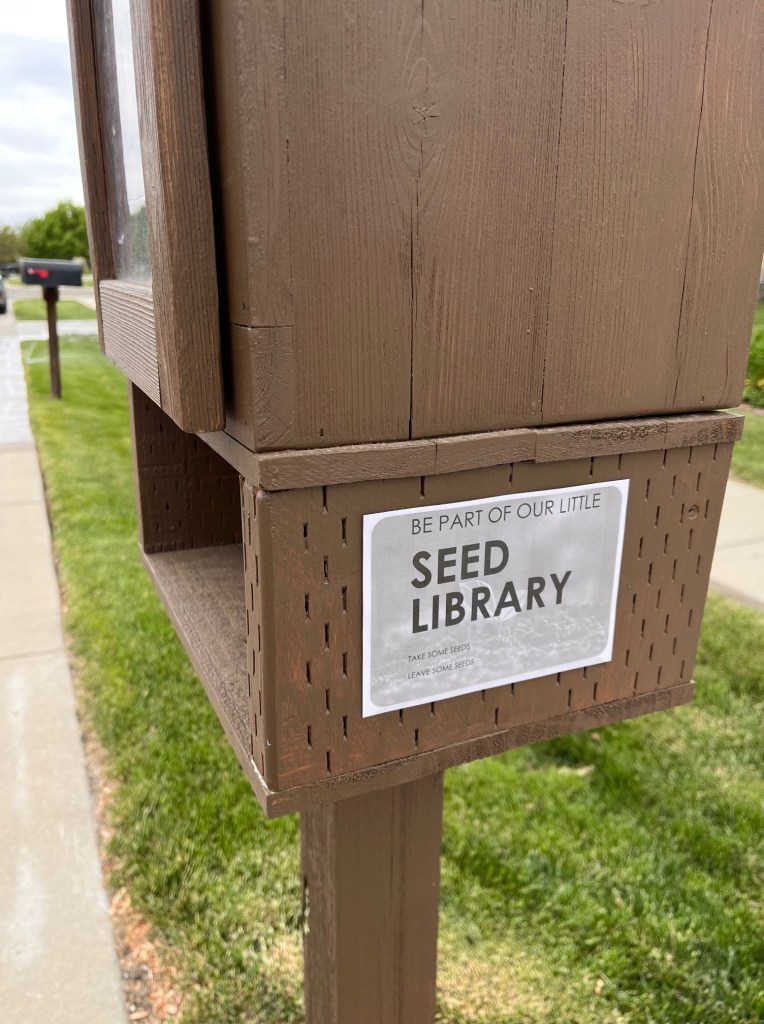
I consider my Free Little Library one of my gardens. Here, I offer books. Here, I remain in community with my neighbors. Here, a space to share what we value. A chance to note what we’ve tended.

This space needed tending, especially a fresh coat of paint and a more aesthetic base.

I hated the previous base, PVC piping, but didn’t have the energy or resources to replace it.

Here, a new beam. And a new shelf.

I’m certain the new shelf confused my neighbors. A few left extra books. Others left flowers.

Behind the scenes, I worked on an idea.

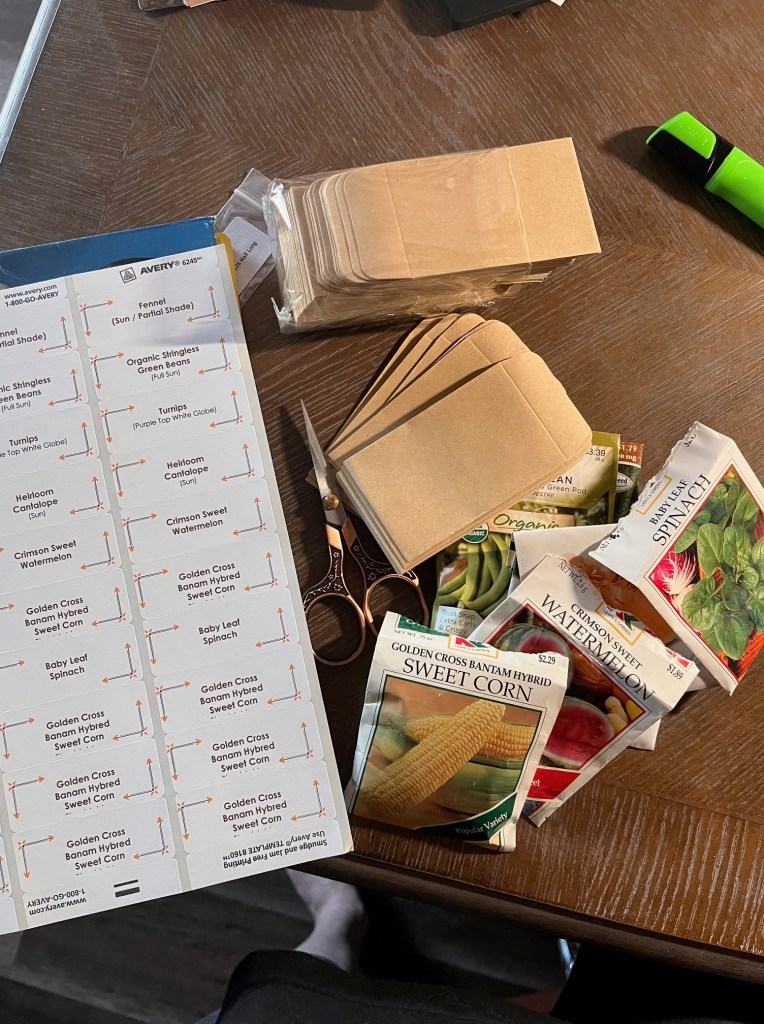
What I wanted to offer, along with books, was a seed library.

Isn’t this what libraries do?

This honored my sense of “return,” a small contribution of restoration to earth.

I packaged seeds in small envelopes.

Labeled.

Placed empty envelopes in a box for others to also easily share.

I printed a small sign, explaining the new neighborhood exchange.

Once the Little Library was painted, I added the sign.

The process was not a mighty one.

Still, It took almost three months.

Slow and steady.

Small movements forward.

No.

Not forward.

A step at a time to my place of return.

We forget that we began as community. We sat across from one another, sharing stories and food and laughter. We helped one another build havens. We healed each other.

The “return” for me is this deep connection with self, with source, with you.

An Invitation to Keep Your Course

Today, there’s a swearing-in. Yesterday, three hostages were released. The day before, TikTok “went dark.” Last week, Zuckerberg decided to eliminate fact-checkers on Meta, citing a “cultural tipping point.” Last year, Musk created a reel using AI, putting words in Harris’ mouth, and called it a Parody. In the days of yonder, we called this slander. Today, we—the people—call it fake news.

Later today, number 47 will be sworn in for another term and you might feel like you’ve just dropped into the middle of a Sci-Fi-Drama-Comedy in an oligarchy society where the rules keep changing and the world shifts into multiverses at every blink. Some might call this the Gilded Age Redux.

 I want to remind you, You are an artist.

I want to remind you, there are ways to navigate the world and still hold true to yourself.

Here’s a few ideas

  1. Keep your values as an artist, as a human. Check out ArtWife‘s Episode 17: THE COIN by Yasmin Zaber (And What it Can Teach Us About Artistic Values).
  2. Maybe now is a good time to re-list those values. Prioritize your top ten. After, make another list of why they matter.
  3. If you need to make hard choices over the next four years, return to your value-list (see #2, above) and ask, Does this choice align with my values?
  4. Keep consuming. Knowledge is power.
  5. Choose your consumption wisely. This includes meals, events, books, relationships, courses, energy, etc.
  6. Keep engaging. Many of us will want to isolate and cocoon. This is how we feel safe, and yes, this response often works. And yes, if this is what you need—do this. I invite you, if you can, stay in the game. Keep playing. Play by your rules, your values.
  7. Illegitimi non carborundum
  8. Connect with communities that nourish you—your heart, your mind, your art.  
  9. Remember that great communities include literature, libraries, films, radio.
  10. Use your critical thinking caps. While you’re at it, teach critical thinking where you can. Many people carry a limited understanding of what AI/Creator skills can accomplish. Many struggle with recognizing false information. Many walk through life with limited knowledge and resources. I have sons and grandsons, friends and family, students and community. I can ask hard questions and showcase methods to research. I can reiterate the importance of questioning truth. Of questioning.
  11. Remain a student. Keep stretching yourself. Garner wisdom from people you trust and respect.
  12. Use social media and platforms to make a difference. Choose beauty. Choose community. MySpace launched social media for many of us, reminding us of our longing for connection and reconnection. Consider maintaining social media on your terms. Maybe it will shift to its original design—a space where we make new friends. Make old friends new again.
  13. Encourage deep listening into conversations that weigh on your heart and on the world.
  14. Become a deep listener.
  15. Make a list of five ways to take great care of your precious self over the next four years. My list includes writing, reading, studying, watercolor, family-time, puppy-time, gardening, chai, bagels, music, meditation, and more.
  16. Sage. I invite you to pack an enormous bundle of sage with you. Consider saging negative jerks. Can you imagine, someone cuts you off in traffic and at the next light, you exit your car, light your smudge stick, and offer a spirit-dance around their vehicle?
  17. Reach out if you’re hurting. Ask for something on your list (#15, above). If you receive a text from me with the word Puppy, please do not bring me a puppy. Instead, understand that I need company and cuddles.

The only way to be part of the solution is to retain who you are.

I’m taking notes, one multiverse at a time. I’m sorting through this continuous rule-shifting game called life. I’m part of the resistance. I take my role seriously.

Let me take you to a powerful portal in my life when I left my universe of world-level athlete and entered motherhood.

Scene Set-Up: My son, Zach, is four hours old. His pediatric cardiologist, Eloisa, sits across from me at St. Luke’s NICU:

“I know we’ve found a lot of wrong things,” she says. She’s right. He can’t breathe on his own, eat on his own, his feet are deformed, his hands are twisted, he is gray instead of pink-baby-hue. His list of “defects” continues, down to less important, more aesthetic issues. Things I care little about.

“Remember, we are looking for wrong things,” she says. “He’s premature. He’s ill. He’s small. If we ran these same tests on every full-term baby, we’d find something wrong with everyone.”

Side by side, we watch my baby sleep. He wears a tiny diaper, electrodes, and his full head of hair. He is not worried; to him his heart works fine. Time is all that exists in this ward, and, like the other parents here, I am required to wait, watch, wonder how my son will develop. I wish I could make a plan, write a list of to-dos that could fix my baby.

Eloisa stands, offers an embrace, pats my back tenderly, as if to console.

“There are so many things that can go wrong with the human body,” she says. “I’m always amazed with the miraculous number of things that go right.”

This morning, I decided to stay committed to a choice I made 24 years ago—I will look for right things in the world and I will offer those things praise.

Last week, Zuckerberg’s decision to place power in the hands of the Meta user can do just that.

We—the people—choose who we gather with, what we read, what we think.

We—the people—can create art no matter.

Today, there’s a swearing in and, during this time, I invite you to re-oath as an artist.

Tomorrow, you can remind yourself, you are still an artist.

And if you forget, look me up. I’ll be under my stairwell, painting or reading, a bagel piled, a mug of steamy chai, and my heart, still holding hope.

The World Needs More Than a Tweaking

I underwent a little spine surgery last Wednesday.

Yes. I’m fine.

Yes. It was a necessary tweaking, offering hope to alleviate pressure and pain on my occipital nerves.

I think of all pain, nerve pain is the worst.

No.

Heart-pain wins.

But this isn’t about pain. This is about hunger.

The day after my tweaking, my youngest son toasted me two slices of rosemary sourdough bread. I taught him how to spread butter—thin and all the way to the crusts. He brewed chai, aerated coconut milk, slowly stirred in creamed honey. I can’t remember a better meal and, within the hour, I heard myself, Is there more?

By 3 pm, I’d devoured the loaf of sourdough and five mugs of chai and still, my belly squealed with wanting.

Before my little tweaking, I’d prepped a couple weeks of dinners. Japanese BBQ meatballs, fried rice, lemon chicken with snow peas, meatloaf and roasted potatoes.

I’m a pescatarian, but my man-cubs, still growing into their skins, are carnivores. Over the years, our meals have shifted—out of piece-it-together based on leftovers and budget and into savory, into recipes curated with time, thought, and blossoming.

By 4 pm, I heard myself, I’m starving. For dinner, we’d planned Udon Noodles with shredded grilled chicken. My son replaced the meat with thinly sliced boiled eggs and avocado for me. I asked for more sesame seeds. Asked for seconds. I might’ve asked for thirds.

I can’t remember the last time my body felt hunger.

That empty and visceral roar, one that rattles the bones.

By Friday, I told my surgeon about my feedings and he said, The body knows, and, It is hard to feel hunger when the body is under assault, continuously navigating deep pain.

If you’ve sat with nerve pain, you know this zapping. It wears you down, grinds your energy and your smile. I never thought of how pain interfered with my appetite. My appetite for life, for food, maybe even for love.

You don’t know what you don’t know.

I thought I was living fairly fully.

I thought wrong.

Four days have passed since my tweaking.

I’ve consumed two books, sixteen new poems, the tub of honey, a bag of soft tortillas with nut-butter and fig jam, a dozen eggs, and a pound of salmon.

This is what I’m willing to catalog.

Despite this filling, I do not feel heavy. I turn my head left without cringing and tearing up. I rest my head on a pillow without the taste of bile, a taste I’d grown so accustomed that I failed to notice.

I sit here with my accommodating keyboard and mouse, a fig & cedar candle dancing.

The sun has yet to rise, the pups are well-fed and already back to sleep, deep in digestion.

California is still burning and fear in our country has traveled beyond our throats, past our voices. There’s a sizzle in our nostrils and I think of the relationship between fear and pain. I think of the way both eradicate desire. I think of how I’m secure in this tiny suburb—a bubble in Idaho—where, in this moment, I am satiated.

Maybe this is about pain after all.

The world’s heart-pain is in need of deep healing.

I know we need more than a tweaking, more than four nerves are in need of attention.

I don’t know what I can do except fill myself with toast and write a poem, share it with you and hope,

hope it matters.

Let’s Say…

Let’s say, recently, interested men-folk express their said-interest in you by pointing out all that they are willing to accept. And, let’s say, their acceptance, which is tolerance in disguise, shapes into a short list and on this list is the life you’ve curated, including your four Newfoundlands, your adult disabled son, and your own “limited” self. Let’s say, none of these men have met you IRL, but they do DM, and DM frequently and yes, they are kind enough and most likely good men. In their messages they recant their willingness to “step up” and “partner up” with you despite your medical “challenges” or “issues” or “liabilities.”

We can say that your medical challenges/issues/liabilities are not

Medical

Challenges

Issues

or … Liabilities.

Because, let’s say, you, like your adult son, are disabled. Magnificently and beautifully disabled.

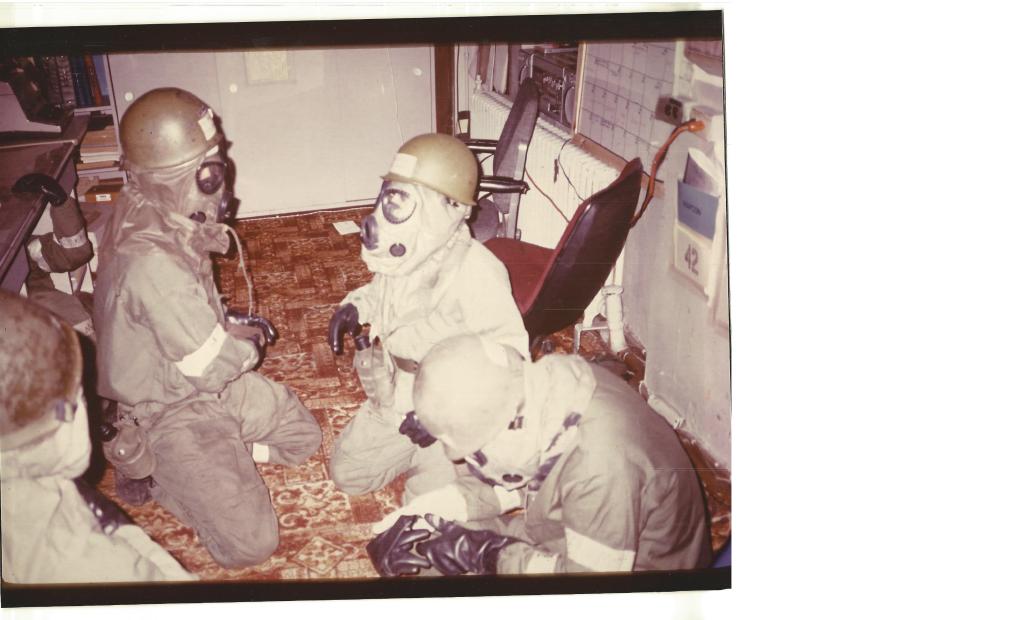
Let’s say, your disability begins here, mid-1980’s, stationed at RAF Upper Heyford as you don a chemical warfare suit to “practice” wartime skills. Here, you weigh maybe 110 and spend your off-duty time trying to control your eating disorder. Your cervical spine is damaged. You wear a brace on your lower leg. You don’t think of yourself as disabled. You don’t talk about your limited ways. You keep a game-face. You maintain your military bearing. You teach yourself to appear as normal as possible…all the time.

Or let’s say, here, 1999-ish, you are at the height of your fitness career. You compete on National and World stages in SportAerobics. Maybe you are 11% bodyfat, give or take. You train six hours a day. You teach PiYo, Pilates, Yoga, JohnnyG Spin, and weighted step. You train athletes, coach dancers, study the human anatomy. You still suffer with eating disorders. You believe yourself invincible and your ego is the size of Texas. Here, you are clearly disabled.

Or let’s say here, 2004, you’ve shape-shifted again, this time with breast implants and a “softer” look. You win the pageant, you wear the 60-pound beaded gown and earrings nearly as heavy. You still starve. You traction your cervical spine in secret. You hide your leg brace beneath wide trousers. You’re married, but not really. Let’s say here, you’re at the height of your disability because you believe yourself truly awful, a terrible human and even worse mother. You believe this because this is what you are told throughout your DV marriage. Did we mention your weight? Your size two gown? Do we need to?

Let’s say here, 2009, your third son arrives and you press his heartbeat into your own. You’ve done this with each son. Here, you feel unabashed, raw love. You have (and still) feel this with each of your beautiful children. You feel this despite all your broken. Let’s say here is the launch of your Exodus, your exit out of abuse, self-induced and otherwise. Within a few months, you will flee that DV marriage and claw your way out of ashes and up a mountain and begin to heal what some have labeled as “flaws” and “poor choices” and “illness.”

Let’s say, here, 2015, and you’ve endured your second cervical spine surgery. And let’s say, you are not at the height of your disability, but instead, you are finding your way.

Let’s say, through the struggle, out of destruction, you realize that you’ve never really accepted disability. We know this is not denial. We know how much your first-born, now-adult (“disabled”) son has taught you. Perhaps what others label as disabled is instead, your superpower.

Or, let’s say, you have an understanding that

every single one of us

carries “disability.”

Some of us are financially disabled. In our current culture, many of us are demographically disabled. Others are educationally or emotionally disabled. Let’s say we are all working WITH something, against another something, and sorting through yet one more something.

And let’s say, because of your childhood sexual trauma, your military stressors, your DV marriage, and your brave mamma-bear single parenting stint, you’ve learned to not display your weaknesses, mainly to avoid the pouncing of predators.

Say it’s taken years to muster your new level of courage and release the shame that society has planted on you for overcoming…

for surviving….

for falling down…

for getting back up.

And, let’s say, now you’re comfortable and madly in love with who you’ve become. And say, in this space of love you begin to openly share on social media these tiny windows into your challenges. You share these glimpses and pieces of your authentic life with the hope that others will also be unashamed. Let’s say you also hope to create awareness. Or let’s say, you’re just trying to stay your course

only to have a handful of men, let’s say seven, give or take, reach out to you and remind you

that you, “limited” and “issued” you, might be tolerated by them.

Let’s say, instead, they remind you that your work has just begun.

And let’s also say that these men, they are your brothers, and like your other brothers (birth brothers, found brothers, brothers-by-choice, brothers-in-arms), you love these men. You love them though their judgement annoys. Let’s say, you are well aware that someone, somewhere, at this very moment, is sitting with deep annoyance of you as well.

And let’s say you welcome this annoyance so long as they lose the labels and you hope, at the top of their disgruntlement circling around you, you hope they find a way in, into their own heart. And in their finding, they realize that they too are super-powered and deeply lovable.

Let’s say.

My Little Guide to Soap-Making

I’m not your average poet. I’m not your average anything. I make soap, candles, lip balm. I use garden ingredients, foraging my backyard, negotiating with the Bumbles and Hummingbirds for my share.

I clipped the last round of lavender a couple of weeks ago. If I were offering instructions, clipping would be the essential first step. If you don’t garden, rummage through your cabinets, spice rack, fruit bowl. A little zest will do you well.

Lavender is known for her calming properties, her fight against insomnia, her wrestle with anxiety. But did you know, she also represents serenity, grace, devotion? And her color, purple, often depicts royalty and luxury. Purple is also linked with the crown chakra, our energy associated with higher purpose and deep spiritual connection.

No matter what you choose to enhance your soap, I highly recommend a bit of research. When I have little lavender, my second soap go-to is Rosemary.

Once you clip and save (or rummage and salvage) your product, you must let it dry, air, aerate. Let it sit atop a counter, a chair, a stairway.

My pile of lavender took two weeks to thoroughly dry. In the summer, I bundle and hang my herbs from my clothesline.

Next, crumble into a bowl. All parts are welcome. Remember, there’s juiciness in stems as well as flowers.

You’ll need your soap base on hand, so hopefully, you’ve read this through before beginning. If not, you can pause here. The lavender can sit for another week, hour, year, while you find your favorite base. I prefer a vegan, cruelty-free, easy-to-cut, base like Primal Elements Triple Butter Soap made from mango, shea, and cocoa butter. I order in five-pound blocks. For this process, I used half the block (2.5 pounds of soap).

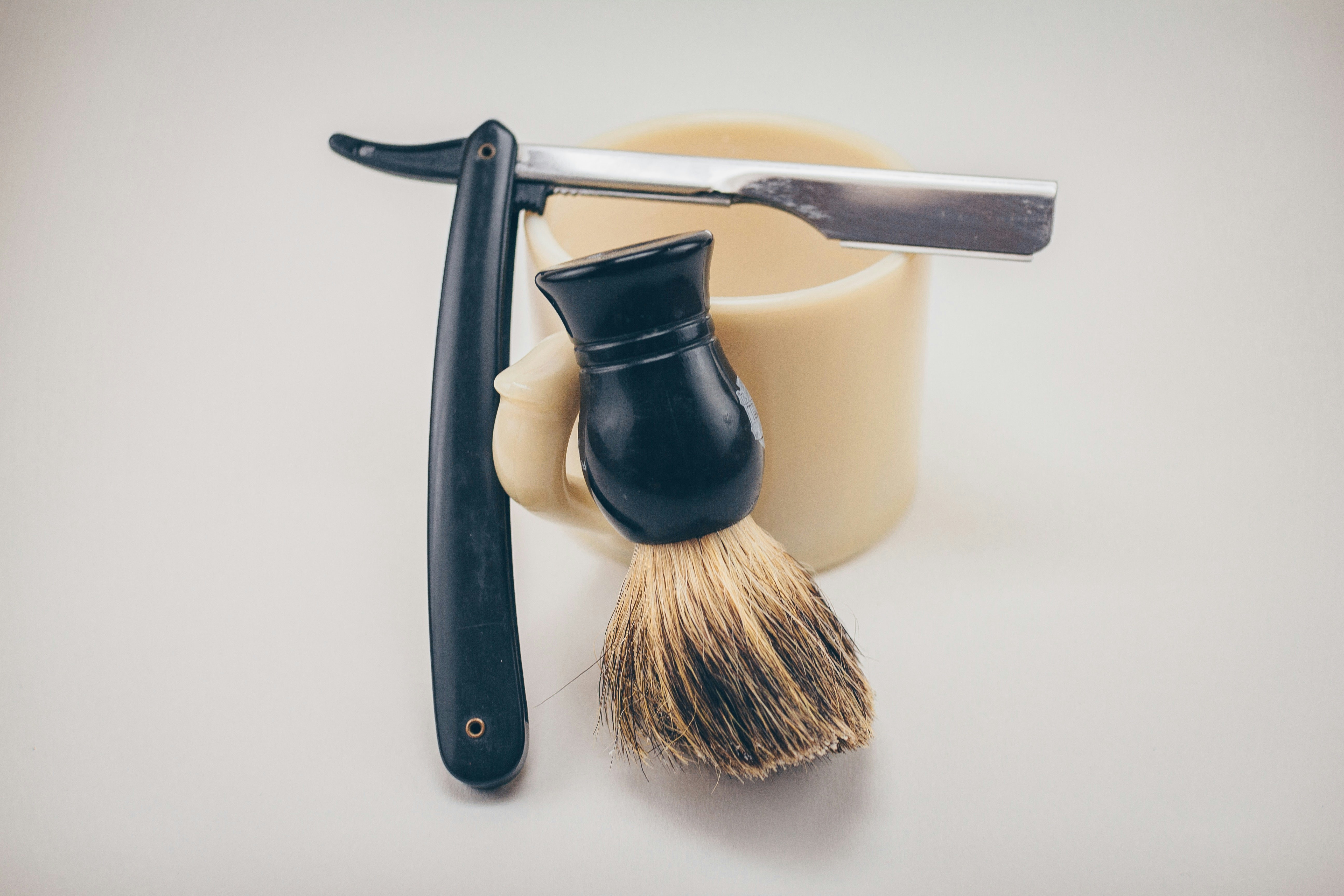
Cut your blocks into smaller, uhm, blocks. Melt them in a microwave-safe dish. I use a wooden chopstick to stir. It really doesn’t matter because, well, you are making soap and everything just comes clean.

In the melting, you can add more “flavors,” like essential oils. Note in the background, I’ve set up molds with chunks of lavender.

Your molds can be anything. I use traditional soap-shape molds, along with old plastic lids. Yes, that “lid” to the left is a KFC coleslaw cap and KFC will end up imprinted on my bar of soap. I also use silicone molds…

Pour into molds.

Yes, that is a tablecloth beneath. No worries, everything washes out, because, well, we are making soap.

Let the molds sit til set.

Once set (usually overnight), pop from molds. Use. Use well. Use often. Wrap unused bars and blocks in wax or parchment.

At this point, you might ask yourself, like any good artist, Why? What’s the why?

Why make soap?

I make soap…

because I can,

because, sometimes, making soap feels like the only thing in my life I have control over.

because there might be a new cabinet position in the new Department of Soap-Making

and I qualify

and so do you.

Just remember, a little lavender goes a long way.

a little self comfort for the tender poet

I can only begin with advice I read (and re-read) from Rebecca Solnit‘s Facebook post, Nov 6th at 4:25 am,

“Things you do not have to do today.

–Join the frenzy of what/who to blame.

–Take in a bunch more media.

–Feel like you’re ready to face the next five years and have to plan and strategize and do it all now.”

I often feel the need to push, press beyond pain and fear, and just DO something, anything when I hit bottom, slam into a wall. Solnit’s post offers permission. I didn’t realize that I needed permission, but apparently, I do.

So I thought, maybe you might too.

You have soft permission to sip whatever brings you comfort—whiskey, wine, chocolate cake milkshakes—and drink them anytime during the day (or night) you feel.

Brewing Chai is my blanket. I think the meditative process matters. I think the warmth of the mug against my palms brings calmness. I think the sweet mesh of cinnamon, ginger, clove, cardamom, black pepper infuses something ancient in me.

You have gentle permission to hug whatever and whoever offers you solace. Perhaps a tree, a body pillow, a shaman. Maybe you just need to hug yourself for awhile, for the day, for all of time. Do this. Do this often.

I’m blessed with Newfoundland-surround-sound. I’ve four beasts, each over 140lbs. That’s a lot of fluff and love. And these water-rescue-bred beauties feel emotion, all the emotions, sometimes all at once. When I’m hurting, they gather. They press against me and, I swear, sop away my hurt.

This is Penelope on my bed, like most mornings.

I gift you permission to read all things loving, all things that restore and replenish you. Read daily. Sit with others art and beauty all that you can. Allow words to wash over you, rinse away darkness that might bring damage.

I’m absorbing Ben Okri. Above is a snippet from his novel, The Freedom Artist, which feels timely and timeless.

Heed this as permission to gather, to lose yourself in community, to surround yourself with like-minded hearts. Your community may include trees or humans or jelly beans, no matter, just gather.

Here is permission to play. Yes, play. Creative time shifts perspective, releases angst, offers a marinading of all that we hold. Gift yourself a bit of wonder. Sit with paints and color and new-found recipes from long ago. Dance in the rain to the drum of your heart. Build a sand angel, a snow castle, a gingerbread gender-neutral being.

I love to Zine and Watercolor. Both mediums are less-than-forgiving, in a good way. They bring the art of letting go, the art of letting art be whatever she wants to be. Here is a recent Zine, thank you Sarabande Books, Natalie Wollenzien, and Kris K. who led the zine workshop on Self Care for a Beloved Self.

Here is my zine…

Here are a few of my zines from my little Guides series.

…and below is one of my waterweaving pieces from my series. The medium is black ink and water color on water color paper, titled, I am a purple lotus. This piece was featured in Boise Weekly‘s May issue (v 32, i 40).

I offer you little if I fail to mention the poets, and for now, Kathryn DeLancellotti, who shared in an IG post to lean into our “holy rage.” I’m paraphrasing, but I’m certain I’ve borrowed her phrase, “holy rage,” every day for the last week. Here is a sample of her holy poetry from Beaver Magazine.

Permission to eat well. Drizzle everything with garlic oil and coarse flake salt. Pause and toast only the best cranberry walnut bread. Chew slow and in silence and thank the good earth for nourishing you, restoring precious energy that we will all need now, and even more, later.

Permission to love on your skin. I typically soften coconut oil between my palms until melted and apply it to my face, neck, locks. I started this in my impoverished days when I couldn’t afford decent lotions or conditioners. I retained the habit because, well, the skin and follicles absorb everything and I could rant on products and ingredients, but I’m preserving my energy and knowledge for better banters.

This month, I dove into a new product created by my incredibly talented (and chic) friend, Jessica Holmes, called Beaux Glow. I’m in love, enchanted, in awe. I love, love, love this product and I am not a product pusher. If you know me, you know I make my own soap, mostly from items in my garden. This product I love. On my face, my elbows, my lady parts. I give you permission to pamper yourself with something new.

Permission granted to body scan and body scan often. Check in with your body. How do you feel in the soles of your feet, your third chakra, your guts? How might you move, stretch, shift to bring your body more comfort? Do you need a warm blanket, fuzzy socks, a punching bag? Pause and listen to your body, note its whispers and respond accordingly.

Speaking of snuggles. I can’t resist. I’m a Bubbe. I don’t take it lightly. I don’t take anything lightly. But whenever I can, I jump at the opportunity to hold my grand-baby, Charlie. Sweet innocence, being of our future, the reason why I poet, my reminder to “keep going.” I give you permission to find your reason, your Charlie, what or who you need to hold on to that allows you to keep moving.

Permission to join others in movement and musings. This is not a plug for the workshop that I co-teach with the amazing Gayle Brandeis. This is a plug for the community we’ve curated, one of hearts and gentleness. Find a sacred space, a place you can dwell with others, a place that nurtures your loves and fills you.

Here is a Movement and a Musing from our November gathering:

Movement: Choosing to be separate. There is strength in your individuality. There is strength in being a single unit as part of a whole. Separate your toes. Move each toe in each direction. Stretch. Massage. Say thank you.

Musings: Choose your singularity. Gather strength through singularity. Write one sentence. Separate each word down the side of your page. Now write a sentence using each word to begin a sentence. Repeat.

If you’d like to join us or download a PDF from previous gatherings, you can visit us at Musings & Movment.

I could keep going, all the permission that you might need for all of time, I give it all to you.

…and I’ll leave you here, with this reminder, circling from where we began, Rebecca Solnit, who offered me permission: “Rage is a form of prayer too.” (Nov 7th, 2:27 pm).

The Price of Energy

“Energy” Jar, 2024

I collect money. Collect it in a mason jar. Collect coins and bills and hand-written IOUs on Post-Its. I charge five dollars per bad attitude. I began this transactional system when my sons were younger, say eight and ten and two. The price lower back then. A quarter for an eye-roll, a dime for a, But Mom.

A few years ago, I stored this jar, believing that we—my sons and me—had arrived. When I say, Arrived, I mean here, someplace stable. Maybe I mean here, Star, Idaho. What I really mean is that I hoped we’d shifted into peace, which meant our energy stabilized.

I believed that arriving here equaled more time. No. More energy.

In my journal, I map my time.

4:30. Feed pups. Make beds.

5:00. Prance through my garden and pluck basil and sage, fry them crisp, fold them into fluffy omelets.

5:30. Yoga.

6:30. Pre-prep lunch—tuna salad pitas with air-fried sweet potatoes smothered in rosemary, again, from the garden.

7:00. Don’t forget the laundry, the dishes, the bills. Remember: Pre-prep dinner, shave Parmesan by hand for pasta. Oops. Buy Parmesan. While shopping, buy bread and eggs, just in case.

Already noon.

My sons munch their lunches while playing video games. In another room, I unclog the vacuum for the third time this week and tell myself. All this energy expenditure will buy me

Appreciation?

Approval?

Irreplaceability?

Tell myself, 30 minutes. Certainly I have 30 free minutes.

I brew tea.

Set my writing intention.

I’m lying.

I need an entire week, most likely a month, to polish my manuscript. I need minutes all in a row. And

a pup eats the remote, I hand-wash dishes, store leftovers, mop floors for the seventeenth time. I forget my tea as I return to my manuscript. Technology fails. I troubleshoot. I re-boot the router. I hole in my office for six minutes, re-reading the second line of the sixth stanza of a Golden Shovel and

one of the boys pokes his head in, What is there to eat?

I pretend not to hear him.

It’s 6 pm.

Mom? Mom? Mom, I’m hungry, and

I cave.

Words escape, You need to leave

me alone.

The words are louder, more square than I intended.

The head in the doorway pulls away. Angels gasp. Devils clap. I slump, hold my face. My brain chugs a thousand directions.

My focus is hard-earned, if earned at all.

I count, oneandtwoandthreeandfour…

Boys, come here.

Look, I say and point to my poem.

See? I say, and show them my need to maintain the anaphora phrase AND the end word AND

I’m stuck in the middle of this line on a word that feels wrong in my body, I say.

How can you feel words in your body?

I have no answer.

No.

I know how to answer.

I could ask, Did you feel my shout?

But I can’t.

I don’t.

I’m sorry, I say. I didn’t mean to raise my voice. Though we know this is the nice way of owning yelling.

Let’s make hot cocoa, I say.

The guilt of parenting quilts me, snuffs out my need to create.

After they sleep, 10 pm, give or take, I wander my home like a ghost. I wish I could re-carve our life, turn time back to last week when we watched a movie, ate salted popcorn mixed with Hot Tamales.

What I really want is the ability to leave the dishes dirty.

You piece of shit, I say to me.

I move room to room and kiss their foreheads, say, Forgive me.

Tell them, I’ll try harder.

Ask, Can I have a do-over?

They slumber.

The next day, I find and place the mason jar on our kitchen counter.

Do you remember our energy exchange? I ask.

You used to charge if we argued with you, one of them says.

Do you remember why? I ask.

Because arguing zapped you and you needed more coffee to parent.

Good memory, I say.

Uhm, but we’re not arguing, the other says.

I know, I tell them. Do you remember how I told you, everything requires an exchange of energy? How, in the old days, people traded chickens for flour, or horseshoes for grain. How currency—like money—became a thing and we forgot what it represented. Our energy.

We have to pay you for something now? one of them asks.

No, I say.

I place a five dollar bill in the jar, say, This is for my bad attitude yesterday.

One of them says, Maybe you’ll save enough to hire a housekeeper and that will help your attitude?

Genius, I think.

A pup sprints through, dish towel in her mouth. Another pup chases after. The boys squeal and join in and suddenly, my body,

my body feels the word, and I, too, sprint up the stairs to my office, to my poem, jot the word and plop into my chair, the resistance of stillness fades. I’m here. Me with my body, my body with my words, my body-words with me. I smile a small smile, perhaps a glimmer of achievement.